
Trace any deal analysis back far enough and you hit the interest rate. It sets the loan payment, and the loan payment decides how many buyers can stretch to your price, what a rental nets after the mortgage, and whether next year’s refinance is a relief or a headache. Nudge the rate and the whole spreadsheet shifts.
This fall showed it again. The Fed raised its policy rate a quarter point on September 16, 2026, to 3.75–4.00%, its first hike since 2023. A week later Freddie Mac’s survey had the average 30-year fixed at 7.03%. A year ago it was 6.30%.
Our team builds TINTY, an AI virtual staging tool for listing photos. That means we look at rates from a slightly different angle than a lender does: we think about what a property costs its owner while it waits for a buyer or a tenant. More on that later. Start with the basics.
Key takeaways
- Pricier money means fewer qualified buyers and softer prices. Cheaper money usually does the reverse.
- One point is real money: on a $300,000, 30-year fixed loan, 7% instead of 6% costs about $197 more a month, roughly $71,000 over the full term.
- The usual damage: thinner cash flow, costlier refinances, squeezed development margins and longer time on market.
- Fixed-rate financing, stress-testing deals at a higher rate, cash-producing properties, diversification, early refinancing plans and a close eye on the Fed all help limit the risk.
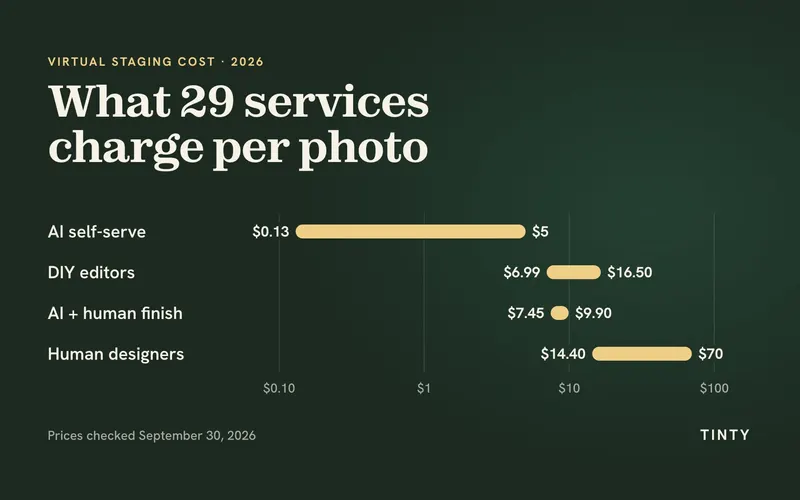
- With rates high, every month a property sits empty costs more. Staging the listing photos with AI can cost under $30 for a whole listing, while NAR’s 2025 report puts the median cost of a staging service at $1,500.
Three Ways Interest Rates Change the Math of a Deal

Most property purchases involve a loan, and real estate loans are big. So even a quarter-point move in rates ends up in the numbers. Here is where investors usually feel it first.
Borrowing Costs
Higher rates make every borrowed dollar more expensive, on a first-time buyer’s mortgage and on a commercial loan alike. People react fast. Some buyers wait. Others drop their price range. Either way, fewer offers land on each property.
Put a number on one percentage point. Take a $300,000 loan on a 30-year fixed. At 6%, principal and interest come to about $1,799 a month. At 7% it’s about $1,996. That’s roughly $197 more every month and about $71,000 more over 30 years, for exactly the same property.
Falling rates run the film backward. Cheaper money pulls more buyers and investors into the market, and the extra demand tends to push prices up.
Property Values
Values follow the payment. If fewer households can carry the monthly cost, sellers see fewer offers and have to meet the market. Let rates fall and the pool of qualified buyers grows again, and prices usually firm up.
It’s a tendency, not a rule. A town that’s adding jobs and short on housing can keep climbing through a rate hike. But if part of your return depends on appreciation, run your projections at more than one rate.
Investor Returns
Interest is an expense like any other, and often the biggest one. A higher rate sends more of the rent to the lender every month for as long as you hold the loan. A lower rate leaves that money with you, for a kitchen update, new flooring or a thicker cash cushion.
Interest Rate Risks Investors Should Plan For
Rate changes rarely wreck a deal in one blow. They usually show up as a handful of smaller problems that add up. These are the four we’d watch most closely.
Thinner Cash Flow
If you bought with a loan, higher financing costs take a bigger slice of your rental income. On an adjustable-rate loan this happens when the rate resets. On a new purchase, you lock in the higher rate at closing. Either way, what’s left after the payment is smaller, and that means less money for repairs, reserves or the next acquisition.
More Expensive Refinancing
Investors refinance to get better terms or to pull equity out of a property. When rates are climbing, a refinance can mean a higher monthly payment or less cash out than the plan assumed. The investors most exposed are the ones who bought on short-term or adjustable financing with the idea of refinancing “later.”
Pressure on Development Projects
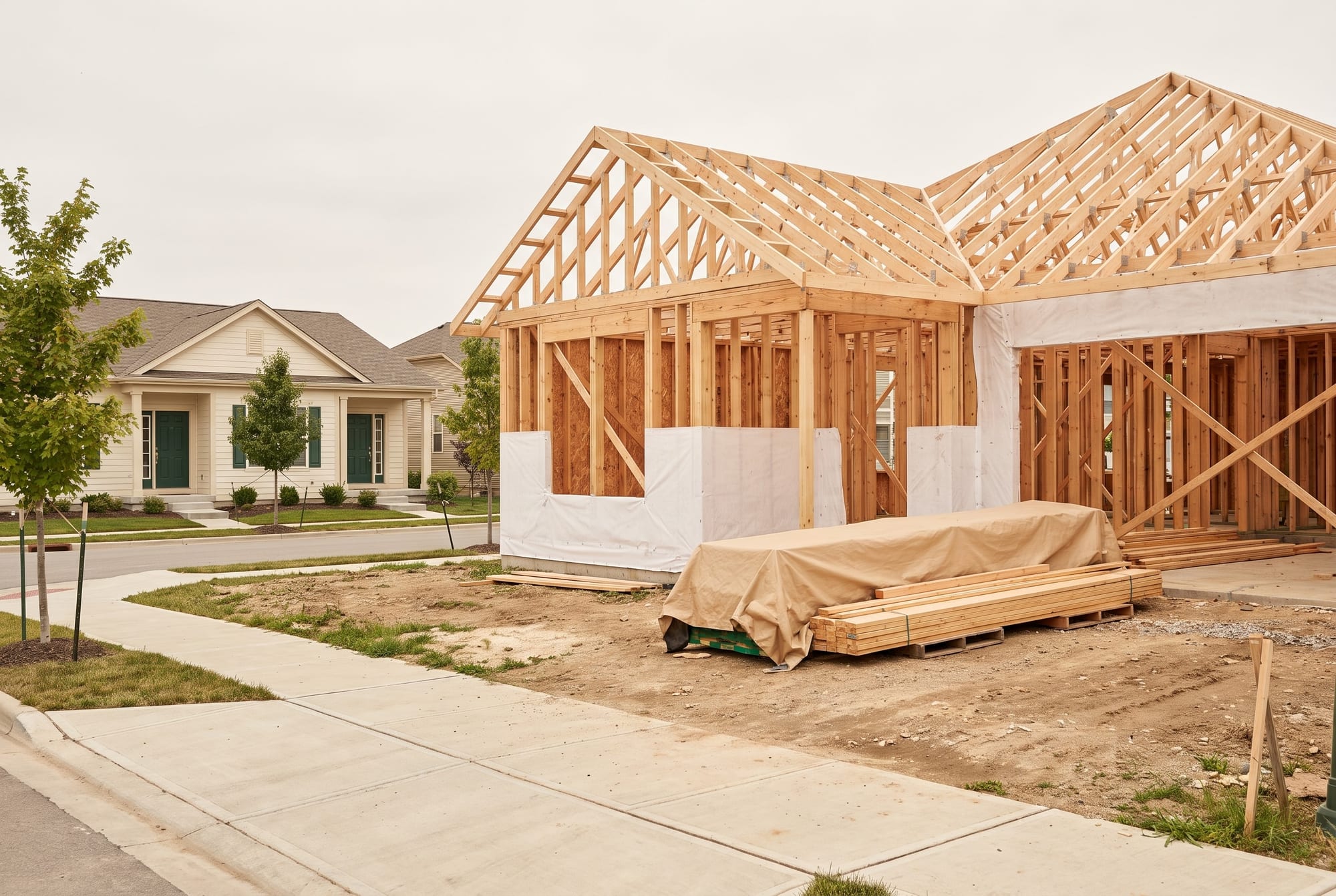
Developers feel high rates twice. Construction loans cost more while the project is being built, and weaker demand at the finish line makes the completed units harder to sell at the planned price. The margin gets squeezed from both ends.
A Slower Market
A fast run-up in rates can stall a whole market. Fewer buyers qualify, listings sit, and a seller on a deadline may take less than planned, sometimes less than they paid. Keep this one in mind. Time on market is where carrying costs quietly pile up, and we’ll come back to it below.
How to Reduce Interest Rate Risk in Real Estate
You can’t control the Fed. You can control how exposed each deal is to what the Fed decides. This is the checklist we’d use.
- Lock in a fixed rate where it fits. A fixed-rate loan keeps the same rate for the full term, so the principal and interest payment in your spreadsheet is the one you’ll actually pay. You lose some flexibility. For a buy-and-hold investor, that predictability is usually worth it.
- Stress-test the deal at a higher rate. Before you buy, rerun the numbers at a rate a point or two above the quote you have. If the property only works at today’s rate, it’s a thin deal.
- Favor properties that produce cash. A rental or small multifamily with steady tenants pays its own bills. When financing gets more expensive, that rent check is what absorbs it.
- Diversify. Residential and commercial, one metro and another: they rarely react to a rate change the same way or at the same time, so owning a mix softens the blow.
- Plan refinancing early. If a refinance is part of the plan, put a date on it instead of waiting for the perfect rate. Line up a backup too. A partner or a private lender can fill the gap if the bank says no.
- Watch the Fed, but read it correctly. The Fed doesn’t set mortgage rates directly. Its moves hit short-term rates right away, while a 30-year mortgage is priced on where lenders think the Fed and the economy are headed over the life of the loan. The FOMC statements and the projections the Fed releases four times a year are worth ten minutes of your time. And if rates are clearly climbing and a deal fails your stress test, waiting is a legitimate decision.
Holding Costs: Why Time on Market Matters More at High Rates

Here’s the part of the rate story that rarely makes the headlines. An unsold or unrented property still sends its owner bills every month: loan interest, property taxes, insurance, utilities and HOA dues where they apply. These are holding costs. High rates push them up from two sides. If you financed at today’s rates, the interest line is bigger. And with fewer buyers qualifying, properties tend to take longer to sell.
Go back to the $300,000 loan at 7%. In the first month, about $1,750 of the payment is interest alone. Three extra months on the market means more than $5,000 in interest before anyone makes an offer, with taxes, insurance and utilities on top. So when rates are high, shortening time on market is one of the few levers an owner actually has. Price is one part of it. Presentation is the other, and presentation starts with the listing photos, because that’s what people look at before they decide whether to visit.
Why Vacant Rooms Fall Flat in Listing Photos
An empty room on a phone screen tends to look smaller and colder than it feels in person. Buyers and renters have nothing to judge scale by, so they can’t tell whether a queen bed and a desk will fit. In NAR’s 2025 Profile of Home Staging, 83% of buyers’ agents said staging made it easier for buyers to picture the property as their future home.
Physical staging fixes that, but it’s a project in its own right. The same NAR report puts the median cost of using a staging service at $1,500. On top of the money, the furniture has to be scheduled, delivered, set up and later picked up, all before the photographer can come in.
Virtual Staging for a Few Dollars a Photo
AI virtual staging does the same job for the photos at a small fraction of that cost. With TINTY, you upload a photo of an empty room, choose the room type (bedroom, living room, dining room, home office and a few more) and a style such as Scandinavian, Modern or Japandi, and get furnished previews in about 30 seconds. Previews are free and don’t need a credit card. When you like one, you render the finished photo.
For an investor with a single property to list, the Listing pack costs $29 for 10 finished photos, valid for 12 months. That’s $2.90 a photo. If you list regularly, the Standard plan is $39 a month for 20 finished photos.
One rule we wouldn’t skip is disclosure. MLS rules on virtual staging vary, so check yours. TINTY can add a “Virtually staged” label to the finished photo when you download it. The staging itself should only add furniture and decor, never hide the real condition of a room.
We won’t promise that staged photos sell a property in a set number of days. Nobody honestly can. The point is simpler. At 7%, a month on the market is expensive, and spending a few dollars per photo to make a vacant listing look lived-in is an easy call next to that.
What We Expect Next
Our bet goes further than cost. Virtual staging used to mean a designer placing 3D furniture into each photo by hand. We think that manual work, along with physical staging done only for the listing photos, will move to AI completely over the next few years. Real furniture will still matter when buyers walk through a high-end home in person. For the photos, we don’t expect anyone to be placing furniture by hand for much longer. If you want the backstory, we covered the history, pros and cons of AI virtual staging in a separate piece.
Nobody controls where rates go next. You do control the loan you pick, the reserves you hold, the rate you stress-test at and how long a place sits empty before the right buyer or tenant shows up. Get those right and a rate hike still costs you, but it won’t catch you off guard.
This article is for general information only and is not financial, legal or tax advice. Talk to a licensed lender or financial advisor before making investment decisions.
Sources
- Federal Reserve: Why do interest rates matter?
- Federal Reserve: Monetary policy: what are its goals? How does it work?
Show 6 more sourcesShow fewer sources
- Federal Reserve: FOMC statement, September 16, 2026
- NPR: The Fed raises interest rates for the first time in over three years (September 16, 2026)
- Freddie Mac: Mortgage Rates Average 7.03% (September 24, 2026)
- Freddie Mac 30-year fixed mortgage rate (FRED, St. Louis Fed)
- CFPB: Fixed-rate vs. adjustable-rate mortgages
- NAR: 2025 Profile of Home Staging (press release, May 6, 2025)