

Price gets most of the attention when people shop for a home, but location is the one thing you can’t fix after closing. You can repaint, replace the roof, knock down a wall. You can’t move the house two miles closer to work or farther from a highway on-ramp. So before you fall for a listing, get to know the area around it: how long the commute takes, how close you’ll be to the people who matter to you, and what an ordinary Tuesday there actually feels like.
Some agents like to say every neighborhood has a personality. A food lover, a hiker and someone with theater season tickets may each want a different one. The only reliable way to know whether a place fits you is to spend real time there before you sign anything. Think of it as a test-drive. Here’s how to run one.
Key takeaways
- Location is the part of a purchase you can’t change later, so weigh it as seriously as price: your commute, the people close to you and what daily life there is like.
- A good agent explains what sets one area apart and gives every client the same objective facts. Locals add the first-hand detail no listing mentions.
- Walk the streets, sit at a local cafe and, if you can, stay a night or two to see everyday life up close.
- Test your regular routes at the hour you’d actually travel them.
- Once you’ve picked the area, a free AI-staged preview of an empty room can help you judge a specific home’s layout before a second showing.
Start With a Local Real Estate Agent

A good buyer’s agent spends a surprising part of the job as a tour guide. Agents know the local market and can explain what sets one area apart from the next, or why homes a few blocks apart are priced so differently.
Many will point out landmarks near a listing, the businesses that operate nearby, and practical things like walkability, parks and comparable listings in the area. Ask for all of it. When you buy a home, you also get new neighbors, new routines and a new set of places you’ll use every week.
The best agents start by asking what you need from a location, then show you how a given area matches it or doesn’t. Expect facts, not opinions. NAR’s fair housing guidance tells agents to give every client the same kind of neighborhood information and to stick to objective data rather than hearsay. So when you ask about schools or crime, a careful agent will answer with data or point you to the source: crime statistics from the local police department, or the school district’s office. That isn’t dodging the question. It’s usually the most reliable answer you’ll get.
Talk to People Who Live There

Your agent knows a lot about the neighborhood, but they don’t wake up there every morning. Residents do, and they notice things no listing will ever mention. If you know someone in the area, buy them a coffee and ask.
If you don’t know anyone, talk to locals anyway: a neighbor out in the garden, the person behind the counter at the hardware store, someone walking a dog. People who have lived somewhere for years usually have opinions about it, good and bad, and many are happy to share them. Introduce yourself, say you’re thinking about buying nearby, and try a few open questions:
- How long have you lived here?
- What has changed over the years?
- Is there anything you wish you’d known before you moved in?
That last one tends to get the most useful answers. You might hear about a street that floods after heavy rain, a freight train that runs at 5 a.m. or the one grocery store that closes early. If flooding comes up, look the address up on FEMA’s Flood Map Service Center. A home in a high-risk flood zone needs flood insurance when the mortgage comes from a government-backed lender, and that changes your monthly budget.
Walk the Neighborhood on Foot

You may have driven through an area a dozen times, but walking the same route shows you much more. From a car you see houses. On foot you notice the cracked sidewalk, the spot where your phone drops to one bar, how far the bus stop really is. Check public transit even if you own a car. There will be days when you’d rather not drive, or can’t.
Look at the details:
- Are there street trees and flower beds, or mostly bare walls and graffiti?
- Are the storefronts kept up or run-down?
- Is the street calm and quiet, or busy and loud?
Walk Score, which you’ll also see on Redfin listings, rates any address from 0 to 100 based on walking distance to everyday places like grocery stores, restaurants, parks and schools. It’s a useful shortcut. The walk tells you something the score can’t: whether you’d actually enjoy making those trips. Go back once at rush hour, too. That’s when you’ll hear the traffic, smell the exhaust and see how lively the area really gets.
Sit Down at a Local Cafe and Watch the Street

A sidewalk table can teach you a lot. Order a coffee, sit outside for half an hour and just watch. How busy is the street? How loud? Are the sidewalks clean? Does anything unusual happen while you’re sitting there?
You’ll also pick up the local rhythm. In some areas the cafes fill up at lunch and go quiet by seven. In others, restaurants stay busy late into the night. Neither is better; it depends on how you like to live. Menu prices help, too. They give you a rough sense of the everyday cost of living before you’ve seen a single utility bill.
Stay a Night or Two
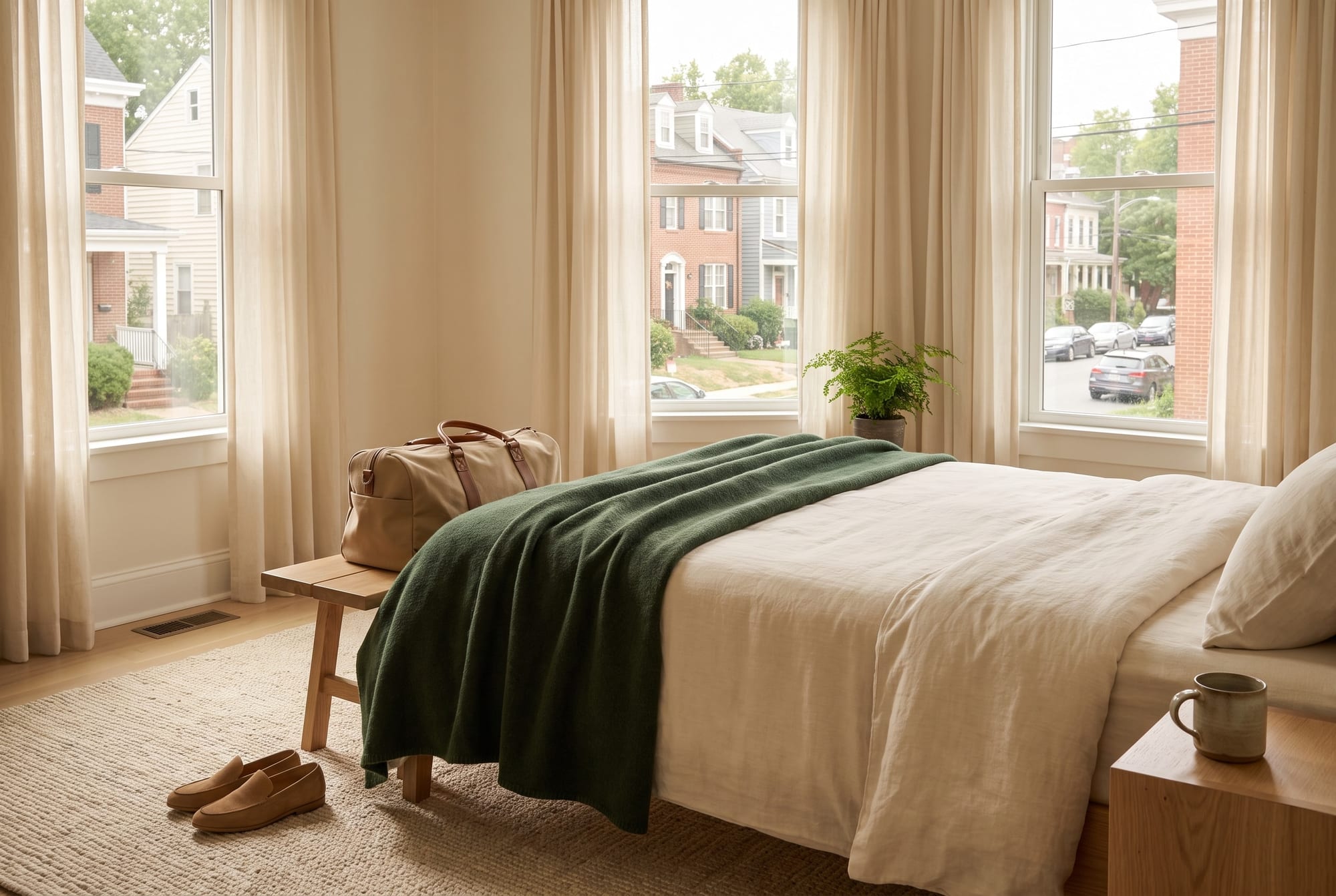
A short stay is the closest thing to a real test-drive. Book a place in the area for a couple of nights and live as if you’d already moved in. You’ll find out how long the morning commute takes, where you’d buy groceries, and what the area has and what it lacks. If peace and quiet is high on your list, one night there will tell you whether you’ll get it.
While you’re there:
- Have a picnic in the nearest park.
- Order delivery and see how long it takes.
- Check how lively the area is after dark.
- Try to find parking near the house in the evening.
Go through your normal routine and notice what’s easy and what’s a hassle. If you have kids, do the school or daycare run and see whether the route is simple and safe for them.
Test Your Commute at Rush Hour

You won’t spend all your time in the neighborhood, so work out exactly how you’ll get in and out of it. How long does it take to get to work, or to drop the kids at school? Will you need to leave earlier than you do now?
Test every regular route at the time you’d actually travel it. A Sunday-morning drive tells you almost nothing about 7:45 on a Tuesday. If you can’t make the trip in person, Google Maps lets you set a “Depart at” time and picks the route from estimated traffic and transit schedules for that hour. Don’t shrug off a small difference. On a five-day workweek, twenty extra minutes each way adds up to more than three hours a week, every week you live there.
Then Picture Your Life Inside the Home
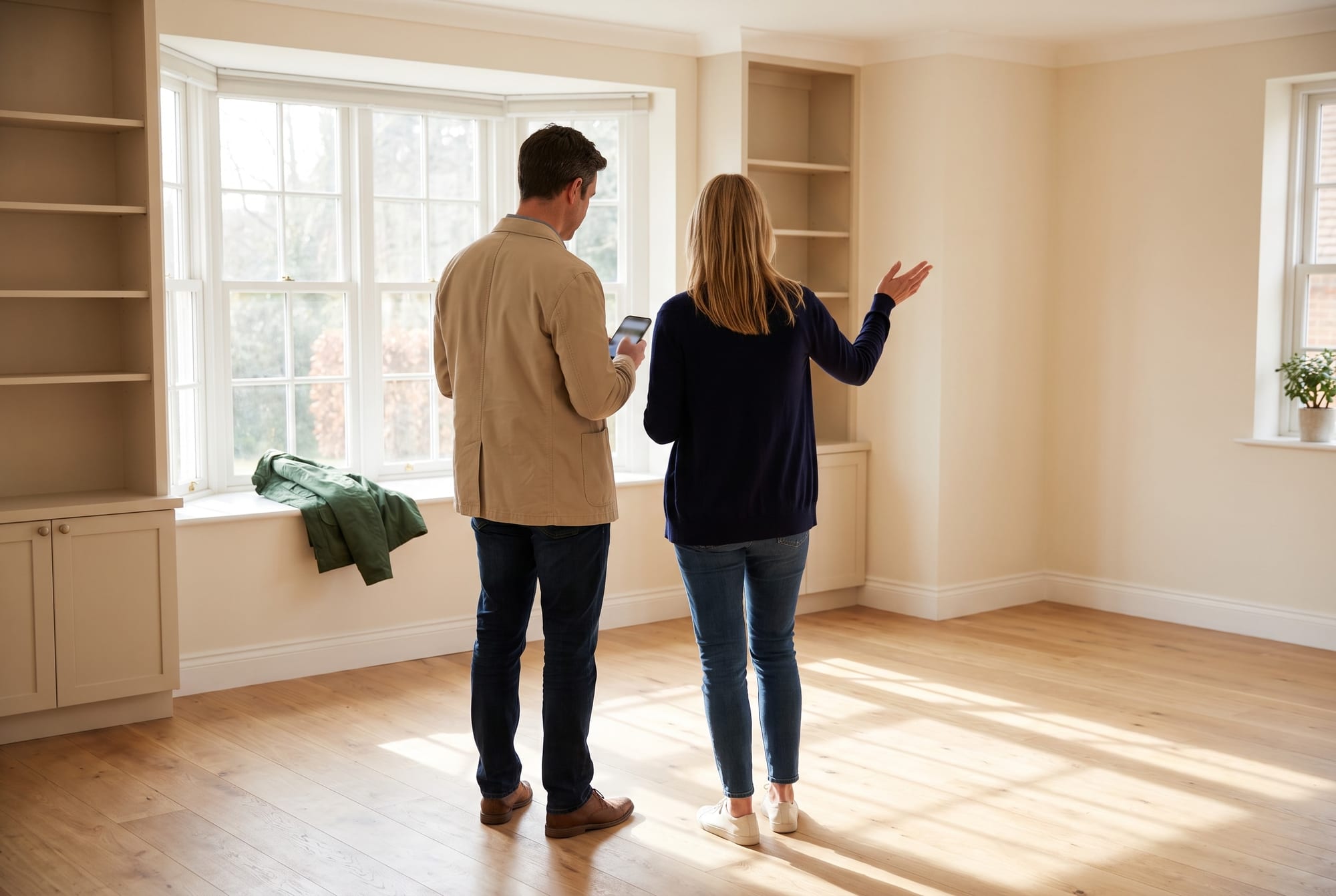
Choosing the neighborhood narrows the search. It doesn’t answer the next question: can you see yourself living in this particular house? That’s harder than it sounds when the rooms are empty, and many homes are listed that way because the sellers have already moved out or the place was just built or renovated. Without furniture there’s nothing to judge scale by, so it’s hard to tell whether a sofa, a rug and a dining table will all fit, or where the bed would go. Staging is meant to close that gap. In NAR’s 2025 Profile of Home Staging, 83% of buyers’ agents said staging made it easier for a buyer to picture the property as a future home.
You can do a quick version of that yourself. We build TINTY, an AI virtual staging tool, so keep that in mind as you read this part. Take a photo of an empty room at the showing (ask the listing agent before you snap pictures), upload it, then pick the room type (living room, bedroom, dining room, home office and a few others) and a style. You’ll see the room furnished in about 30 seconds, and previews are free, with no credit card. Try the same room in Scandinavian and in Modern, or stage an open-plan space as a living–dining room to see how a seating area and a dining table might share it. Then take your questions, and a tape measure, to the second showing. A staged preview gives you a feel for scale and layout. It doesn’t replace real measurements.
If you want to know how this kind of tool works and where it falls short, we wrote about the pros and cons of AI virtual staging.
Sources