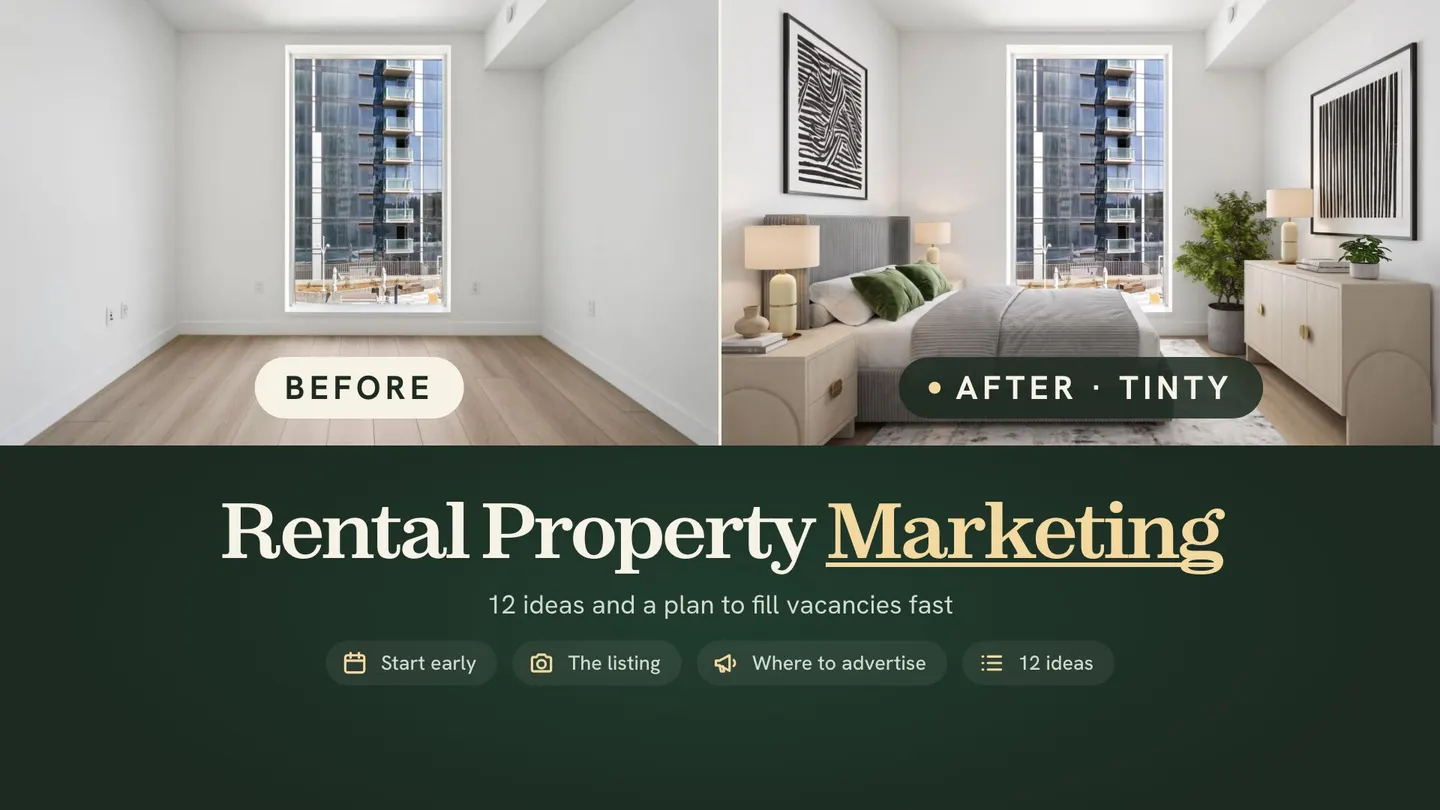
What is rental property marketing? Everything that turns an empty unit into a signed lease. That means strong photos, a fair price, an ad on the sites renters use, fast replies and easy showings. Start before the unit is empty, track where each lead came from, and drop what doesn’t bring applications.
We make TINTY, an AI virtual staging app, so one section covers listing photos. Notes on fair housing and ad rules are general information, not legal advice.
Sources and TINTY details checked November 10, 2026.
Key takeaways
- Vacancy is up: the US rental vacancy rate hit 7.6% in the third quarter of 2026, the highest since early 2014, per the Census Bureau.
- Renters start online: 85% use or plan to use rental listing sites, and 87% start without a specific place in mind.
- Each empty day costs money: about $51 a day at the median asking rent of $1,541 (our math on Census data).
- Speed wins: renters research about 10 places and seriously consider three, so reply the same day.
On this page: Why it matters · Start early · The listing · Where to advertise · Replies and showings · 12 ideas · Track it · FAQ
Why rental property marketing matters more in 2026
Renters have more choice this year. Rental vacancy hit 7.6% in the third quarter of 2026, up from 7.1% a year earlier, per the Census Bureau. That’s the highest since early 2014, in our reading of its historical tables.
Landlords are competing on price, too. In September 2026, 39.6% of rental listings on Zillow offered a concession, such as a free month, up from 37.4% a year earlier.
The good news: rentals still move. Rental Beast’s metro data put the median at 19 days on market in the third quarter of 2026. Our guide on how to find tenants covers screening once the applications come in.
Start marketing before the unit is empty
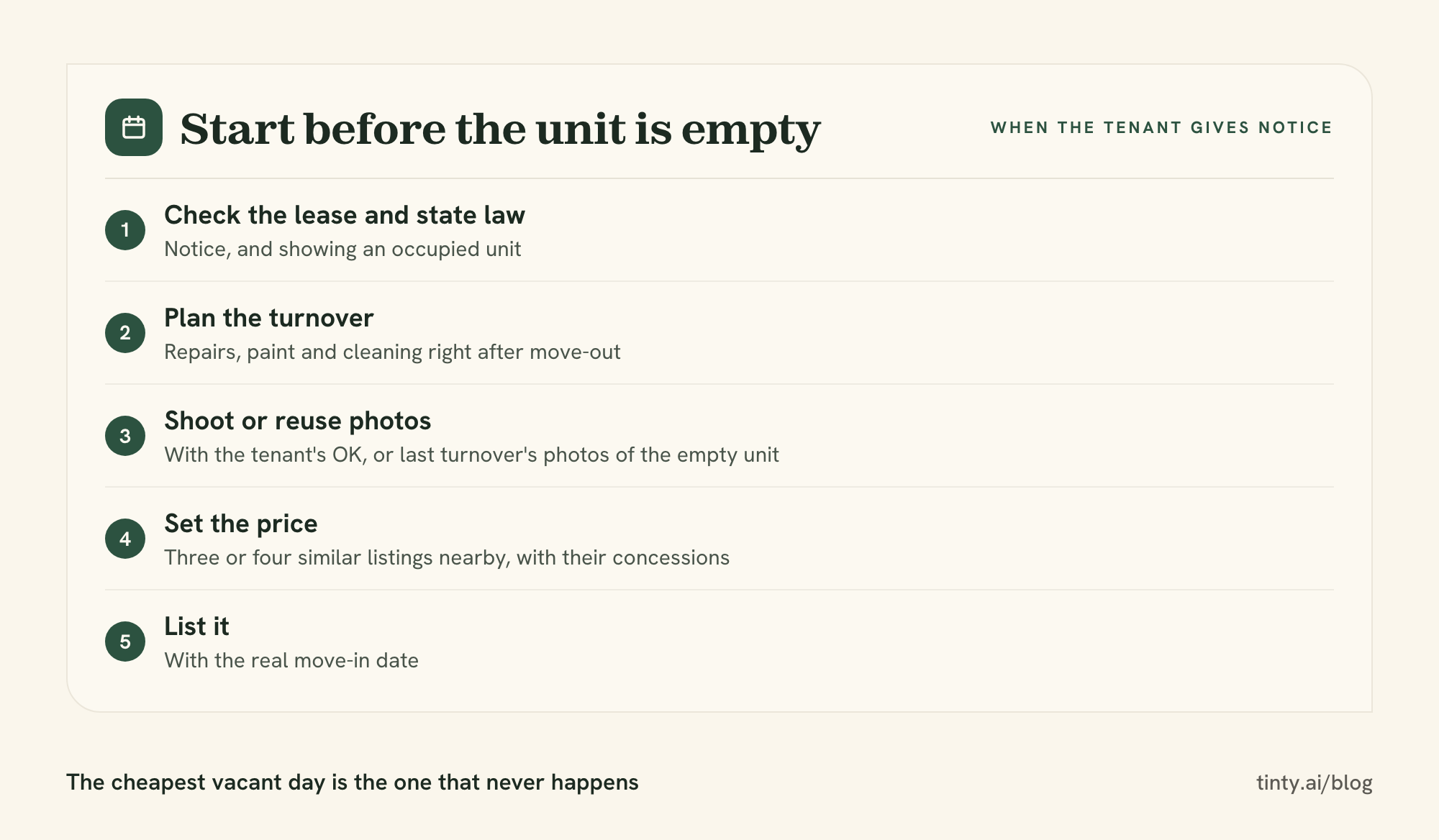
The cheapest vacant day is the one that never happens. Start when the current tenant gives notice:
- Check the lease and state law on notice and on showing an occupied unit. Many states require advance notice to the tenant before you enter.
- Plan the turnover: list repairs, paint and cleaning, and book them for the days right after move-out.
- Shoot or reuse photos: if the unit looks good now, photograph it with the tenant’s OK. If not, use last turnover’s photos of the empty unit, if they still match.
- Set the price: compare three or four similar listings nearby, including their concessions.
- List it with the real move-in date, so renters planning ahead find you first.
The listing: photos, price and description
Renters compare listings before they ever call. Apartments.com surveyed more than 15,000 people planning to rent. 99% said unit-specific information matters: the price, the photos and the floor plan of the actual unit.
Your listing needs these parts:
- Photos of the actual unit: every room, shot wide from a corner, lights on and blinds open. Our iPhone photo guide covers the shoot.
- A floor plan or a video tour: both help renters who are moving from another city.
- A clear price: rent, deposit, fees and any concession in one line, with no surprises at the application.
- The move-in date and the lease length.
- The basics renters filter by: bedrooms, bathrooms, pets, parking, laundry and utilities.
- A description of the unit, not the renter: “two blocks from the park,” not “perfect for young professionals.”
Rule: federal fair housing rules ban ads that indicate “any preference, limitation or discrimination” based on a protected class. That covers words and photos. Many landlords add the Equal Housing Opportunity logo to their ads.
Photos of an empty unit
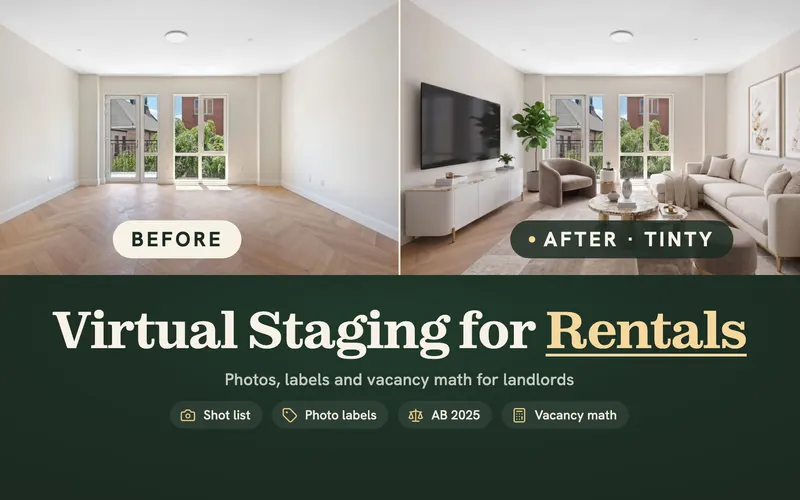
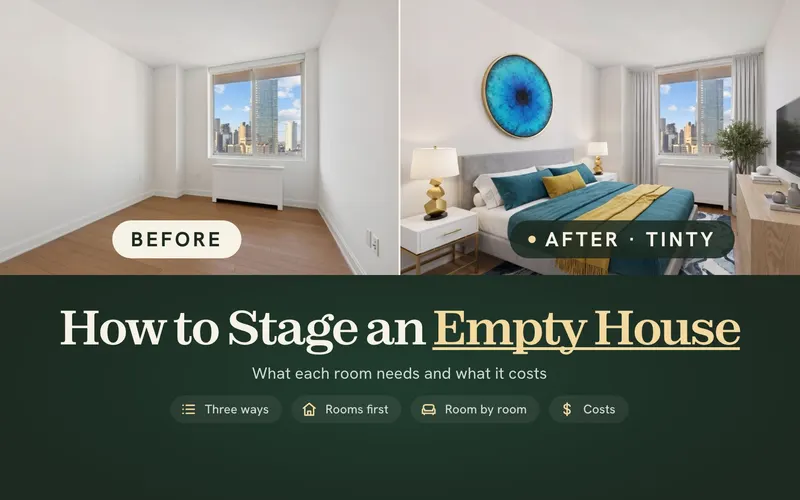
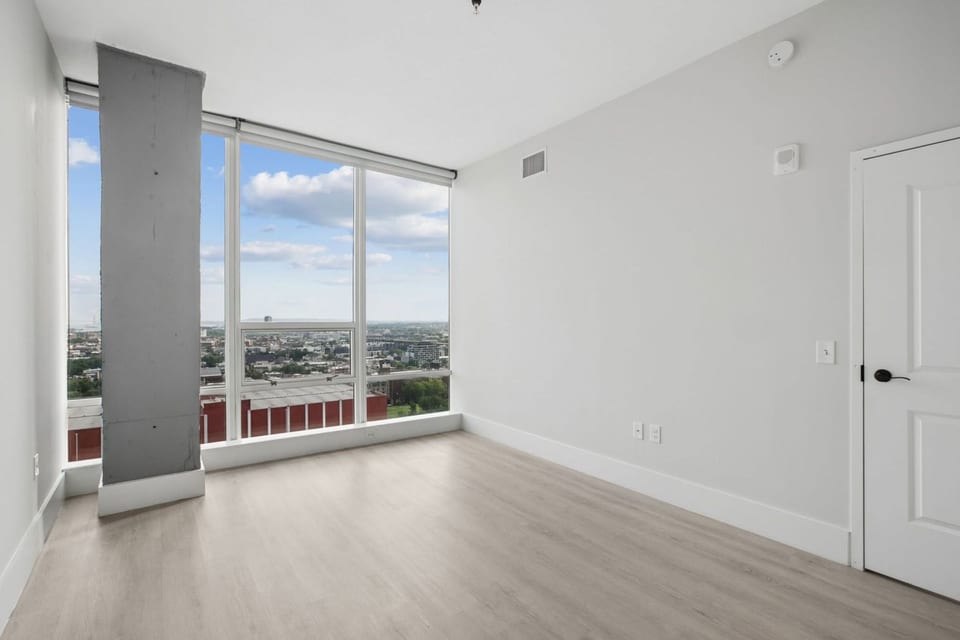
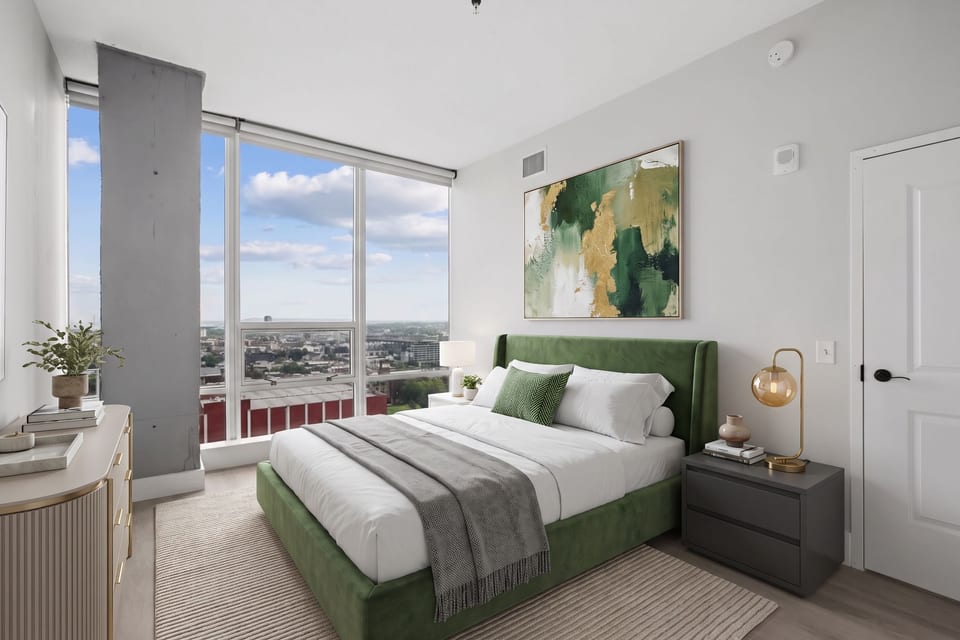
Empty rooms photograph small and hard to read, especially studios and odd-shaped bedrooms (our view). Virtual staging adds furniture to the photo, so renters see the size and the use of each room.
TINTY stages an empty room in about a minute. It stages living rooms, bedrooms, studios, home offices and terraces, but not kitchens, bathrooms or building exteriors. If the current tenant’s furniture is still in the photo, TINTY can remove it first and stage the room. Ask the tenant before you photograph their home.
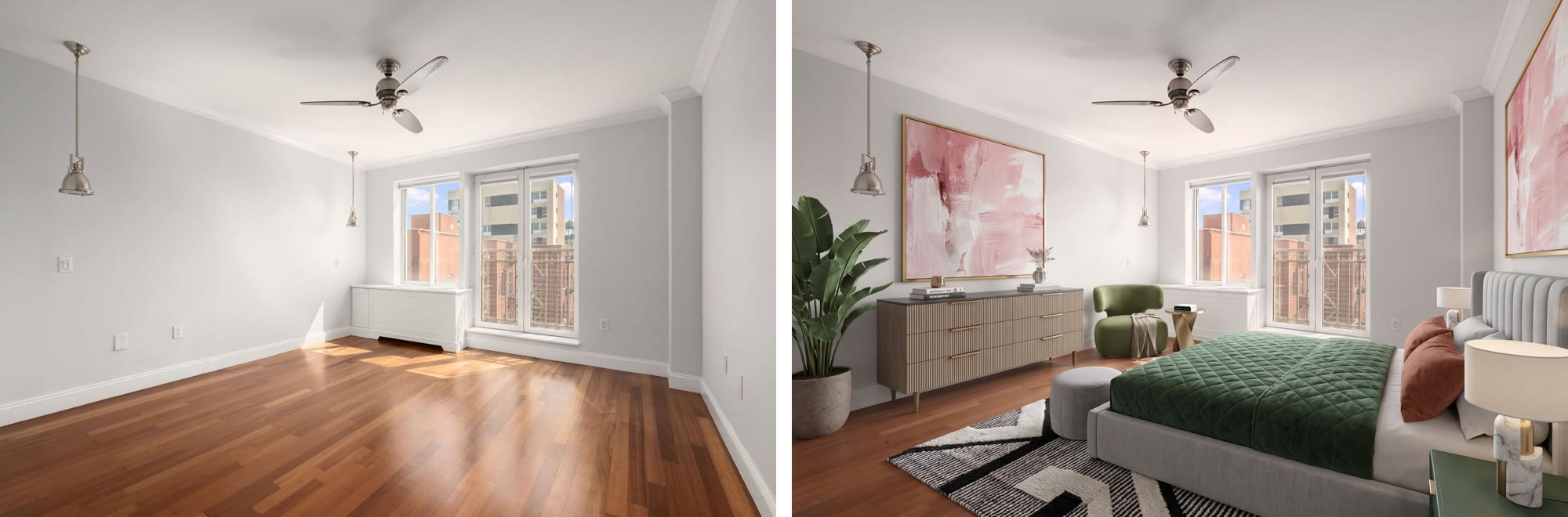
Label every staged photo and keep the original next to it. California’s AB 2025 extends the AB 723 rule to rental ads on January 1, 2027. Our guide to virtual staging for rentals covers labels, the math and what to stage.
Stage a rental photo free with TINTY. The 6 free staged photos carry a light watermark and need no card, so use them to test the look, not in your ad. Plans start at $9 a month for 10 photos on TINTY’s pricing page. These are launch prices, so they may change.
Managing many units with no time for photo work? Email the empty-room photos to hello@tinty.ai with the style and the use of each room. TINTY Studio, our done-for-you virtual staging, sends them back in 2 to 24 hours. It’s $10 a photo from 3 photos, and you pay only if you like them.
Where to advertise a rental property
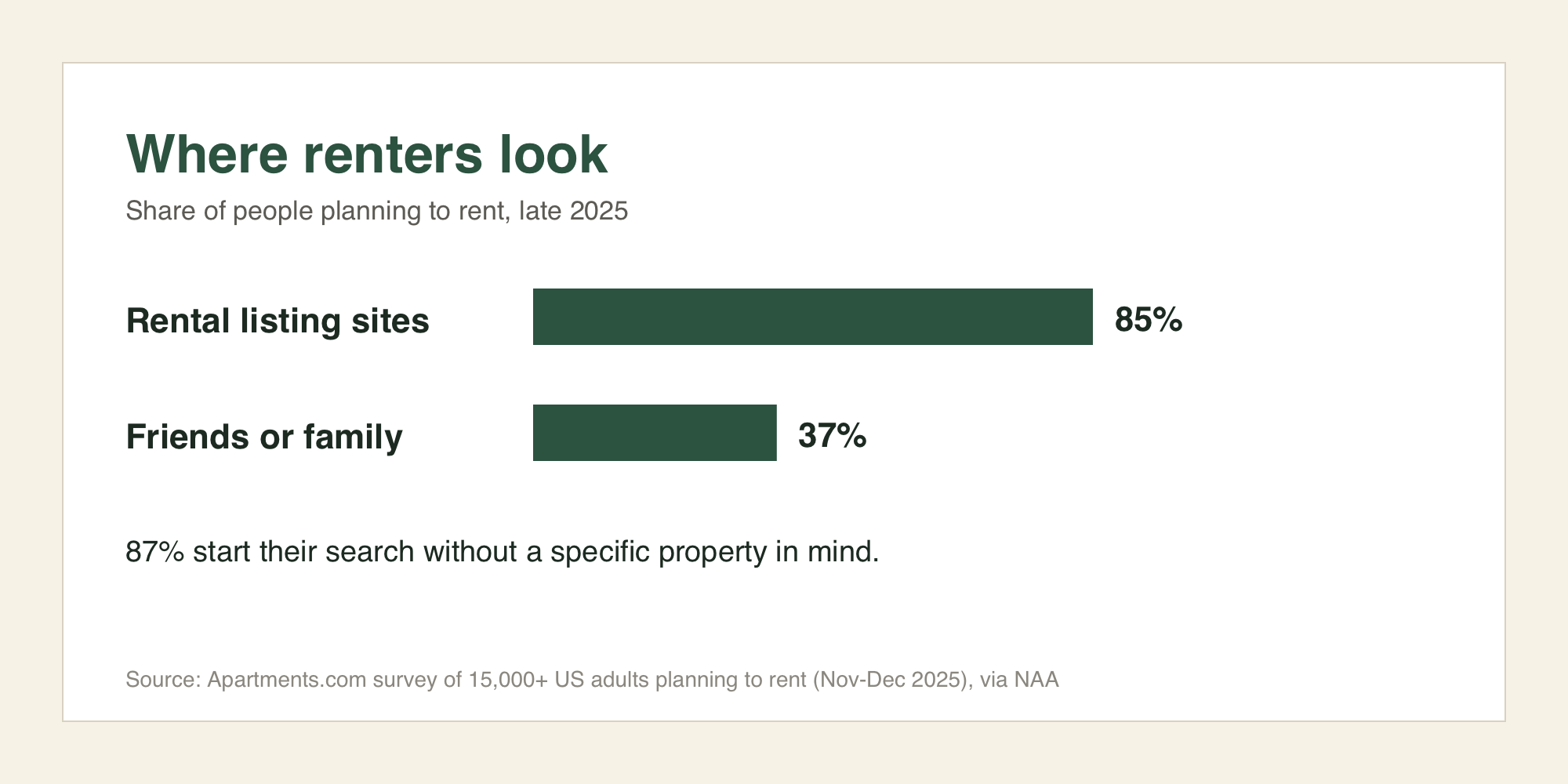
Start where renters look. In the Apartments.com survey summarized by the National Apartment Association, 85% of renters use listing sites, or plan to. Word of mouth came second at 37%, and search engines third.
The channels, in the order we’d use them:
- Rental listing sites: Zillow, Apartments.com and similar sites. Some pass one ad on to partner sites, so check where yours ends up.
- Your own page: a simple page for the property, with the photos, the price and an application link. It’s what renters find when they search the address.
- Social media and marketplaces: Facebook Marketplace and local groups reach renters who aren’t on listing sites.
- Your current tenants: ask them to tell friends, and offer a referral thank-you if your state allows it.
- A sign at the property: a “For Rent” sign with a phone number and a short link.
- Local employers, schools and relocation offices: a short email with the listing link (our tip).
Our guide to finding tenants compares these channels in more detail.
Reply fast and make showings easy
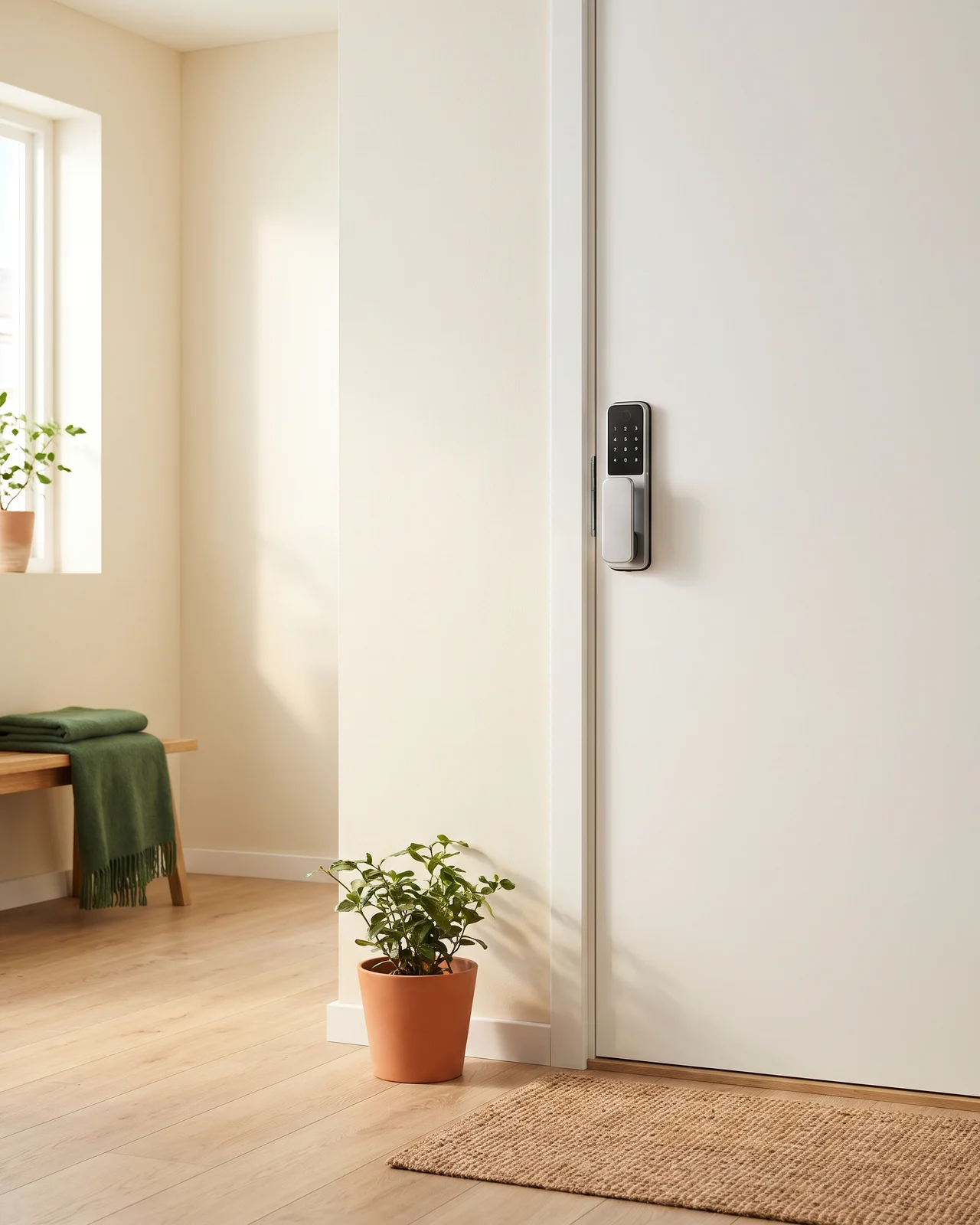
Most renters don’t have a place in mind when they start: 87% begin without a specific property, per the same survey. The average renter plans to research 10 places and seriously consider three. If you reply tomorrow, you may already be off the shortlist (our reading).
- Reply the same day, ideally within an hour, with the answer and two showing times.
- Use a short pre-screen: move-in date, number of occupants and pets, asked the same way for every renter.
- Offer easy showings: group showings at set times, a video walk-through or self-showing with a smart lock.
- Bring a sign-in sheet to group showings, so you can follow up. Our free open house sign-in sheet works for rentals too.
- Send the application link right after the showing, while the unit is fresh in their mind.
Rental property marketing ideas: 12 that cost little
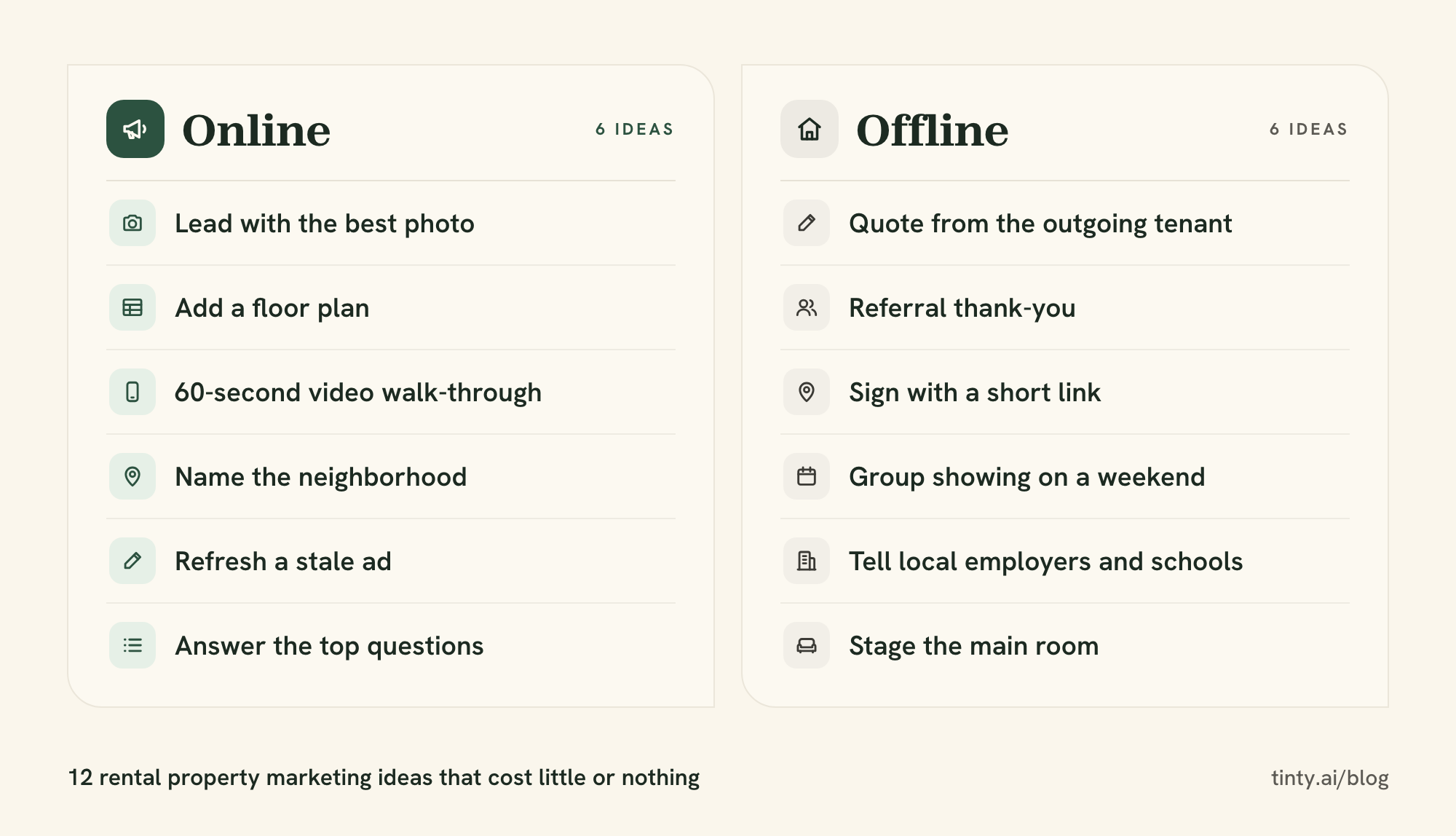
Twelve ideas that cost little or nothing (our suggestions). Start with the six online ones:
- Lead with the best photo: the living room or the view, not the front door.
- Add a floor plan: a phone app can draw one in minutes.
- Post a 60-second video walk-through on the listing and on social media.
- Name the neighborhood: the nearest park, transit stop and grocery store, with walking minutes.
- Refresh a stale ad: new lead photo and new first line after a week without inquiries.
- Answer the top questions in the ad: pets, parking, laundry and utilities.
Then the six offline ones:
- Ask the outgoing tenant for a short quote about the building.
- Offer a referral thank-you to current tenants, where your state allows it.
- Put a sign in the window or the yard with a short link.
- Hold a group showing on a weekend afternoon.
- Tell local employers and schools when a unit opens up.
- Stage the main room with real furniture, or virtually stage the photos.
Track what fills units
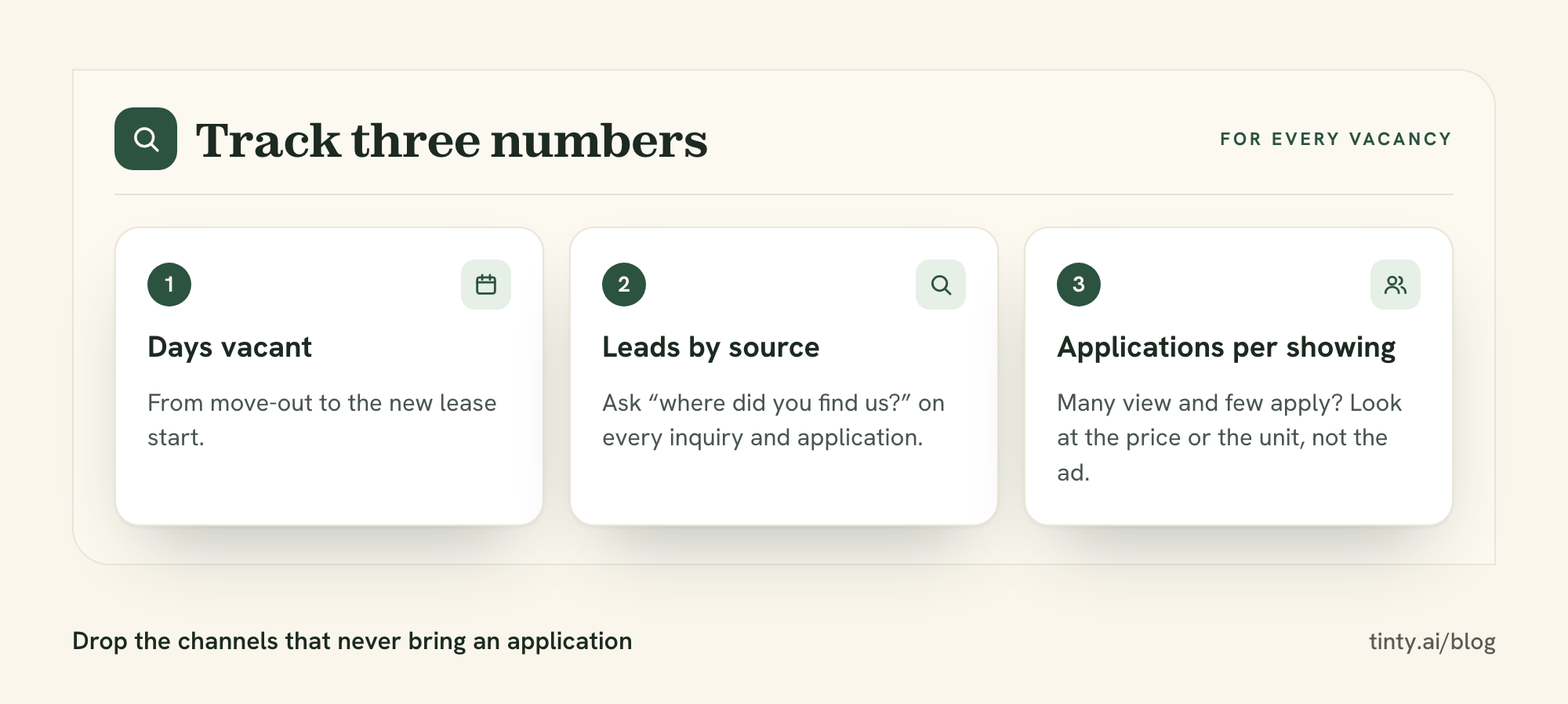
Marketing that you don’t measure turns into habit. Track three numbers for every vacancy (our advice):
- Days vacant: from move-out to the new lease start.
- Leads by source: ask “where did you find us?” on every inquiry and on the application.
- Applications per showing: if many people view and few apply, look at the price or the unit, not the ad.
After a few turnovers, drop the channels that never bring an application, and move that money to the ones that do.
Rental property marketing FAQ
What is the best way to advertise a rental property?
Post a complete ad with photos of the actual unit on rental listing sites first: 85% of renters use them, per Apartments.com’s survey. Add social media, a sign and referrals from current tenants. Reply the same day and make showings easy.
How do I market my rental property for free?
Use free listing sites and social media, ask current tenants for referrals, and put a sign at the property. Shoot good photos yourself with a phone, add a floor plan and a short video, and write a clear ad with the price and the move-in date.
When should I start marketing a rental?
When the current tenant gives notice. List the unit with the real move-in date, and check your lease and state law on showing an occupied unit. Book the turnover work for the days right after move-out.
How long does it take to rent a property?
It depends on the market and the price. Rental Beast’s metro data put the median at 19 days on market in the third quarter of 2026. A good ad and fast replies help you beat that.
Can I use virtually staged photos in a rental ad?
Yes, if you label them and keep the original photos available. California’s AB 2025 makes that a legal requirement for rental ads from January 1, 2027. Never use staging to hide the unit’s condition.
How we researched this
Vacancy and rent data come from the Census Bureau’s Housing Vacancy Survey for the third quarter of 2026. Concessions come from Zillow’s September 2026 report and days on market from Rental Beast. Renter behavior comes from the Apartments.com survey of more than 15,000 people planning to rent, as summarized by the National Apartment Association.
The daily cost of vacancy is our own math. The 12 ideas and the tracking plan are our advice, not survey results.
Sources
Show 8 sourcesHide sources
- Census Bureau: Quarterly Residential Vacancies and Homeownership, Q3 2026 (PDF) (October 28, 2026)
- Zillow September 2026 Market Report (PDF) (October 6, 2026)
- Rental Beast: Q3 2026 Rental Market Report (October 26, 2026)
- Apartments.com: How Today’s Renters Choose a Place (February 21, 2026; survey of November and December 2025)
- National Apartment Association: Renters Rely on Rental Listing Sites (May 29, 2026)
- 24 CFR §100.75: discriminatory advertisements and statements
- tinty.ai · TINTY pricing (launch pricing) · TINTY Studio
- How to find tenants · Virtual staging for rentals · Equal Housing Opportunity logo · iPhone real estate photos · Open house sign-in sheet