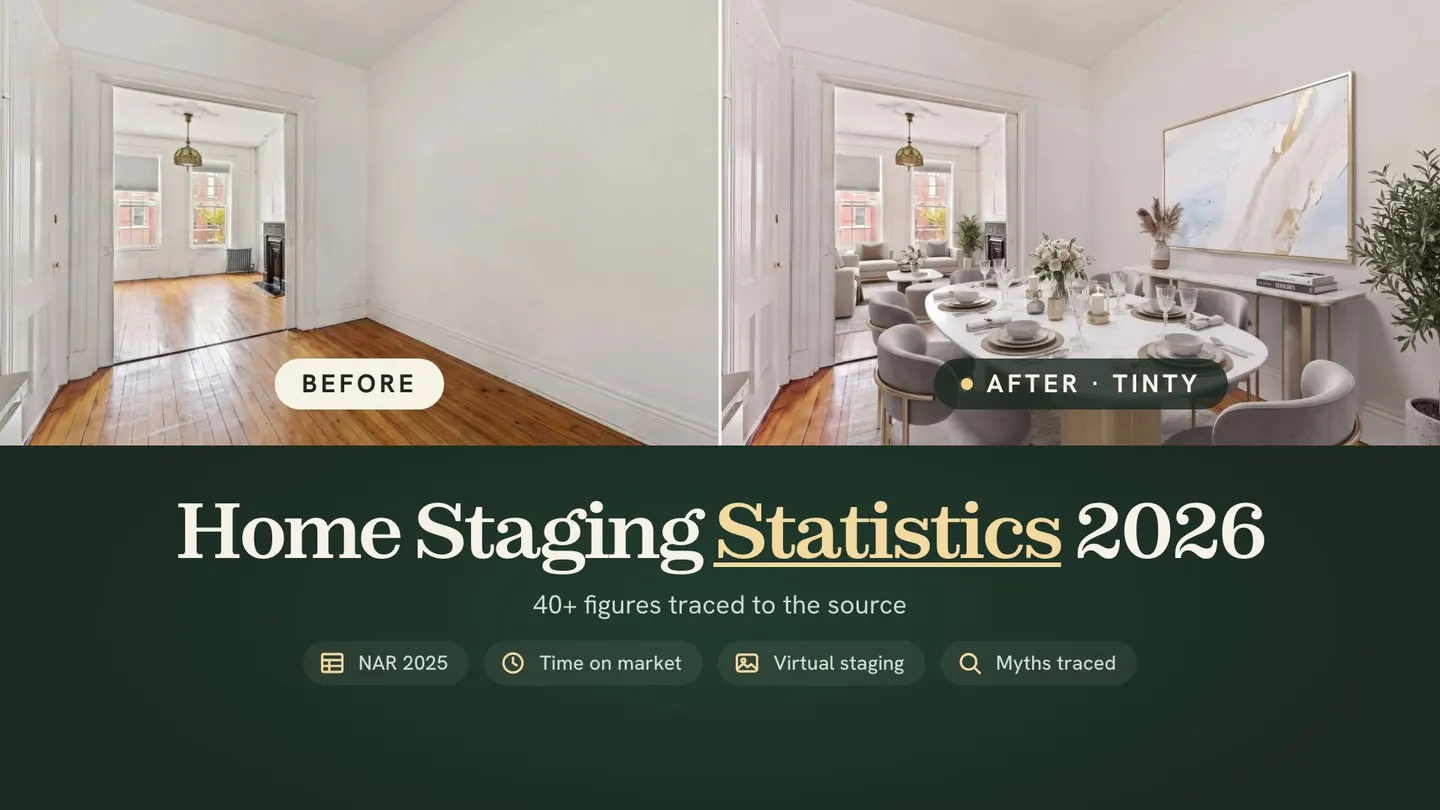
What do home staging statistics really show? In NAR’s 2025 survey, 83% of buyers’ agents said staging helps buyers picture the home, and 49% of sellers’ agents said it cut time on market. But only 29% saw a price gain of 1-10%, and nobody has measured a clean effect for virtual staging yet.
We make TINTY, an AI virtual staging app, so read our take on virtual staging with that in mind. Every number below links to the document it came from.
Sources checked November 16, 2026.
Key takeaways
- Staging helps buyers picture the home: 83% of buyers’ agents said so in NAR’s 2025 survey of 1,266 Realtors.
- Faster, but no days given: 49% of sellers’ agents said staging cut time on market. NAR publishes no number of days.
- The price effect is modest: 29% of sellers’ agents saw a 1-10% bump, 30% saw none, and 34% weren’t sure.
- Virtual staging is still a minority tool: 8% of sellers’ agents only stage virtually, and 16-18% of agents rate it important to clients.
- Some famous numbers have no source: “73% faster” and “17% more (HUD)” can’t be traced to any study.
On this page: Headline numbers · Time on market · Sale price · Rooms · Cost · Virtual staging · Photos and search · Market · Myths · FAQ
Download free, no sign-up: the full table of figures (CSV), with the source and date for every row.
The headline numbers (NAR 2025)
Most staging statistics you see online trace back to one survey. The National Association of Realtors (NAR) runs its Profile of Home Staging every two years. The latest edition came out in 2025.
Here’s how it was done:
- Who: a random sample of 49,806 Realtors was invited in February 2025.
- How many answered: 1,266 usable responses, a 2.5% response rate.
- Margin of error: plus or minus 2.75% at 95% confidence.
- What it measures: agents’ opinions, not sale records.
The four numbers people quote most:
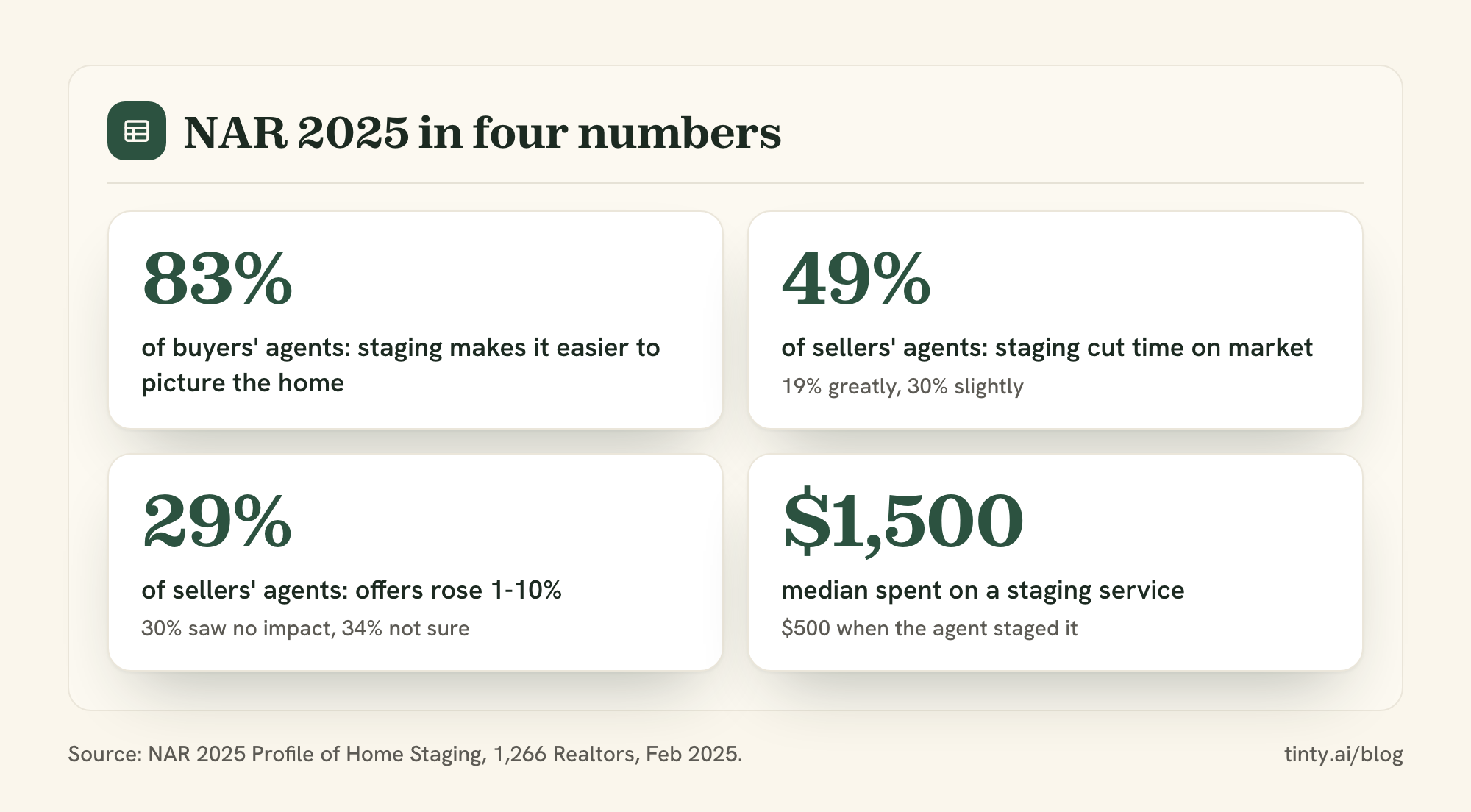
- 83% of buyers’ agents said staging made it easier for buyers to picture the home as their future home. The figure was 83% in 2019 too.
- 49% of sellers’ agents said staging decreased time on market (19% greatly, 30% slightly).
- 29% of sellers’ agents said staging raised the dollar value offered by 1% to 10%.
- $1,500 was the median spent on a staging service; agents who staged homes themselves spent $500.
How buyers react to staged homes
Buyers’ agents were split on how much staging matters. 60% said it affected some buyers, but not always. 26% said it affected most buyers, and 12% said it had no impact.
The effects they reported were practical. 32% saw a positive impact on value when the decor matched the buyer’s taste. 31% said buyers were more willing to walk through a home they’d first seen online.
Staging can also cut the other way. 20% said buyers overlooked faults more easily in a staged home, but 9% saw a negative impact when the decor went against the buyer’s taste. Neutral decor is the safer bet (our reading).
How many agents stage homes
Fewer than you might think. NAR asked sellers’ agents how they handle staging before listing, and only 21% stage every home. Another 10% stage only homes that are hard to sell, and 5% only homes in a high price bracket.
The biggest group, 51%, don’t stage but tell sellers to declutter or fix faults. 15% don’t stage at all, and 8% only stage virtually.
What do agents tell sellers to do instead? Their top advice in the 2025 survey:
- Declutter the home: 91%.
- Clean the entire home: 88%.
- Improve curb appeal: 77%.
- Get professional photos: 76%.
- Make minor repairs: 75%.
Our guide on how to get your house ready to sell turns that list into a room-by-room checklist.
What TV shows did to buyers
Home makeover shows set the bar. In NAR’s 2025 survey, 48% of agents said buyers expected homes to look like the ones on TV. 58% said buyers were disappointed by how homes looked compared to those shows.
That 58% is often quoted as “buyers are disappointed by listing photos.” The NAR question was about TV shows, not photos.
Do staged homes sell faster?
Probably somewhat, but nobody has measured how much. NAR asked sellers’ agents only about direction, not days. In the 2025 survey, 19% said staging greatly decreased time on market and 30% said it slightly decreased it.
The rest were mixed. 17% saw no impact, 13% said staging added time, and 21% didn’t know.
The Real Estate Staging Association (RESA) reports faster numbers from its members. In the third quarter of 2026, 114 homes staged by RESA members averaged 9 days to an accepted offer.
For context, the typical home sold in 35 days in October 2026, per NAR’s monthly survey of Realtors.
The one real gap: vacant homes
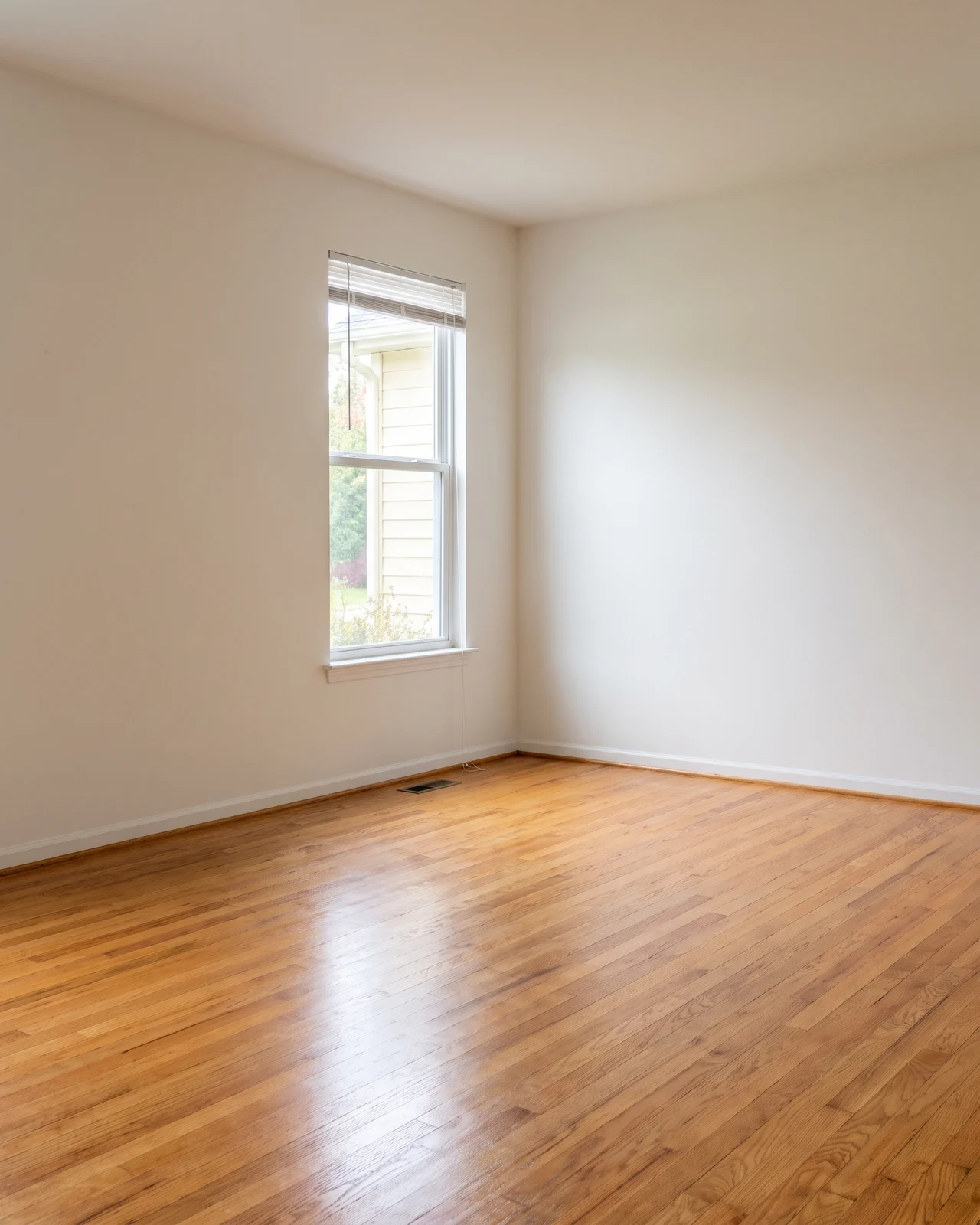
The best-measured number is about empty homes, not staging. Redfin compared homes listed and sold in 2018. Vacant homes sold for $11,306 less and spent six more days on the market than similar occupied homes.
That gap ran up to 7.2% of the price in Omaha and Greenville, South Carolina. Our guide on selling a vacant house covers what to do about it.
Does staging raise the sale price?
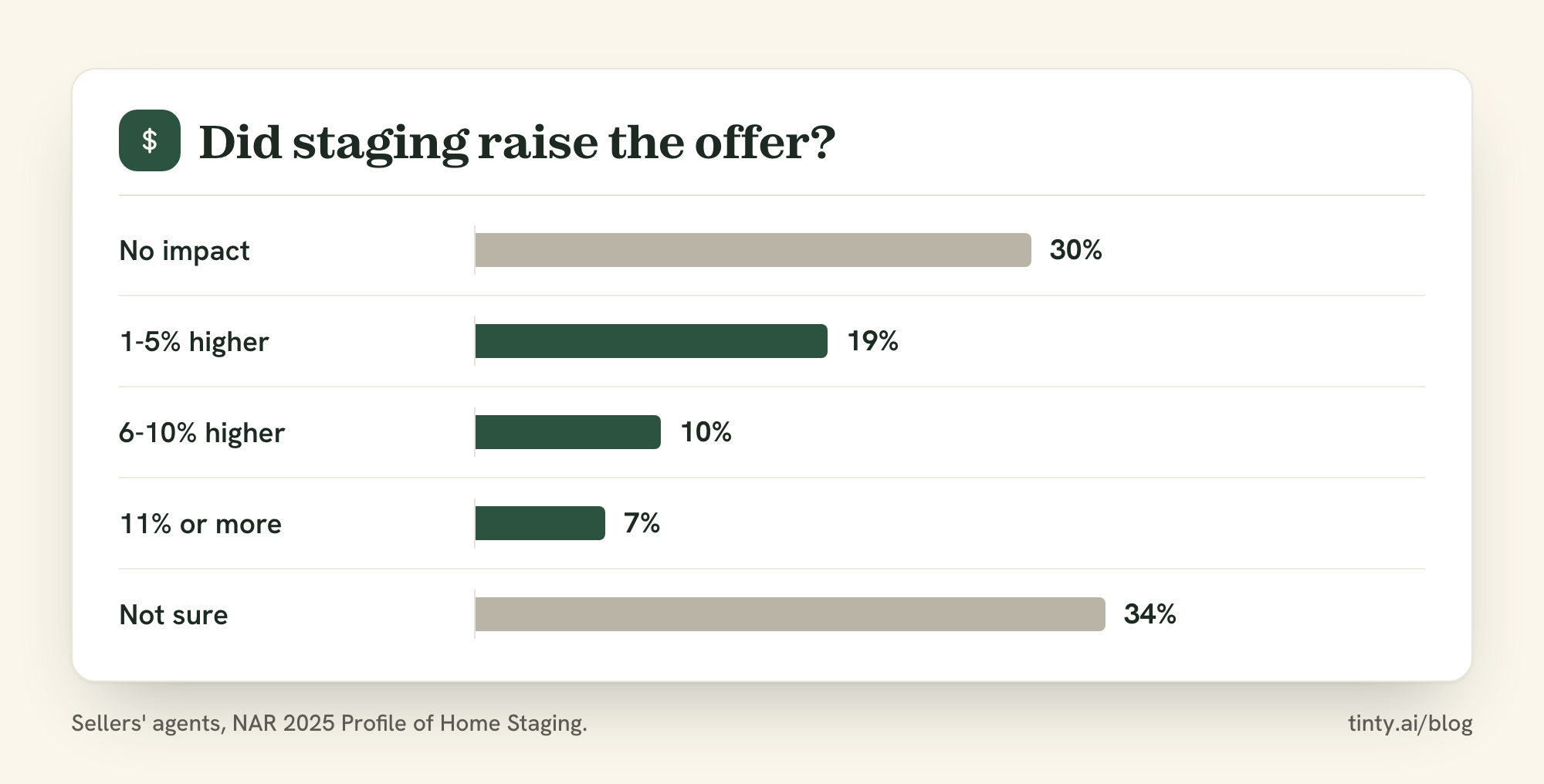
Agents say sometimes, an experiment says no. In NAR’s 2025 survey, sellers’ agents answered like this:
- No impact on the dollar value offered: 30%.
- An increase of 1-5%: 19%.
- An increase of 6-10%: 10%.
- An increase of 11% or more: 7%.
- Not sure: 34%.
Buyers’ agents were more cautious. 41% saw no impact on price, 17% saw 1-5%, and 24% weren’t sure.
What the experiment found
In 2015, researchers Lane, Seiler and Seiler showed 820 US homebuyers virtual tours of the same home. The furnishings and paint varied: good or poor furniture, neutral or “ugly” walls.
Buyers said good furniture added about $8,881. But what they’d actually pay didn’t change significantly between versions. Staging did raise how livable buyers rated the home.
Example: RESA’s members report a 113% average sale-to-list ratio in Q3 2026. That only covers 101 homes from its “sold over list” club, so it can’t tell you what staging does for a typical home.
Which rooms matter most
Agents agree on the order. Stage the living room first, then the primary bedroom.
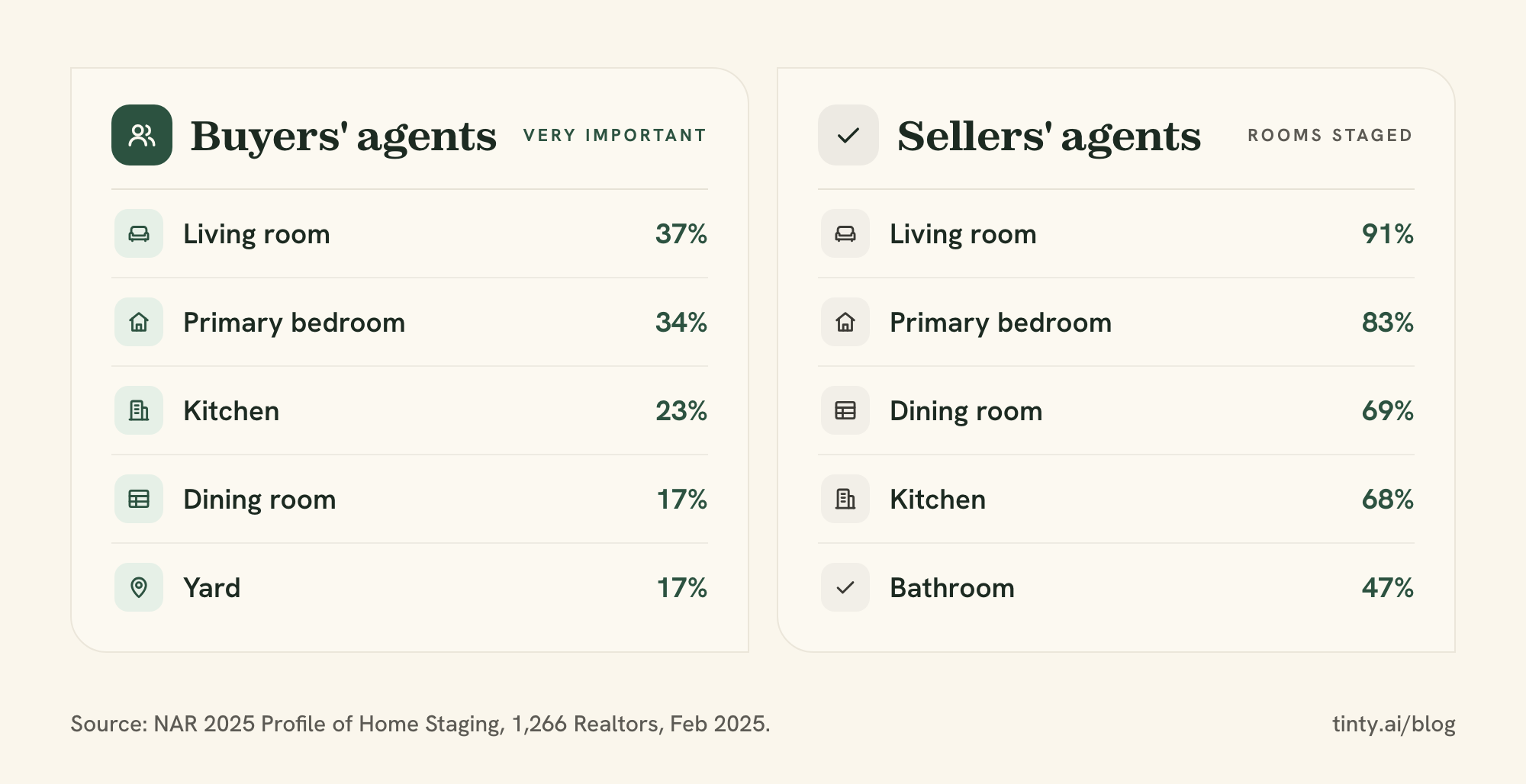
Buyers’ agents named these rooms “very important” to stage (NAR 2025):
- Living room: 37%.
- Primary bedroom: 34%.
- Kitchen: 23%.
- Dining room and yard: 17% each.
- Bathroom: 13%.
Sellers’ agents who stage reported which rooms they actually staged. The living room led at 91%, then the primary bedroom (83%), dining room (69%) and kitchen (68%). If the budget covers only two rooms, take the living room and the primary bedroom: both lists put them on top.
What staging costs and who pays
Costs vary a lot by who does the work. In NAR’s 2025 survey, the median spend on a staging service was $1,500. When the sellers’ agent staged the home personally, the median was $500.
RESA’s member homes cost more. Their average staging investment was $6,521 in Q3 2026. That’s an average of member-reported jobs, so it doesn’t compare directly with NAR’s medians.
Who pays depends on the deal. Sellers’ agents in the 2025 survey answered:
- It depends on the situation: 26%.
- The agent personally offers to stage: 23%.
- The seller pays before listing: 17%.
- The agent offers a professional service to sellers: 15%.
For a full price breakdown, see our guides on home staging cost and virtual staging cost.
Virtual staging statistics
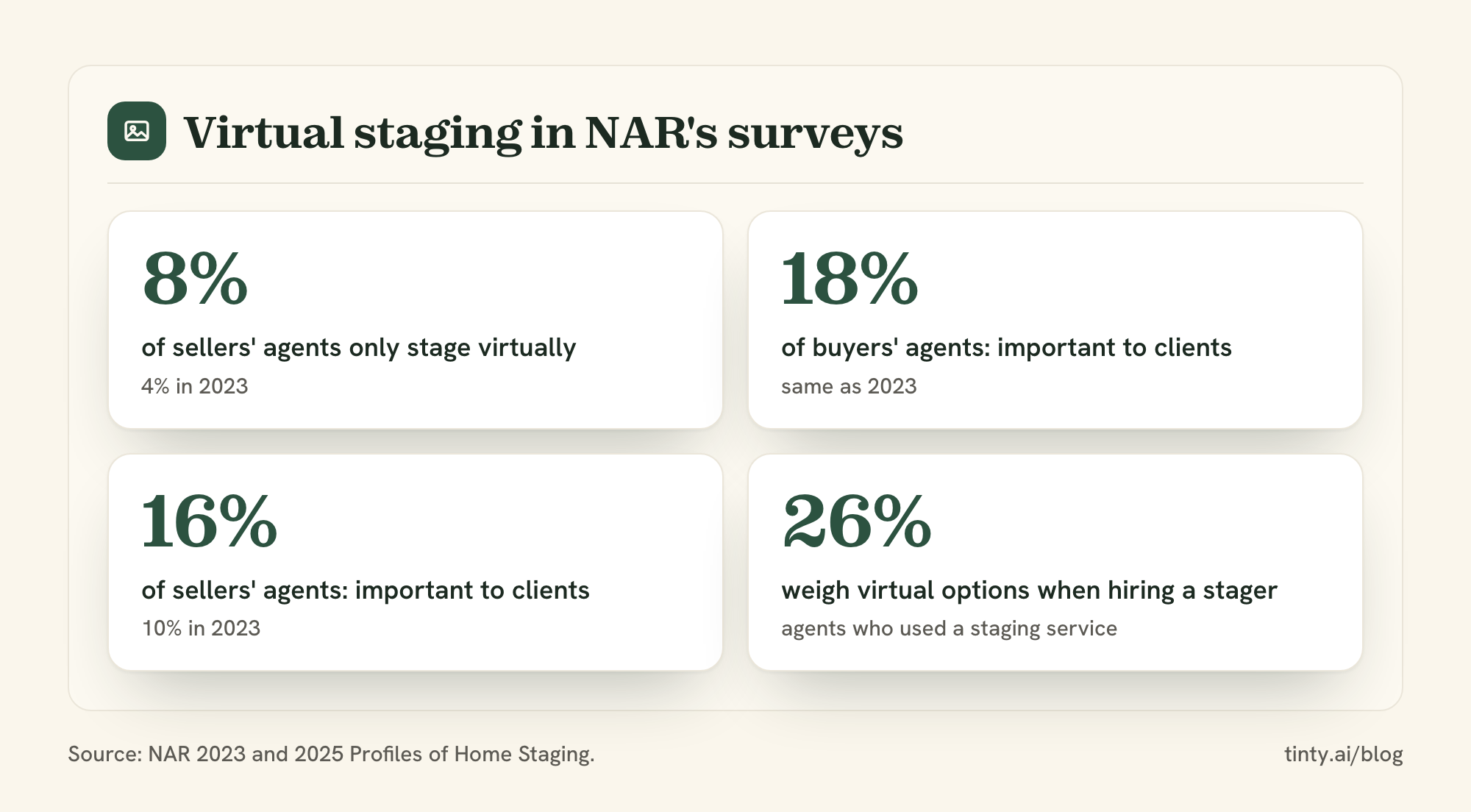
NAR began asking about virtual staging in 2023. That makes it the only survey series on virtual staging we could find. Here’s what it shows:
- 8% of sellers’ agents only stage homes virtually, up from 4% in 2023.
- 18% of buyers’ agents rated virtual staging much more or more important to clients, the same as in 2023.
- 16% of sellers’ agents said the same, up from 10% in 2023.
- 38% of buyers’ agents said virtual staging was less important to clients.
- 26% of agents who hire a stager look at virtual staging options when choosing one.
Rule: NAR has never measured virtual staging’s effect on price or days on market. Any page that quotes a number for that is guessing or borrowing a physical staging figure.
Where virtual staging fits
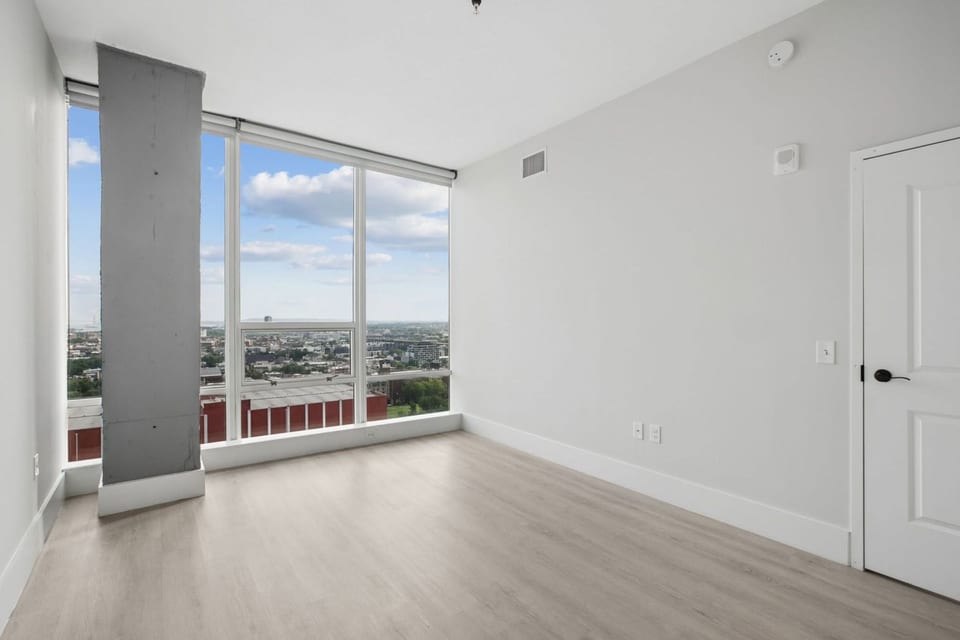
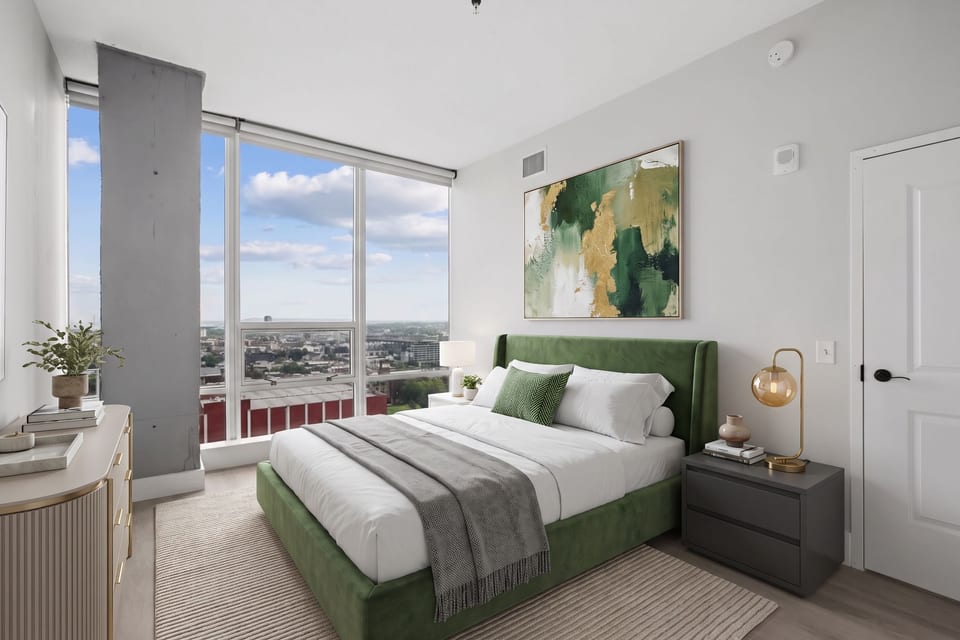
The numbers point to one clear use: empty homes. Vacant homes sell for less (Redfin), and photos are what buyers look at first (NAR). Virtual staging puts furniture into photos of empty rooms for a few dollars a photo or less, against a $1,500 median for a staging service.
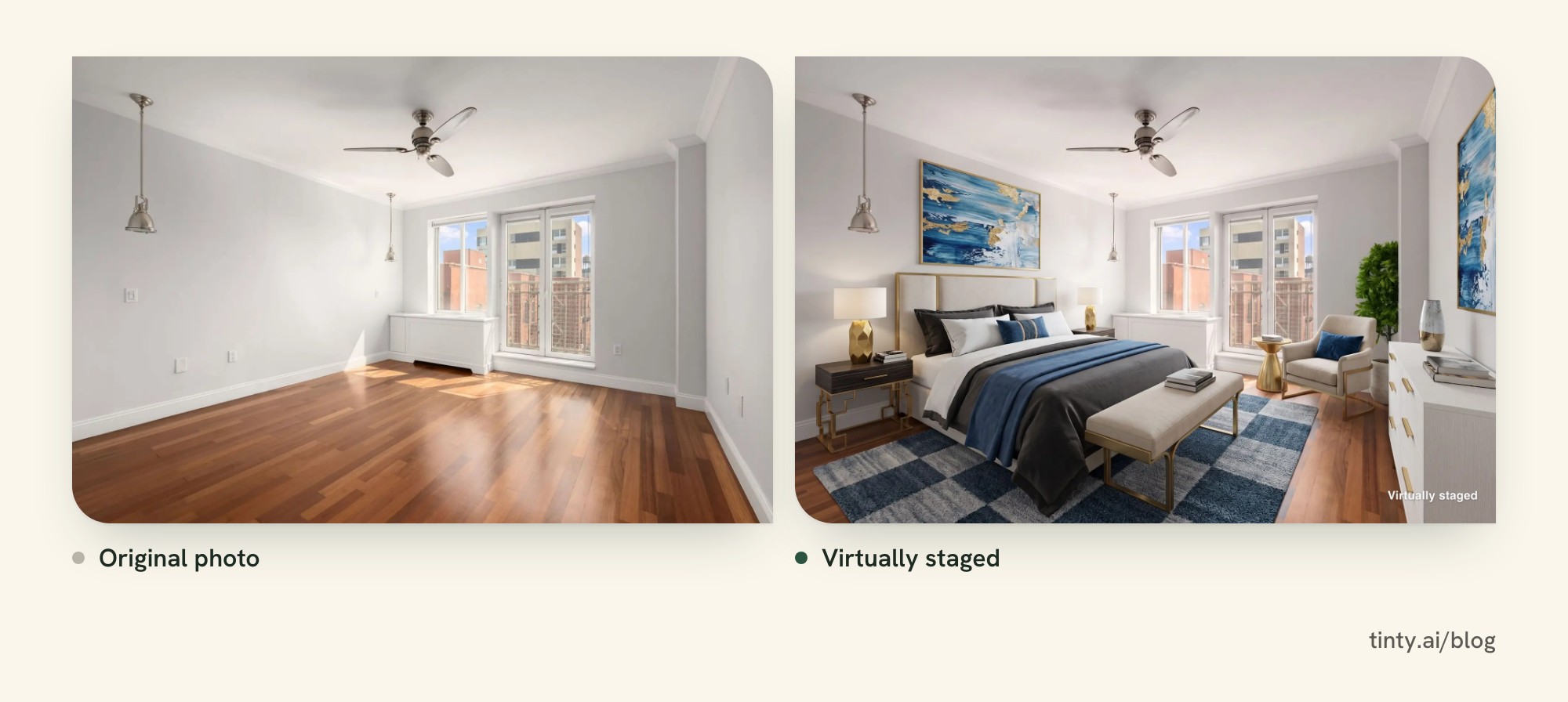
With TINTY, you upload a photo, pick the room and style, and get a staged version in about a minute. The first 6 photos are free with a light watermark. No time to do it yourself? TINTY Studio stages your photos for you.
Label virtually staged photos in your listing. Our guide on whether virtual staging is legal covers disclosure rules by state and MLS.
Listing photos and online search
Buyers judge a home by its photos long before they visit. NAR’s 2026 Home Buyers and Sellers Generational Trends report covers buyers from July 2024 to June 2025:
- 46% of buyers started by looking online for homes for sale.
- 52% found the home they bought on the internet.
- 81% of buyers who searched online called photos “very useful,” the top feature.
- 57% said the same about floor plans, 38% about virtual tours, and 29% about videos.
Agents see it too. In NAR’s 2025 staging survey, 88% of sellers’ agents said photos were more or much more important to clients. Where buyers set a target, they expected to view a median of 20 homes virtually, up from 12 in 2023.
The 2026 market behind the numbers
Staging works inside a market, and the 2026 market is slow. NAR’s October 2026 existing-home sales report showed:
- Median price: $416,700, up 0.4% from a year earlier.
- Median time on market: 35 days, up from 34 a year earlier.
- Supply: 5.1 months, up from 4.4 months.
- First-time buyers: 29% of sales.
NAR’s 2026 Profile of Home Buyers and Sellers, published November 5, 2026, adds the people behind the sales. 92% of sellers used an agent, an all-time high, and 90% of buyers did. Sellers who went for-sale-by-owner stayed at 5%.
Sellers had owned their homes for a median of 12 years, a record. Many of them are selling a home that hasn’t been updated in a decade or more (our reading). That’s exactly the case where staging and good photos help buyers look past dated rooms.
Our read: with more supply and longer days on market, presentation is how a listing stands out.
Home staging statistics to stop quoting
Some numbers appear on dozens of pages but have no document behind them. We traced the most common ones:
| Figure you’ll see | Where it really comes from | Our verdict |
|---|---|---|
| “Staged homes sell 73% faster” | No NAR or RESA publication; RESA says its data don’t isolate staging | Untraceable |
| “Staged homes sell for 17% more (HUD)” | Questioned on ActiveRain in 2007; no HUD document has ever surfaced | No source |
| “Virtually staged homes sell 6 days faster (Redfin)” | Redfin 2019: vacant homes take 6 days longer | Reversed |
| “Virtual staging costs 97% less” | One vendor’s price divided by one staging average | Vendor math |
| “16-18% of agents use virtual staging” | NAR measured importance, not use; 8% only stage virtually | Mislabeled |
| “Videos matter to 74% of buyers’ agents” | A typo in NAR’s 2023 text; the chart shows 44% | Typo |
Rule: before you quote a staging statistic, find the survey, its year and who answered. If a page can’t show you that, don’t repeat the number.
How to use these numbers
Agents use staging data mostly in listing presentations. A few honest ways to put it:
- Lead with what’s solid: “83% of buyers’ agents say staging helps buyers picture the home (NAR 2025).”
- Show the empty-home gap: Redfin’s $11,306 is real data, even though it’s from 2018.
- Don’t promise a price: say “agents report” and give the range, not “staging adds 10%.”
- Offer a cheap option: virtual staging for empty rooms, physical staging for occupied ones.
Our listing presentation templates have a slide where these numbers fit.
Home staging statistics FAQ
Do homes sell faster if they are staged?
Agents say yes more often than no. In NAR’s 2025 survey, 49% of sellers’ agents said staging cut time on market, and 13% said it added time. NAR doesn’t publish a number of days, so any “X% faster” figure comes from somewhere else.
How effective is home staging?
It mostly helps buyers picture the home. 83% of buyers’ agents said so in 2025. Its price effect is smaller: 29% of sellers’ agents saw offers rise 1-10%, and a 2015 experiment found buyers wouldn’t pay more for the same home.
Is virtual staging as effective as physical staging?
No study has compared them on price or speed. NAR shows fewer agents rate virtual staging important (16-18%) than physical staging (43-57%). It costs far less, so it fits empty homes and tight budgets.
What’s the most important room to stage?
The living room. 37% of buyers’ agents called it very important to stage, and 91% of sellers’ agents who stage include it. The primary bedroom comes second on both lists.
How much does home staging cost?
NAR’s 2025 median was $1,500 for a staging service and $500 when the agent staged it. RESA members averaged $6,521 in Q3 2026. Virtual staging runs from under $1 to about $75 a photo, per our cost guide.
Where do home staging statistics come from?
Mostly from NAR’s Profile of Home Staging (2019, 2021, 2023, 2025), RESA’s quarterly member reports, Redfin’s 2019 vacancy study and one 2015 academic experiment. Most other numbers online copy these, often with errors.
How we researched this
We read all four editions of NAR’s Profile of Home Staging page by page, along with NAR’s 2026 Generational Trends report. Then we checked each figure against the page it appears on and noted the sample size and year.
For the myths table, we followed each viral number back as far as it goes. We searched for the original study, read RESA’s methodology notes and the 2007 ActiveRain thread, and compared vendor pages that quote the same figures.
We left out anything we couldn’t open or that had no named survey behind it. Market numbers are from NAR’s releases of November 5 and November 12, 2026. RESA’s Q3 2026 figures were read on its statistics page on November 16, 2026.
Sources
Show 12 sourcesHide sources
- NAR: 2025 Profile of Home Staging (PDF) and report page (2025)
- NAR news release: home staging boosts sale prices and reduces time on market (May 6, 2025)
- NAR: 2019 Profile of Home Staging (PDF) (March 14, 2019); 2021 and 2023 editions
- RESA: Home Staging Statistics and Quarterly Market Insights (Q3 2026)
- Redfin: Do Vacant Homes Sell for Less Money? (May 20, 2019)
- Lane, Seiler and Seiler: The Impact of Staging Conditions on Residential Real Estate Demand, Journal of Housing Research 24(1) (2015)
- NAR: Home Buyer and Seller Generational Trends (2026 edition)
- NAR: Existing-Home Sales Decreased 5.5% in October (November 12, 2026)
- NAR: Top 10 Takeaways from the 2026 Profile of Home Buyers and Sellers (November 5, 2026)
- ActiveRain: “A staged home sells on average 17% higher”: show me the study (April 10, 2007)
- tinty.ai · TINTY pricing · TINTY Studio
- Home staging cost · Virtual staging cost · Selling a vacant house · Is virtual staging legal? · Listing presentation