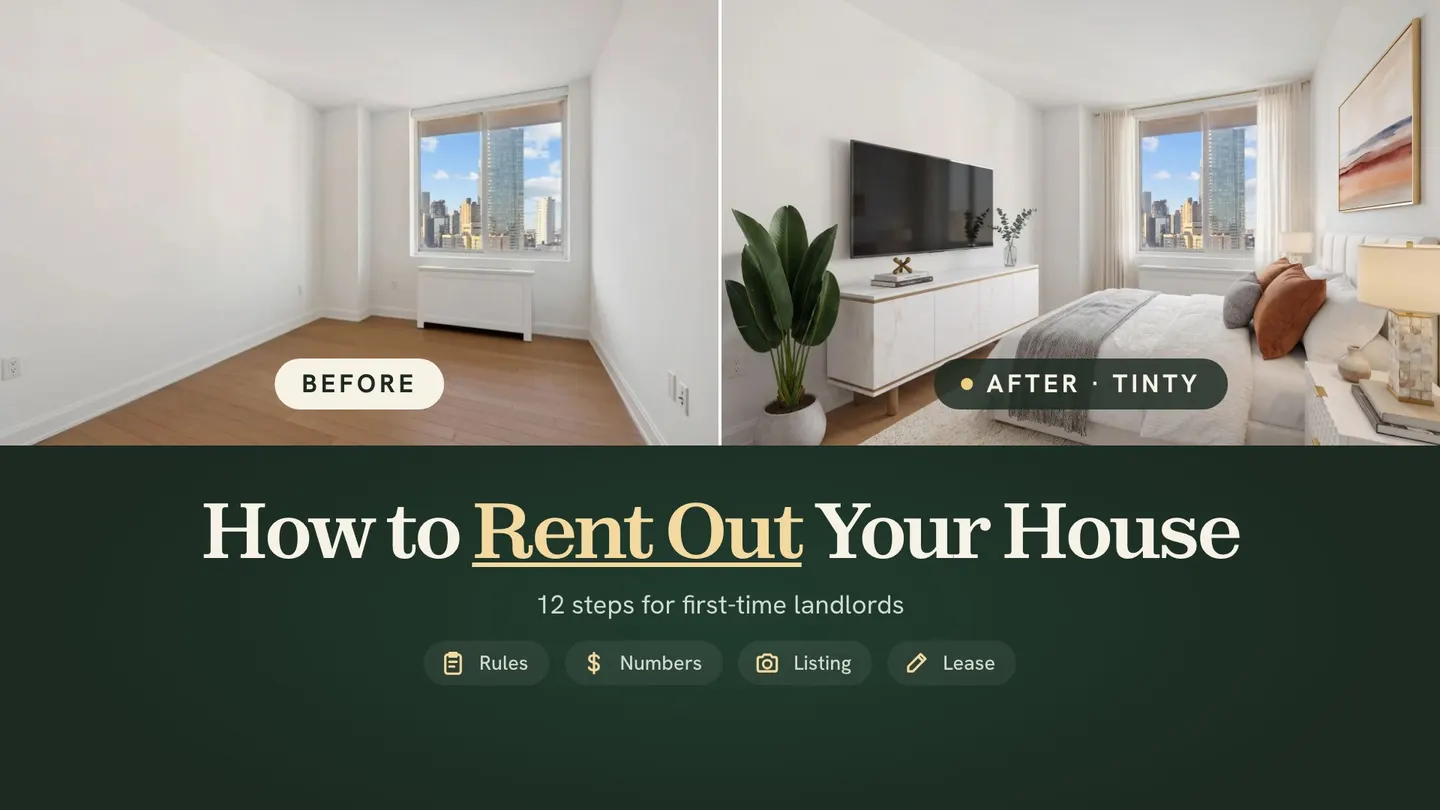
How do you rent out your house? Check your mortgage, HOA and local rules first, then switch to landlord insurance. Run the numbers and prepare the home. Set a fair rent, list it with good photos and screen every applicant the same way. Sign a written lease, document the move-in and keep records for taxes.
We make TINTY, an AI virtual staging app, so one step covers listing photos. The rules below are general information for US landlords, not legal or tax advice. Check your state and city rules.
Sources and TINTY details checked November 16, 2026.
Key takeaways
- Check before you list: your mortgage, HOA rules, city permits and insurance can all block or change a rental.
- Renters have choices: the US rental vacancy rate hit 7.6% in the third quarter of 2026, per the Census Bureau.
- An empty month is expensive: at the median asking rent of $1,541, each empty day costs about $51 (our math).
- Write it all down: your screening rules, the lease and the move-in condition protect you if anything goes wrong.
On this page: Is it worth it? · Rules · Insurance · Numbers · Taxes · Prepare · Rent · Listing · Tenants · Lease · FAQ
Should you rent out your house?
Renting can pay, but it’s a small business. It isn’t passive income. You’ll handle repairs, late rent, turnovers and taxes. Some owners love it; others sell after the first bad tenant.
Renting out tends to make sense when:
- The rent covers your costs: mortgage, taxes, insurance, repairs and empty months, with some left over.
- You’d lose money selling now: for example, if prices in your area dipped or you’d pay steep selling costs.
- You plan to come back: a job move for a year or two is a common reason to rent instead of sell.
- You have a cash cushion: a new roof or a furnace can’t wait for next month’s rent.
Renting vs selling: a quick test
Ask yourself three questions. Would the rent cover all costs with something left over? Would you net less from selling today than in two or three years? Are you ready to answer a tenant’s call about a broken water heater?
If you answer yes to all three, renting is worth a closer look. If not, compare an agent’s net sheet for a sale first. Our seller net sheet shows what you’d keep after selling costs.
Step 1: Check your mortgage, HOA and local rules
Start with the paperwork, because any of these can stop you:
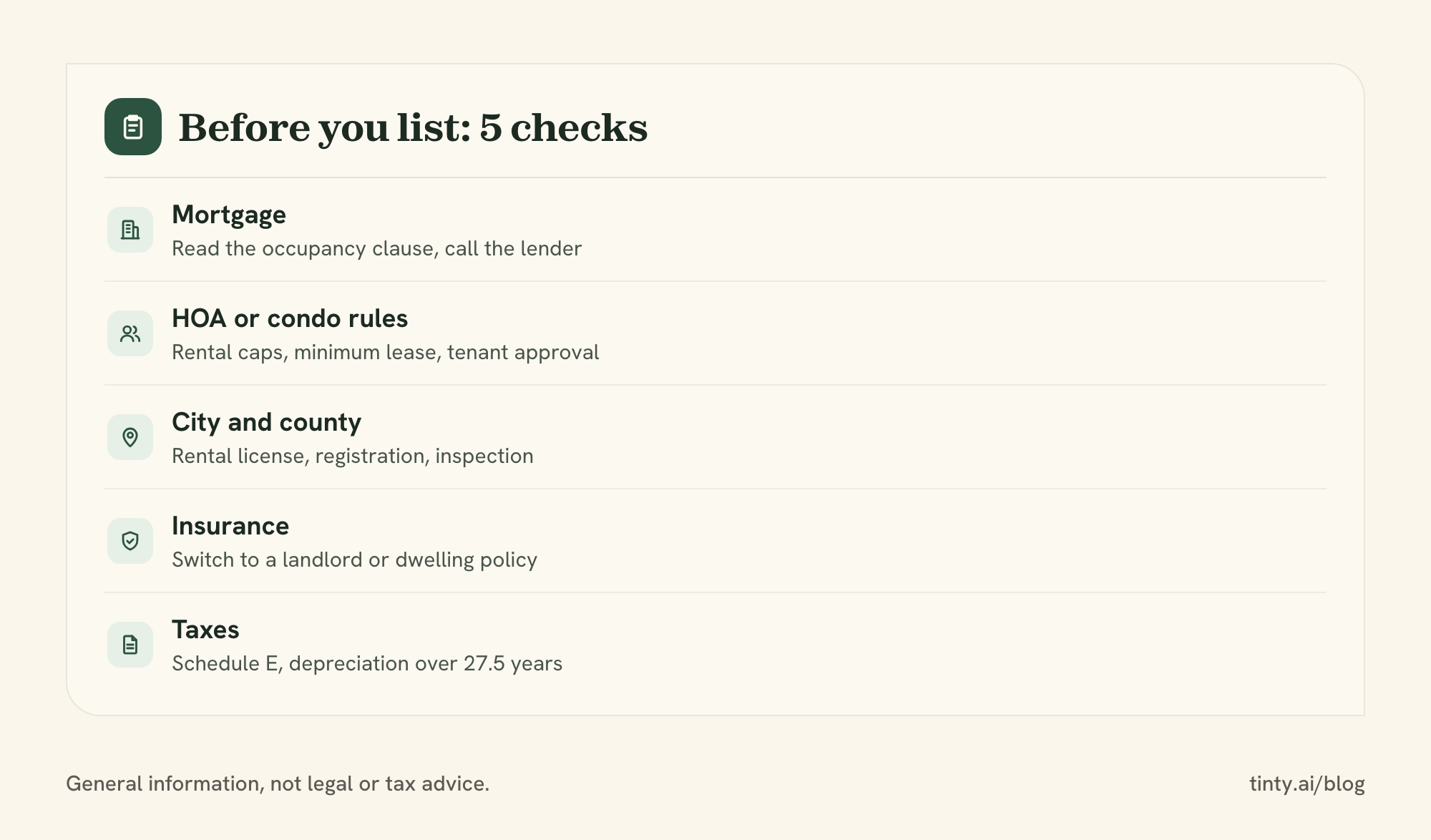
- Your mortgage. Many owner-occupied loans require you to live in the home for a set time after closing. Read the occupancy clause and call your lender before you list.
- Your HOA or condo rules. Some associations cap the number of rentals, set a minimum lease length or require approval of tenants.
- Your city and county. Some places require a rental license, a registration or a safety inspection before a tenant moves in.
- Your state’s landlord-tenant law. It sets rules on deposits, entry notice, repairs and eviction.
Step 2: Switch to landlord insurance
A standard homeowners policy is written for a home you live in. Tell your insurer you’re renting the house out and ask for a landlord or dwelling policy.
Ask the agent what the new policy covers:
- The building: damage from fire, storms and other covered events.
- Liability: injuries to tenants or guests on the property.
- Lost rent: income while the home can’t be lived in after a covered loss.
- Your belongings: only what you leave, such as appliances. Tenants need their own renters insurance.
Step 3: Run the numbers
Work out the monthly picture before you set a price. Here’s an example for a $2,000 rent (our numbers, not a market average):
- Mortgage payment (principal and interest): $1,100.
- Property tax: $250.
- Landlord insurance: $120.
- Repairs and maintenance reserve, 10% of rent: $200.
- Vacancy reserve, 5% of rent: $100.
That leaves $230 a month before income tax. A property manager would take a cut of that, so price their fee in if you plan to hire one.
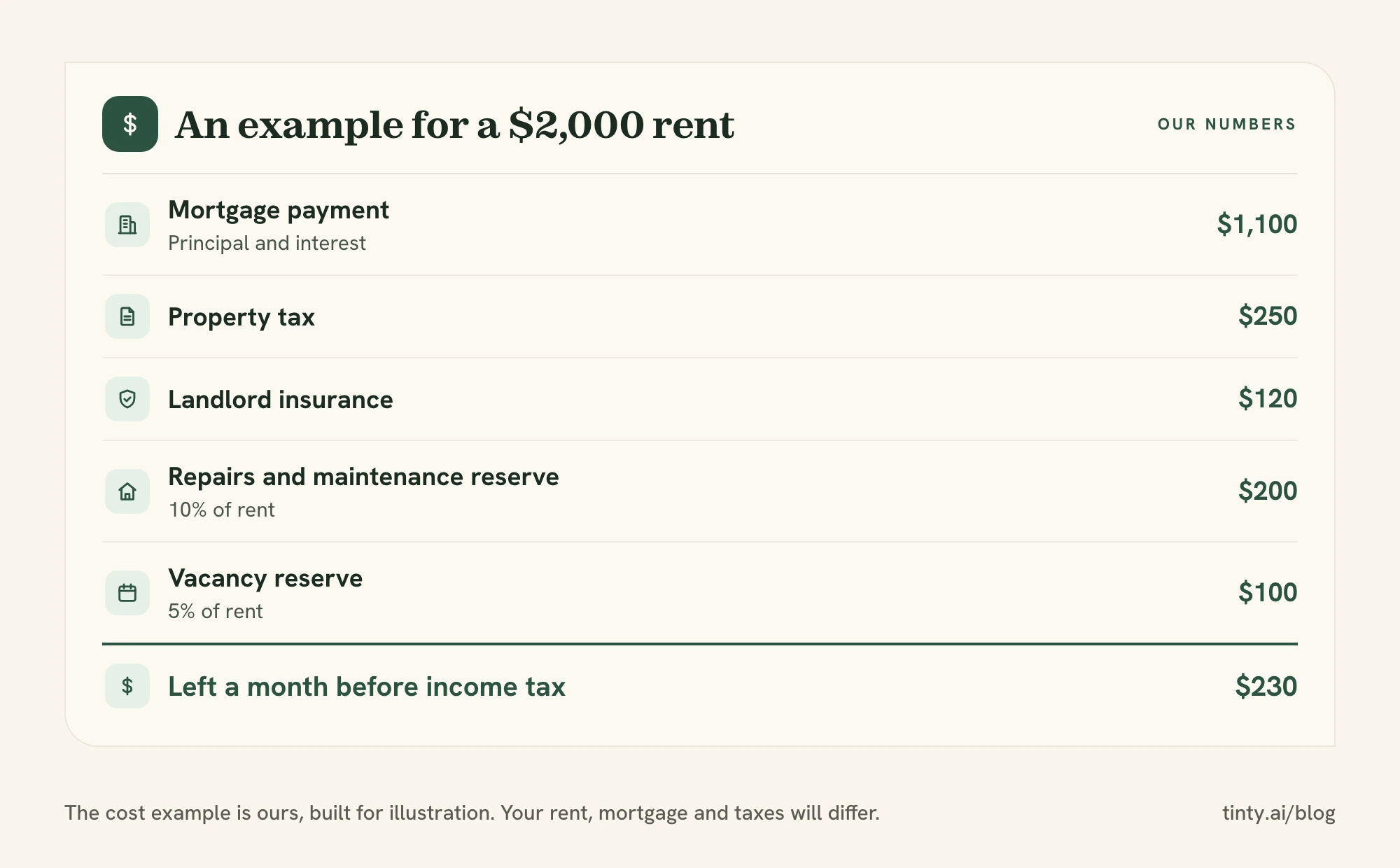
Example: one empty month wipes out the profit from more than eight good months in this example. At the Census median asking rent of $1,541, an empty day costs about $51 (our math).
The 50% rule and the 1% rule
Landlords use two rough rules to screen a deal. The 50% rule says operating costs (taxes, insurance, repairs, vacancy and management) eat about half the rent, before the mortgage.
The 1% rule says monthly rent should be at least 1% of the home’s value. A $300,000 house would need about $3,000 a month to pass (our math).
These are rules of thumb, not data. Your own costs from Step 3 beat any rule. For a home you already own, the real question is simpler: does the rent cover your actual costs with room for surprises?
Step 4: Plan for taxes
Rental income is taxable, but so are many deductions. The IRS covers it in Publication 527, Residential Rental Property. The basics:
- Where it goes: you report rental income and expenses on Schedule E of Form 1040.
- What you can deduct: mortgage interest, property tax, insurance, repairs and many other rental costs.
- Depreciation: a residential rental building is depreciated over 27.5 years under the general system.
- Your starting value: for a home you lived in, depreciation starts from the lower of two numbers. One is its fair market value on the day you convert it; the other is your adjusted basis.
Rule: keep every receipt and a log of what you spend on the rental. A tax professional can tell you how renting affects a future sale of the home.
Step 5: Get the house ready
Tenants judge the home on the first visit. Before you list:
- Fix what’s broken: leaks, doors, outlets and anything a tenant would report in week one.
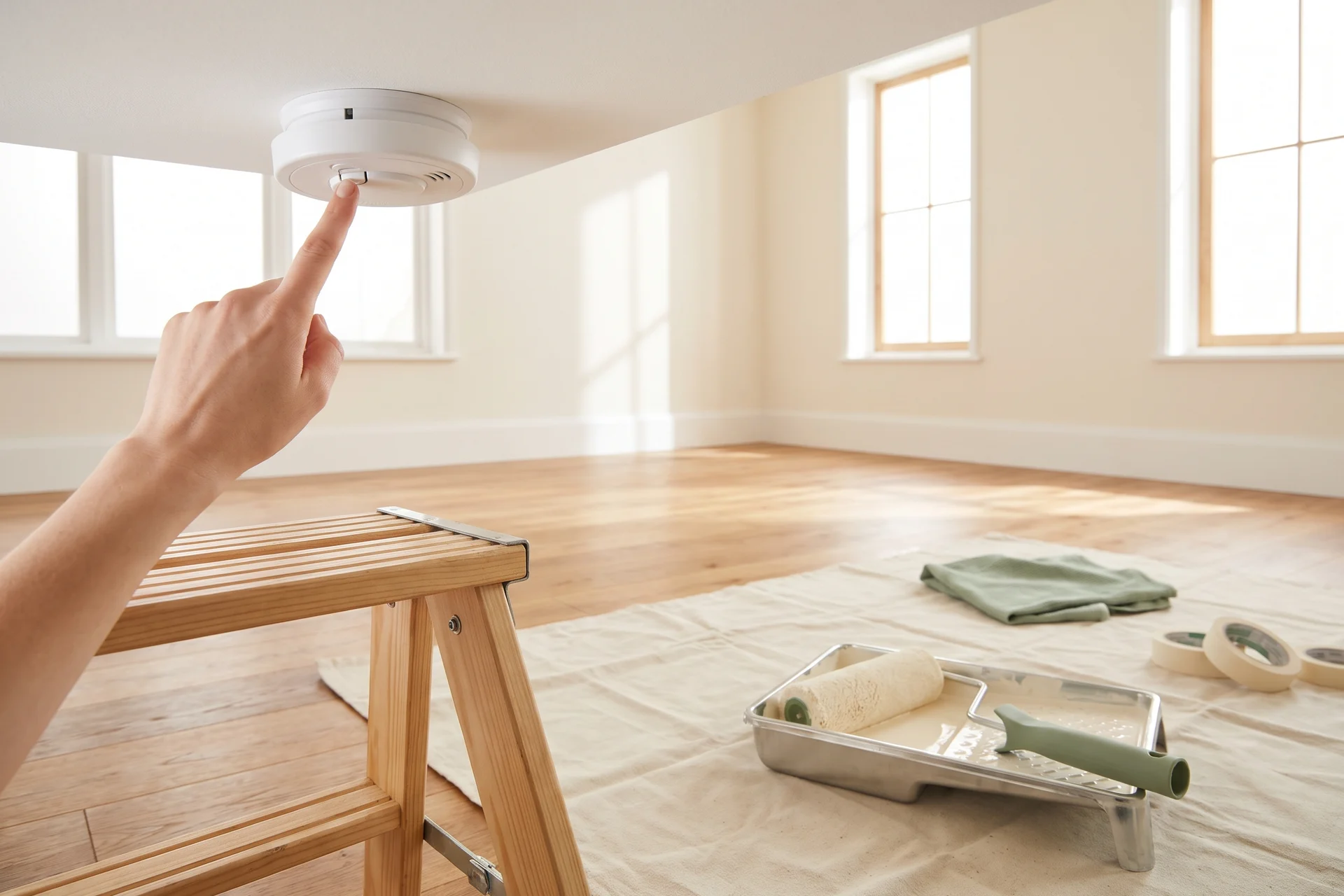
- Check safety items: smoke and carbon monoxide detectors, railings and locks. Change the locks between tenants.
- Paint and clean: neutral paint and a deep clean, including carpets and appliances.
- Clear your things: empty the closets, garage and storage, or lock off one space and say so in the lease.
- Take condition photos: date-stamped photos of every room protect you at move-out.
Is the home older than 1978? Federal rules require you to give tenants the EPA pamphlet “Protect Your Family From Lead in Your Home.” You must also disclose any known lead-based paint and put a Lead Warning Statement in the lease.
Step 6: Set the rent
Price it like a renter would compare it. Look at three or four similar rentals nearby on the big listing sites: same beds, baths, size and condition.
Then adjust:
- Up for a garage, a yard, laundry in the unit or a newly updated kitchen.
- Down for an older kitchen, no parking or a busy street.
- Check concessions: a listing at $2,100 with a free month is really about $1,925 a month over a year.
Step 7: Take photos and write the listing
Renters decide from the listing. In an Apartments.com survey of more than 15,000 people planning to rent, 99% said unit-specific information matters, such as the price, the photos and the floor plan.
Good listing photos for a rental:
- Every room, shot wide from a corner, lights on and blinds open.
- The outside, the yard and the street view.
- Kitchen and bathrooms in full, since renters look at them closely.
Our iPhone real estate photo guide shows how to shoot each room.
Empty rooms: virtual staging
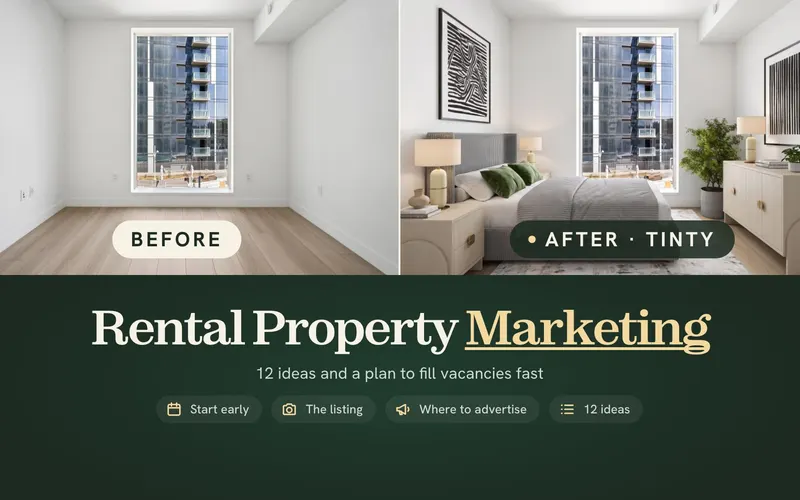
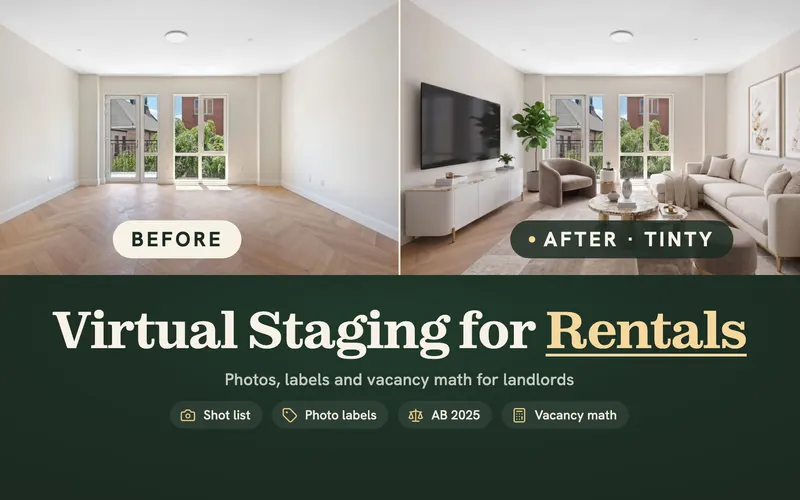
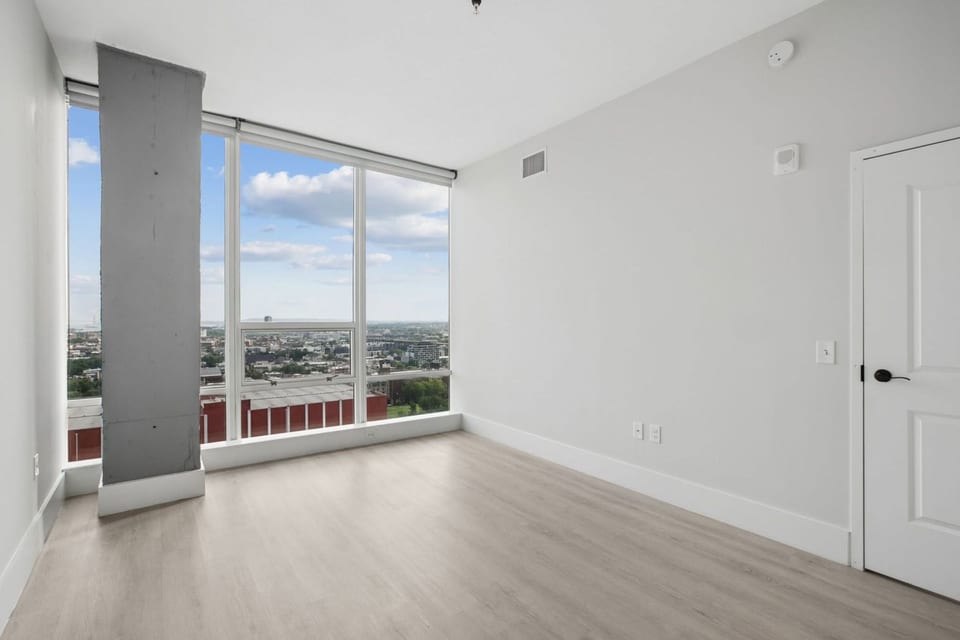
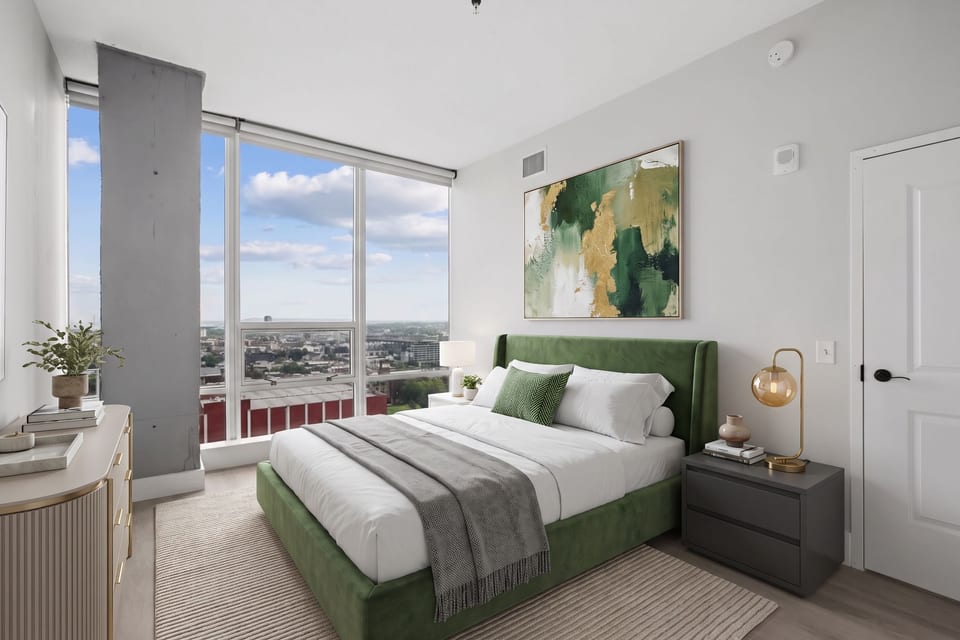
After you move out, the house is empty. Empty rooms look smaller in photos and hide how the space works. Virtual staging adds furniture to the photo so renters see the size and the use of each room.
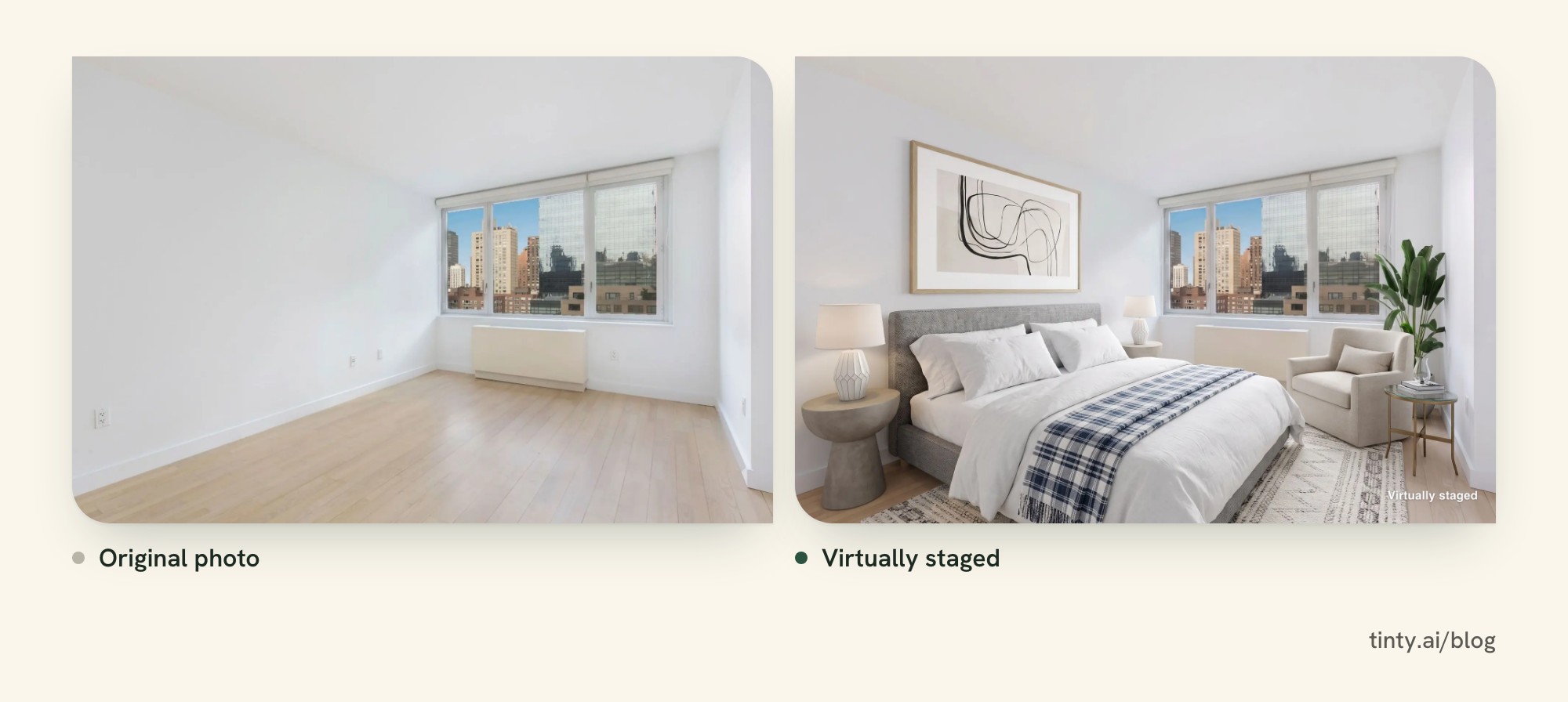
With TINTY, you upload a photo, choose the room type and style, and get a staged version in about a minute. The first 6 photos are free with a light watermark; plans start at $9 a month for 10 photos. No time? TINTY Studio stages them for you for $10 a photo, from 3 photos.
Keep at least one photo of each room as it really is, and label the staged ones. Our guide to virtual staging for rentals covers labels and the rental rules.
Step 8: Advertise, show and screen
List the home where renters look: the big rental sites, your local Facebook groups and a sign in the yard. Our guide to rental property marketing covers each channel.
Reply fast and show it often. Rental Beast put the median rental at 19 days on market in the third quarter of 2026. Same-day replies and evening showings help you beat that.
Showings that save you time
Group visits into one or two time slots a week so you aren’t driving over for each person. Ask a few questions by phone first: move-in date, number of people, pets and income. If you can’t be there, a lockbox with a timed code lets renters see it alone, but check your insurance first.
Screen every applicant the same way
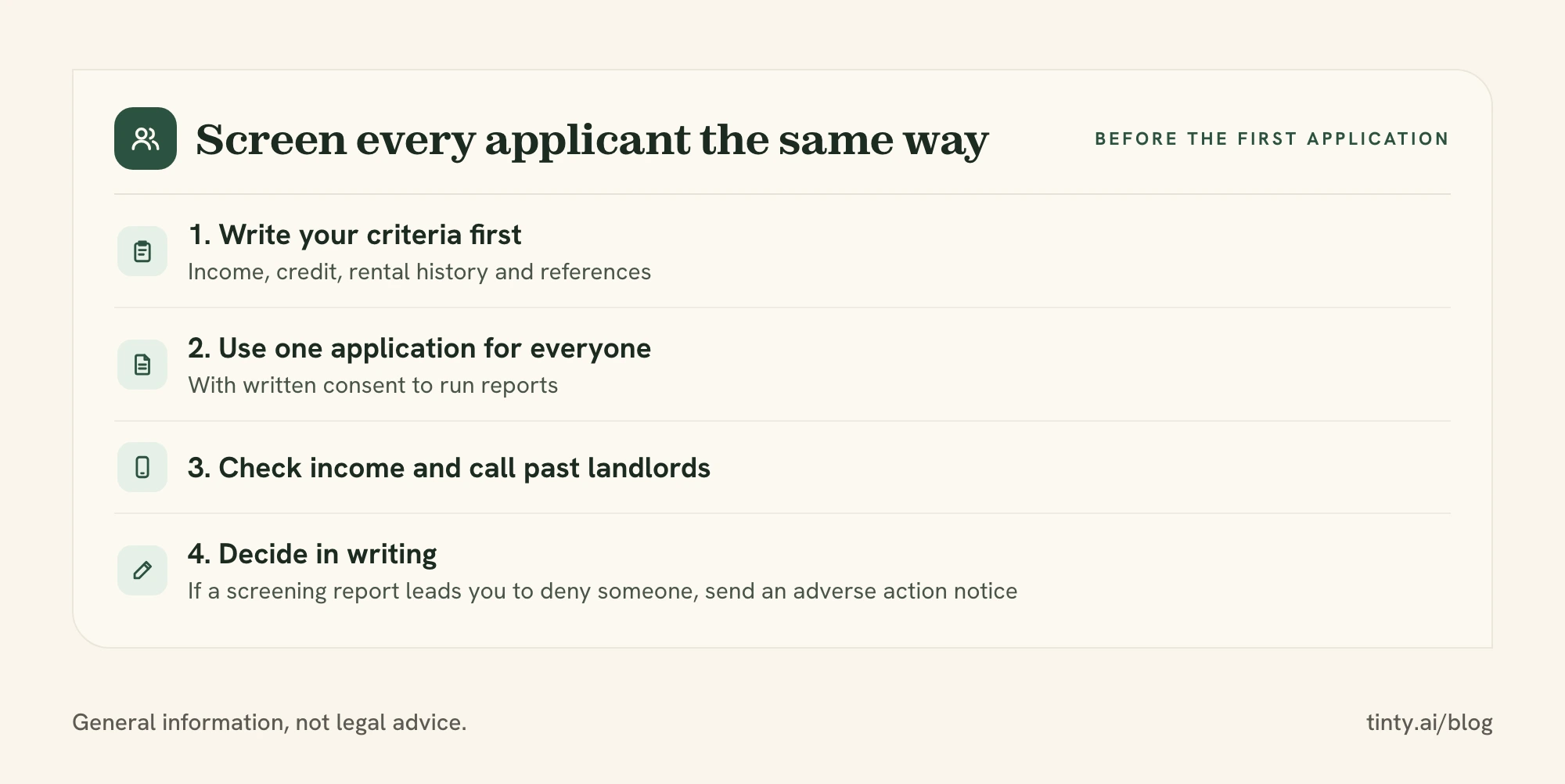
Fair screening starts before the first application comes in:
- Write your criteria first: income, credit, rental history and references.
- Use one application for everyone, with written consent to run reports.
- Check income and call past landlords.
- Decide in writing. If a screening report leads you to deny someone, send an adverse action notice.
Rule: the Fair Housing Act bans ads and decisions based on race, color, religion, sex, disability, familial status or national origin. The ad rule applies even to small landlords. Our tenant screening guide covers fees and state rules.
Step 9: Sign a written lease
Use a written lease that follows your state’s law. Many states and bar associations publish sample leases. A local attorney can review yours for a flat fee.
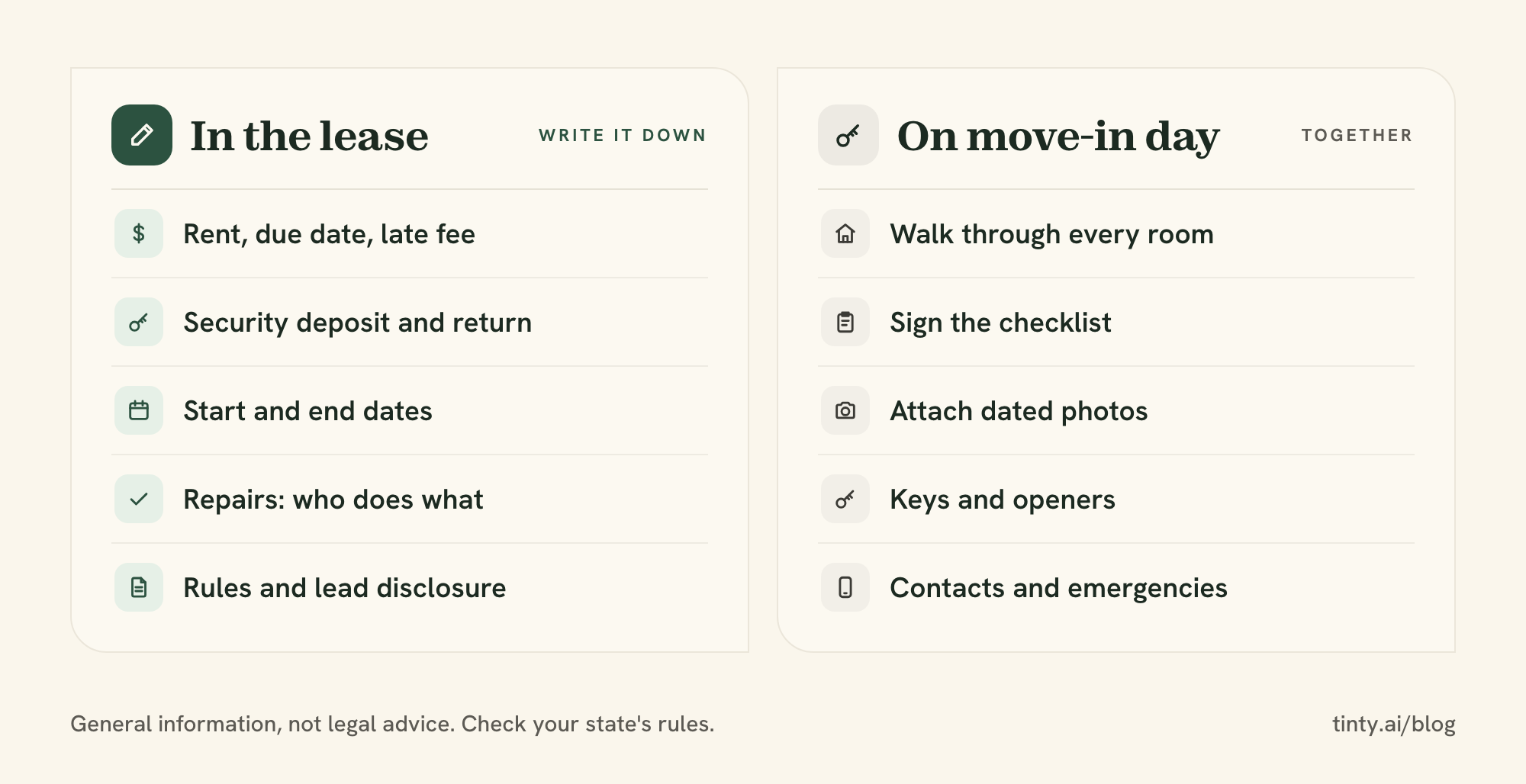
The lease should cover:
- Rent: the amount, due date, how to pay and the late fee your state allows.
- The security deposit: the amount, where it’s held and when it comes back. States cap deposits and set return deadlines.
- Term: the start date, end date and what happens after.
- Repairs: who handles what, and how to report a problem.
- Rules: pets, smoking, guests, parking and renters insurance.
- Lead disclosure: for homes built before 1978, with the Lead Warning Statement.
Step 10: Move the tenant in

Walk through the home with the tenant on move-in day. Fill in a move-in checklist room by room and attach the dated photos from Step 5. Both of you sign it.
Then hand over the keys, the garage openers and a short list of contacts: you, a plumber and what to do in an emergency.
Give the tenant a copy of the signed checklist and keep yours with the lease. At move-out, you’ll walk the home again with the same list and compare room by room. That comparison decides what comes out of the deposit.
Steps 11 and 12: Manage the rental and keep records
Once the tenant is in, the job turns into upkeep: rent, repairs and paperwork.
Step 11: Decide who manages it
You can manage the rental yourself or hire a property manager. Managing it yourself saves the fee but means you take the 2 a.m. call. A manager handles rent, repairs and turnovers for a share of the rent, plus fees for finding tenants.
Ask at least two managers for their fee list in writing. Compare the leasing fee, the monthly fee and what counts as an extra charge.
Step 12: Keep records from day one
Open a separate bank account for the rental. Keep the lease, the move-in checklist, receipts and every message with the tenant. Good records make taxes easy and protect you at move-out.
Renting out your house FAQ
Is it profitable to rent out a home?
It can be if the rent covers the mortgage, taxes, insurance, repairs and empty months with room to spare. Run your own numbers first. In our $2,000 example, the owner keeps about $230 a month before income tax.
How difficult is it to rent out your home?
The setup takes a few weeks: rules, insurance, repairs, photos and screening. After that, expect a few hours a month plus surprises like repairs. A property manager takes on most of it for a fee.
What is the 50% rule in rental property?
It’s a rule of thumb: about half of the rent goes to operating costs such as taxes, insurance, repairs, vacancy and management. The mortgage comes out of the other half. Use it to screen a deal, then check real numbers.
Can I legally rent out my house?
Usually, yes, but check three things first. Your mortgage may require you to live there for a while, your HOA may limit rentals, and your city may require a license or inspection.
How much does it cost to rent out a house?
Expect costs for repairs, cleaning, photos, landlord insurance and screening before the first rent comes in. Count at least one month of the home sitting empty, too: about $1,541 at the national median asking rent.
How long does it take to rent out a house?
Plan on about a month from deciding to signing. Setup (rules, insurance, repairs, photos) takes one to three weeks. Rental Beast’s Q3 2026 median was 19 days on market once the listing goes live.
Should I rent my house furnished or unfurnished?
Furnished rentals suit short stays and corporate tenants. For a standard 12-month lease, unfurnished is simpler, since furniture wears out and you pay to replace it (our view). If the house is empty, virtual staging shows renters how the rooms could look without you buying furniture.
How we researched this
We read IRS Publication 527 for the tax rules and the EPA’s lead disclosure page for homes built before 1978. Fair housing and screening rules come from the federal statute and our earlier research for the tenant screening guide.
Market numbers are from the Census Bureau’s Q3 2026 vacancy report, Zillow’s September 2026 market report, Rental Beast’s Q3 2026 report and the Apartments.com renter survey. We checked the top Google results for “how to rent out your house” on November 16, 2026, to see what renters and owners ask.
The cost example is ours, built for illustration. Your rent, mortgage and taxes will differ.
Sources
Show 9 sourcesHide sources
- IRS: Publication 527, Residential Rental Property (2025 returns)
- EPA: Lead-Based Paint Disclosure Rule (real estate disclosure)
- Census Bureau: Quarterly Residential Vacancies and Homeownership, Q3 2026 and press release (PDF) (October 28, 2026)
- Zillow September 2026 Market Report (PDF) (October 6, 2026)
- Rental Beast: Q3 2026 Rental Market Report (October 26, 2026)
- Apartments.com: How Today’s Renters Choose a Place (February 21, 2026)
- 42 U.S.C. § 3604: discrimination in the sale or rental of housing
- tinty.ai · TINTY pricing · TINTY Studio
- How to find tenants · Rental property marketing · Virtual staging for rentals · iPhone real estate photos