What are objection handling scripts in real estate? They’re short, planned answers to the doubts agents hear most, such as “another agent said more” or “can you cut your fee?” Good ones listen first, answer with facts and end with a clear next step. They never promise a price, and they follow commission and Do Not Call rules.
We make TINTY, an AI virtual staging app, so one section covers empty houses. Every script below is an example we wrote and haven’t tested, and each “Why it comes up” line is our view unless sourced. Notes on rules are general information, not legal advice.
Key takeaways
- One method: listen, acknowledge, ask one question, answer with facts, check, then agree on a next step.
- No promises: never promise a price or a sale. The National Association of Realtors (NAR) Code bars deliberately misleading owners about market value.
- Fees are negotiable: say so plainly. Since August 17, 2024, agents in multiple listing services (MLSs) covered by NAR’s settlement need a written buyer agreement before a tour.
- Empty house: show the staging options honestly, including a free virtual preview of an empty living room.
- Lead calls: check Do Not Call lists, text only with consent and stop when asked.
On this page: Method · Rules · Sellers · Commission · Empty house · Buyers · Lead calls · Practice · FAQ
How to handle any objection: a 6-step method
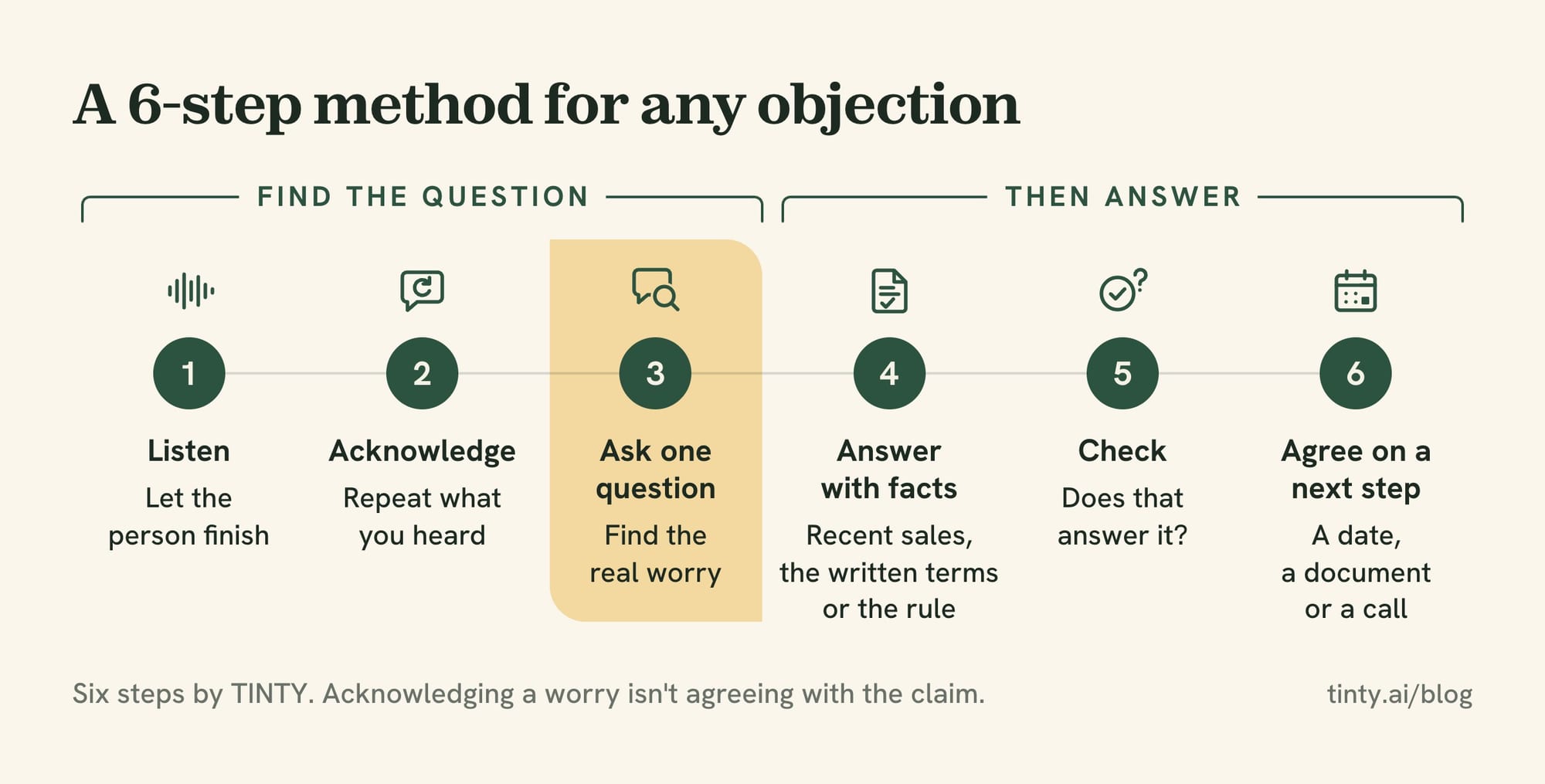
Most objections hide a question, so find the question before you answer (our view). Tom Ferry’s guide uses three steps: acknowledge the worry, ask a question to clarify it, then steer toward a next step.
We split it into six steps:
- Listen: let the person finish without planning your reply.
- Acknowledge: repeat what you heard, such as “So the price feels low to you.”
- Ask one question: find the real worry. “Low compared to what?” often does it.
- Answer with facts: use recent sales, the written terms or the rule. If you don’t know, find out.
- Check: ask “Does that answer it?” before you move on.
- Agree on a next step: a date, a document or a call. If it’s still no, accept it.
Acknowledging a worry isn’t agreeing with the claim. Most objections fall into a few types. Here’s what each often means and a first question to ask (our view):
| Type | Example | What it often means | First question |
|---|---|---|---|
| Price | “Another agent said more” | Fear of leaving money behind | “Which sales did they use?” |
| Timing | “We want to wait” | Unsure about the market or the move | “What would make the timing right?” |
| Fee | “Can you cut your commission?” | Unclear what the fee pays for | “Which services matter most to you?” |
| Trust | “We’re talking to other agents” | Not sure you’re the right fit | “Which three things will decide it?” |
| Information | “Just send me something” | Not ready to talk yet | “What would be useful to see?” |
Rules every objection answer must follow
Check every script against these points from NAR’s 2026 Code of Ethics:
- No price promises: Realtors trying to win a listing “shall not deliberately mislead the owner as to market value” (Standard of Practice 1-3). Article 2 bars exaggeration and misrepresentation.
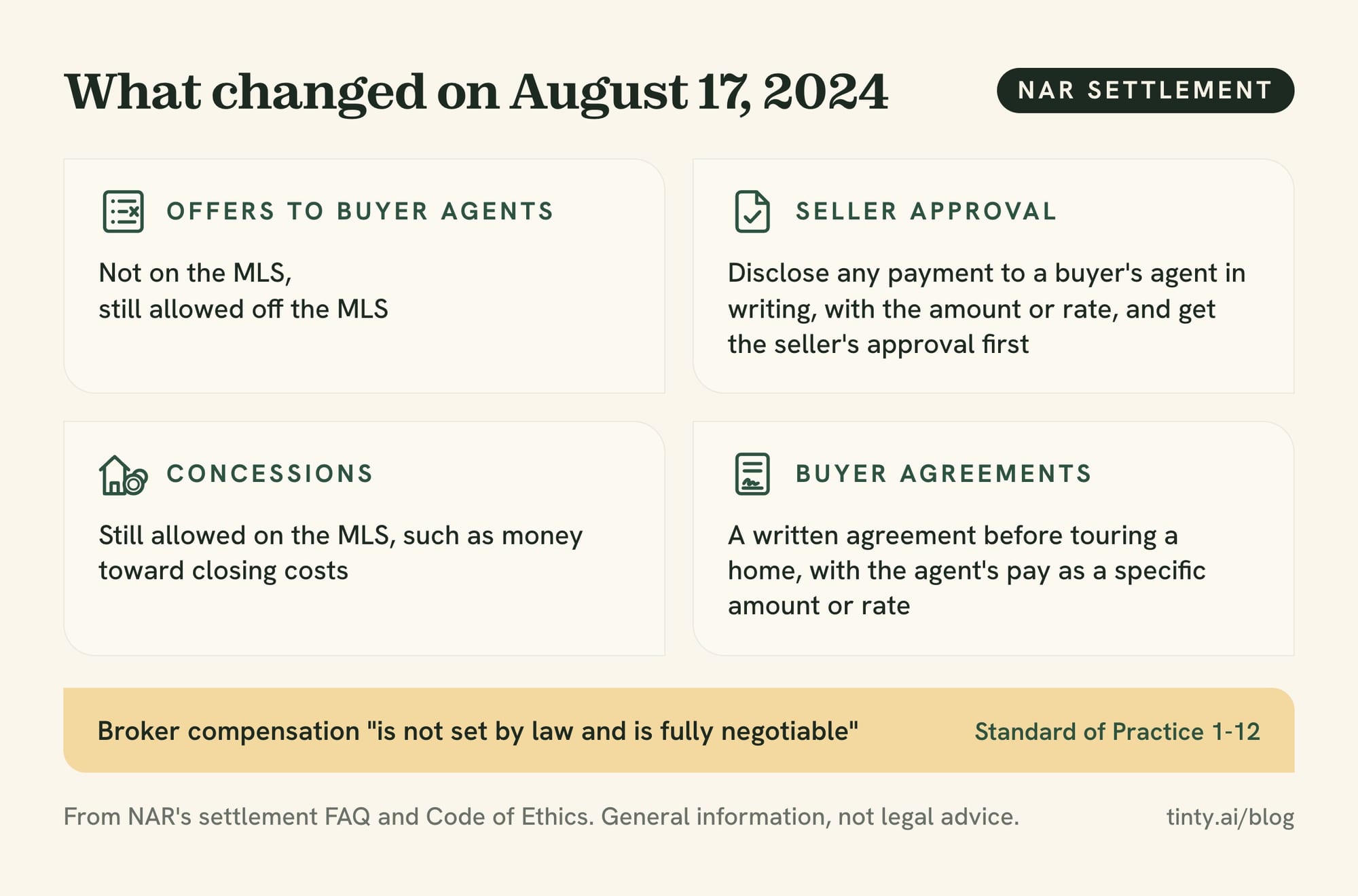
- Negotiable fees: when taking a listing, Realtors must tell sellers that broker compensation “is not set by law and is fully negotiable” (Standard of Practice 1-12).
- No savings promises to buyers: Standard of Practice 1-4 bars misleading buyers about savings from your services.
- Fair to other agents: Article 15 bars false or misleading statements about other real estate professionals.
- Say who you are: Article 12 requires honest communications that make clear they come from a real estate professional.
Listing appointment objections: 6 seller answers
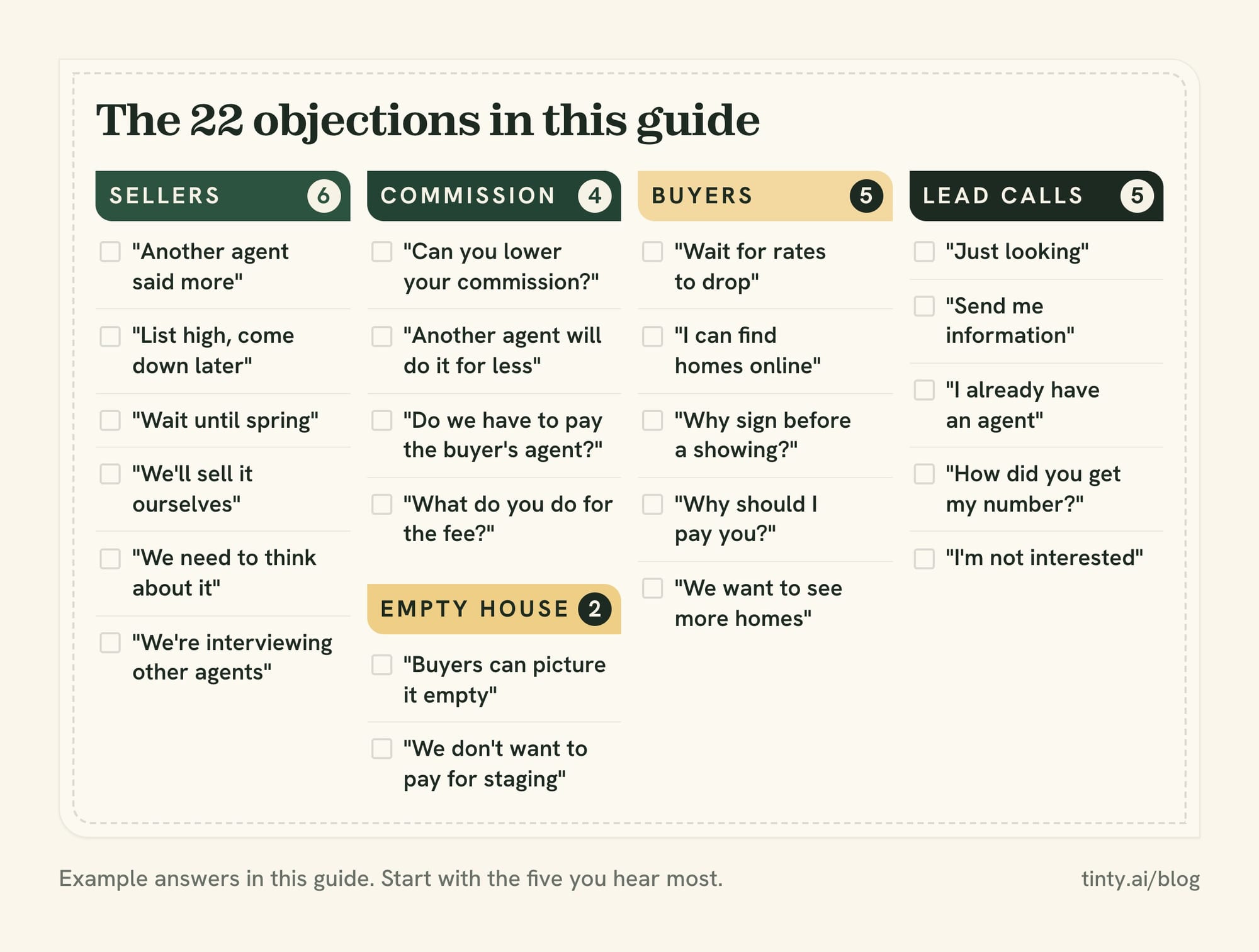
Seller objections at a listing appointment are mostly about price, timing and trust. Our free listing presentation templates cover the meeting itself.
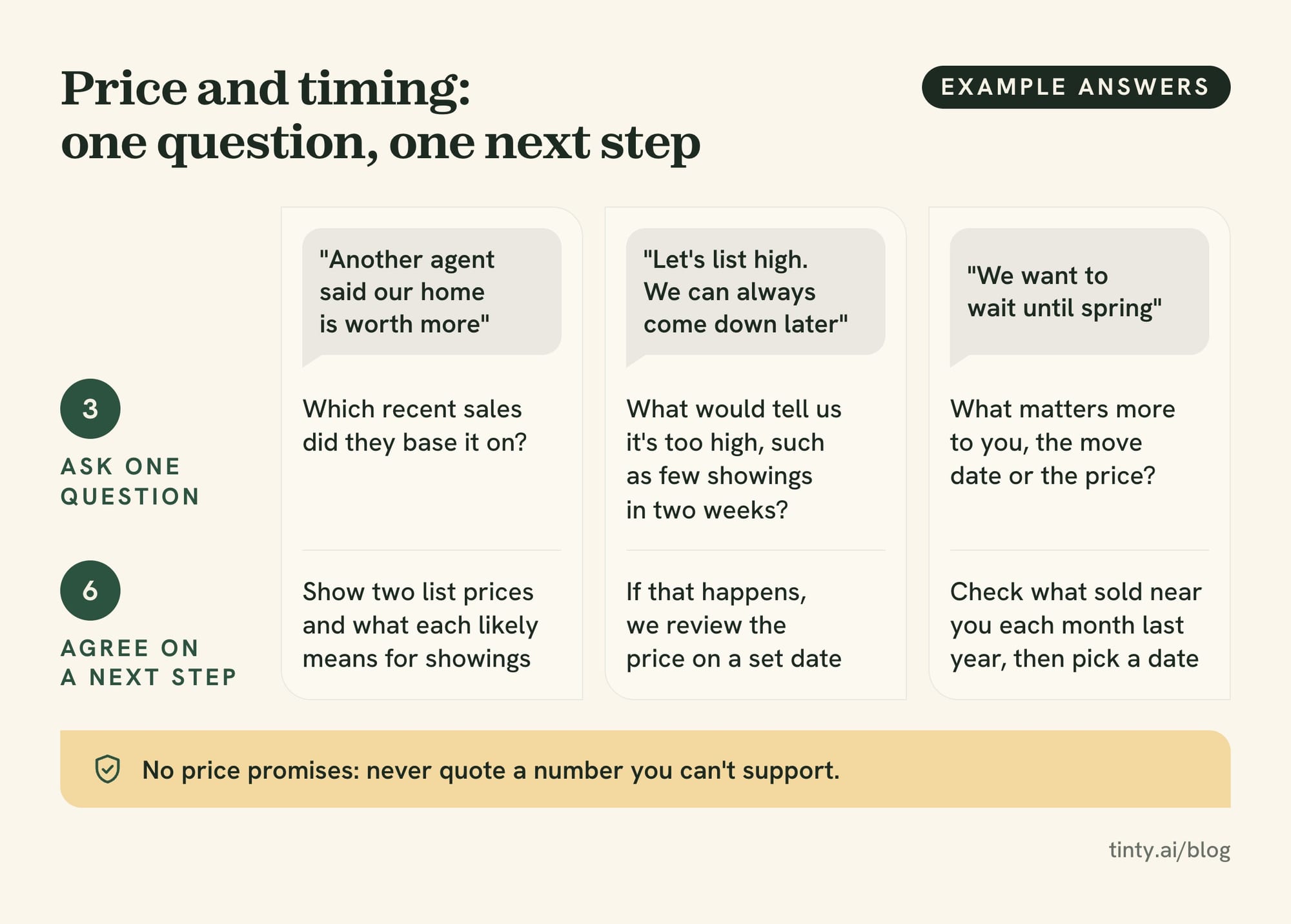
“Another agent said our home is worth more”
Why it comes up: a higher number feels like more money, and some agents quote high to win a listing.
Example answer: “Could be. Which recent sales did they base it on? If theirs match your home better than mine, I’ll say so. I won’t quote a number I can’t support, because buyers and appraisers will test it.”
If the comps don’t support it, show two list prices and what each likely means for showings.
“Let’s list high. We can always come down later”
Why it comes up: a price cut feels easy to undo, while starting lower feels permanent.
Example answer: “We can, and it’s your call. Let’s agree now on what would tell us it’s too high, such as few showings in two weeks. If that happens, we review the price on a set date.”
Our guide to selling a stale listing has a price reduction script for that review.
“We want to wait until spring”
Why it comes up: some owners expect spring to bring better prices, or they aren’t ready to move yet.
Example answer: “Waiting can make sense. What matters more to you, the move date or the price? Let’s check what sold near you each month last year, then pick a date and get ready for it.”
After an expired listing, our expired listing scripts cover this call.
“We’ll sell it ourselves”
Why it comes up: saving the fee is one of the most common reasons owners sell without an agent, per NAR’s report on by-owner sales.
Example answer: “That’s a fair choice, and some owners do it well. Which part are you least sure about: price, showings or paperwork? I can answer that one now, for free. If it stalls, you have my number.”
Our FSBO (for sale by owner) scripts cover the numbers, calls and follow-up.
“We need to think about it”
Why it comes up: it’s a polite pause, and it often hides one open question about price, fee or timing.
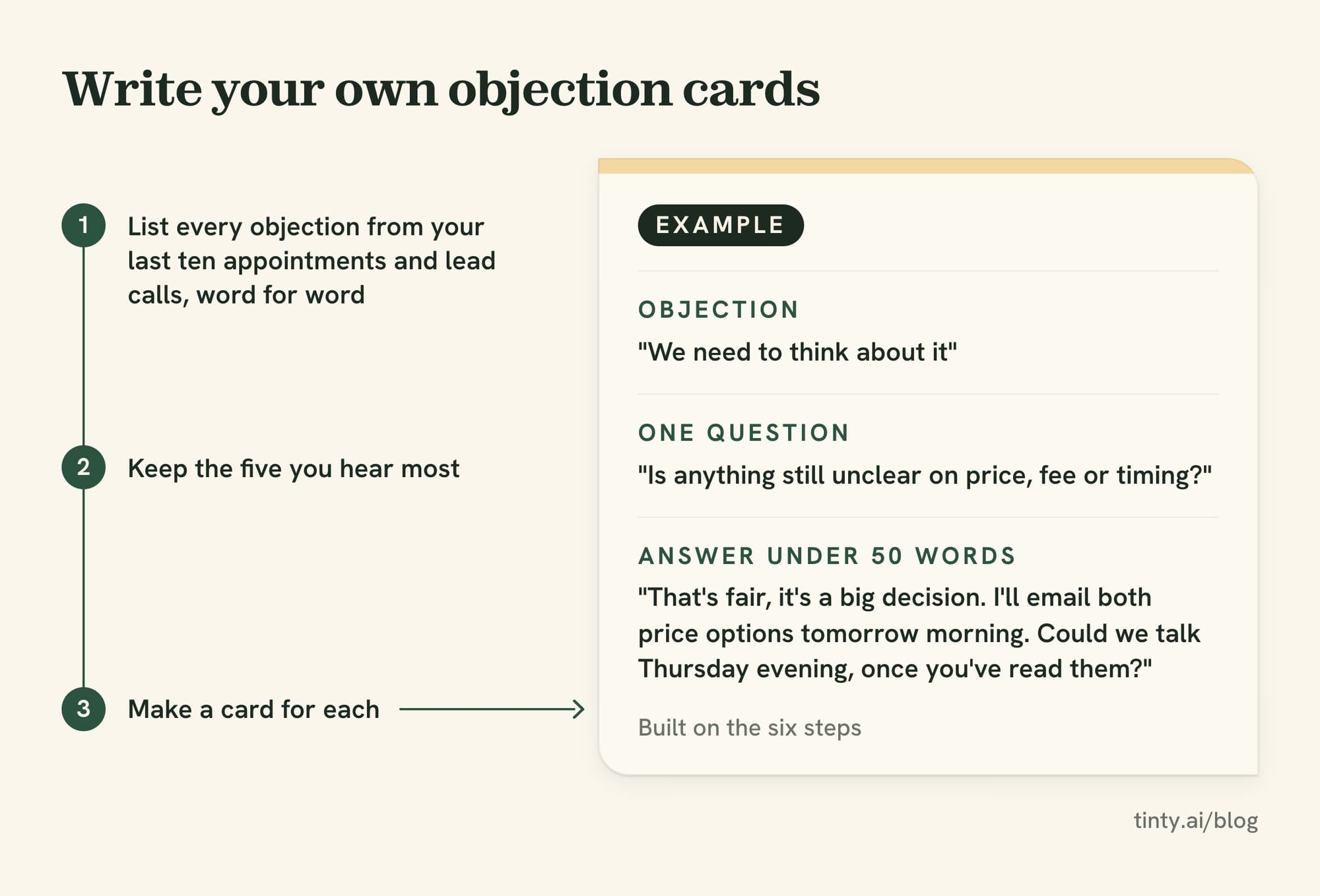
Example answer: “That’s fair, it’s a big decision. Is anything still unclear on price, fee or timing? I’ll email both price options tomorrow morning. Could we talk Thursday evening, once you’ve read them?”
“We’re interviewing other agents”
Why it comes up: it’s smart shopping, and it means they’ll compare agents on something specific.
Example answer: “Good, you should compare. Which three things will decide it for you? Here’s what I’d ask every agent, me included: which sales support their price, what happens in the first two weeks, and how often you’ll hear from them.”
Commission objections: honest answers about fees
Commission is negotiable, so the honest answer starts with yes. Then explain what the fee pays for, and let the seller choose.
Per NAR’s settlement FAQ, these practices changed on August 17, 2024:
- Off the MLS: offers of pay to buyer agents can’t appear on an MLS covered by the settlement. A seller can still make one off the MLS.
- Seller approval: the listing agent must disclose any payment to a buyer’s agent in writing, with the amount or rate, and get the seller’s approval first.
- Concessions: sellers can still offer buyers help on the MLS, such as money toward closing costs.
- Buyer agreements: buyers sign a written agreement with their own agent before touring a home.
“Can you lower your commission?”
Why it comes up: the fee is a big number on the seller’s net sheet, and it’s negotiable.
Example answer: “You can ask, and my fee is negotiable. First, let me show you what it pays for, line by line. Tell me which parts matter most. If a lower fee fits, we’ll look at what I’d stop doing for it.”
“Another agent will do it for less”
Why it comes up: discount and flat-fee brokers exist, so the comparison is real.
Example answer: “That might be a good fit for you. Ask what’s included at that price: photos, open houses, showings, negotiation and help through closing. Bring me their list, and we’ll compare it with mine side by side.”
“Do we have to pay the buyer’s agent?”
Why it comes up: the settlement changed how that pay is shown, and sellers have heard different versions.
Example answer: “No, it’s your choice. Offers can’t go on the MLS anymore, and I’ll put any offer in writing, with the amount, for your approval first. You can offer some pay, a credit toward the buyer’s costs, or nothing. Let’s weigh the trade-offs together.”
“What do you actually do for that fee?”
Why it comes up: most of an agent’s work happens out of the seller’s sight, so it’s a fair question.
Example answer: “Good question. This written plan lists each step: pricing from recent sales, photos and launch, showings and feedback, offers and negotiation, then inspections and closing. Each step has a date, so you can hold me to it.”
When the house is empty: staging objections and options
Some sellers of empty homes don’t want to pay to furnish them. Give them the options and the costs, then let them decide.
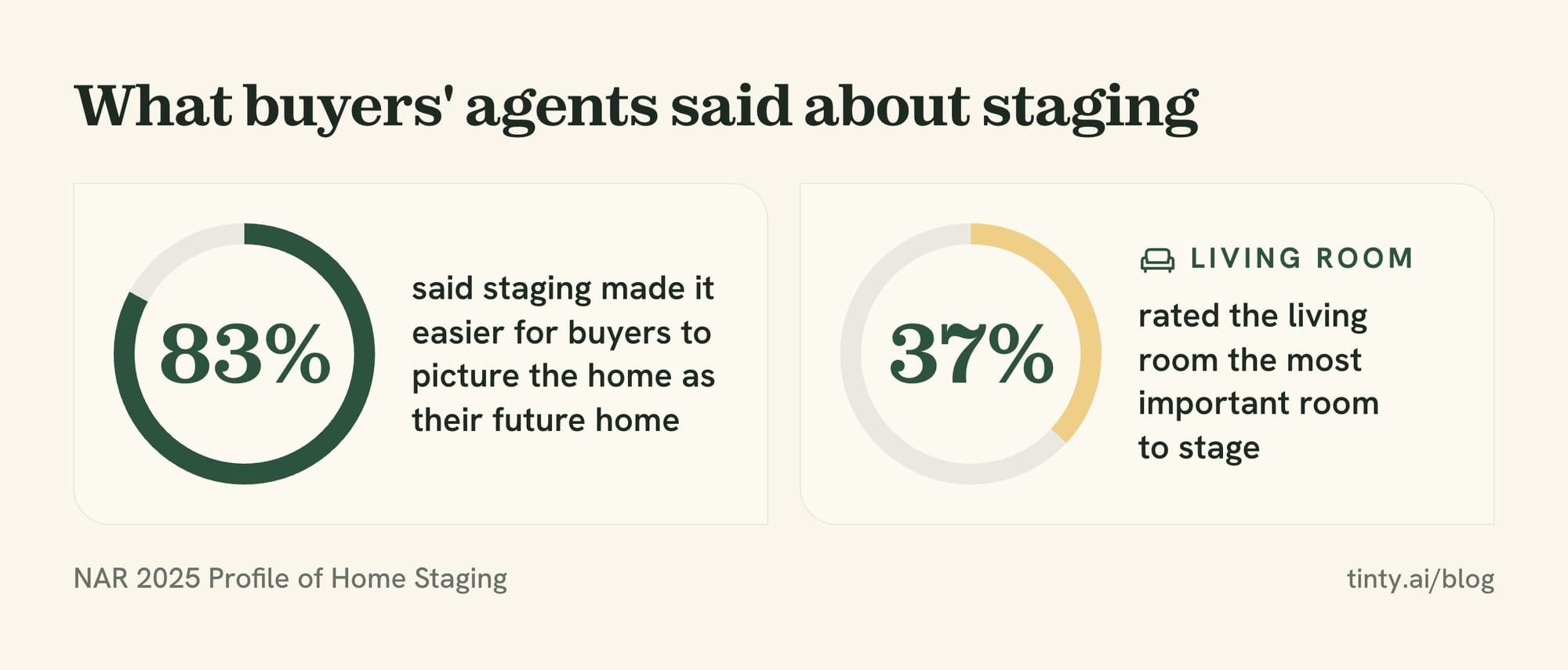
In NAR’s 2025 Profile of Home Staging, 83% of buyers’ agents said staging made it easier for buyers to picture the home as their future home. Those agents rated the living room the most important room to stage (37%).
“Buyers can picture it empty”
Why it comes up: owners know every room by heart, so they assume buyers will too.
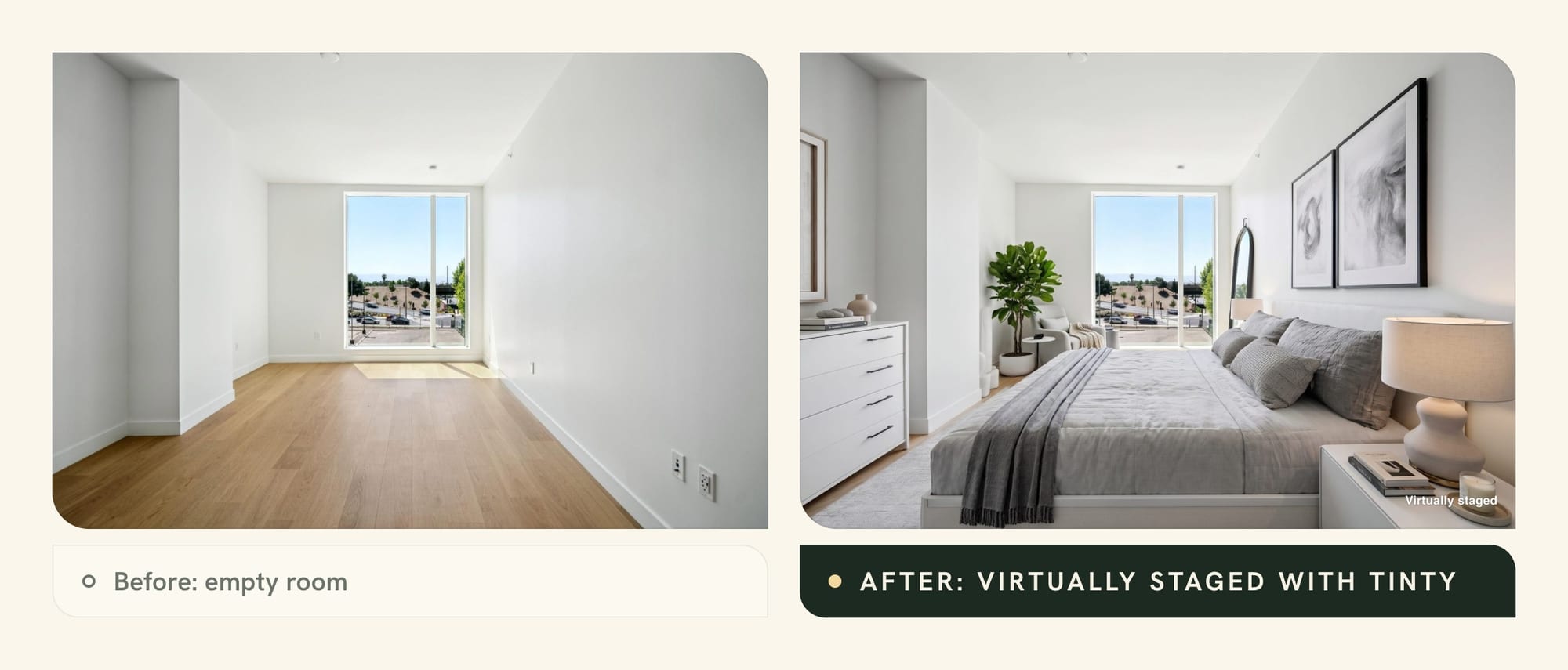
Example answer: “Some buyers can. Many first see it as a photo online, where an empty room gives few clues about size. Want to see your living room furnished, as a virtual preview? Then judge which version tells buyers more.”
“We don’t want to pay for staging”
Why it comes up: physical staging means renting furniture, and the bill is real.
Three honest options to put in front of the seller:
- Leave it empty: costs nothing. Use bright photos and a floor plan so buyers can read the space.
- Physical staging: NAR’s survey of agents put the median spend at $1,500 when a staging service did it.
- Virtual staging: furniture added to photos of empty rooms. AI tools cost under $1 to about $5 a photo, per our virtual staging cost guide (checked September 30, 2026).
Example answer: “That’s fine, you don’t have to rent furniture. Here are three options and what each costs. If you’d like, I’ll make a free virtual preview of your living room now. Any staged photo we list will say ‘Virtually staged.’ If it doesn’t help, we skip it.”
We make TINTY, so here’s where it fits. Upload one photo of an empty room for a free TINTY preview, no card needed, on a phone or a laptop. Previews take about 30 seconds and carry a light TINTY watermark, so they’re for the conversation, not the listing.
TINTY stages empty living spaces only, with nine room types such as living rooms, bedrooms and home offices. It doesn’t stage kitchens, bathrooms, building exteriors or yards, and finished photos are 2K. Short on time? TINTY Studio stages photos you email to hello@tinty.ai in 2 to 24 hours, and you pay only if you’re happy.
Watch out: a staged photo shows furniture that isn’t there. Label each one “Virtually staged,” keep the original (California requires a link to it) and follow your MLS’s rules. Our virtual staging disclosure guide compares them.
Buyer objections: 5 example answers
Buyer objections usually come down to money, timing and the newer paperwork. Answer with today’s numbers and the written terms, never with predictions.
“We’ll wait for rates to drop”
Why it comes up: rates move every week, and nobody wants to lock in right before a drop.
Freddie Mac’s Primary Mortgage Market Survey (PMMS) put the 30-year fixed average at 7.40% for the week of October 8, 2026. A year earlier it was 6.30%, per FRED’s copy of the PMMS series.
Example answer: “That’s reasonable, and I can’t tell you where rates will go. Let’s start from a monthly payment you’re comfortable with today. Then we’ll decide what rate or price would make you move, and I’ll watch for it.”
If refinancing comes up, don’t promise it. Suggest they ask a lender what a refinance would require and cost.
“I can find homes myself online”
Why it comes up: listings are online, and buyers often spot a home before any agent sends it.
In NAR’s 2025 Profile of Home Buyers and Sellers, 52% of buyers found the home they bought online. Still, 88% bought through an agent, and 54% said their agent pointed out features or faults they’d missed.
Example answer: “You probably will, since most buyers do. My part starts after that: checking nearby sales, spotting problems on the tour, and negotiating price and repairs. Want to try that on the next home you like?”
“Why do I have to sign before you show me a house?”
Why it comes up: the rule started in August 2024, so buyers who last bought before then may not know it.
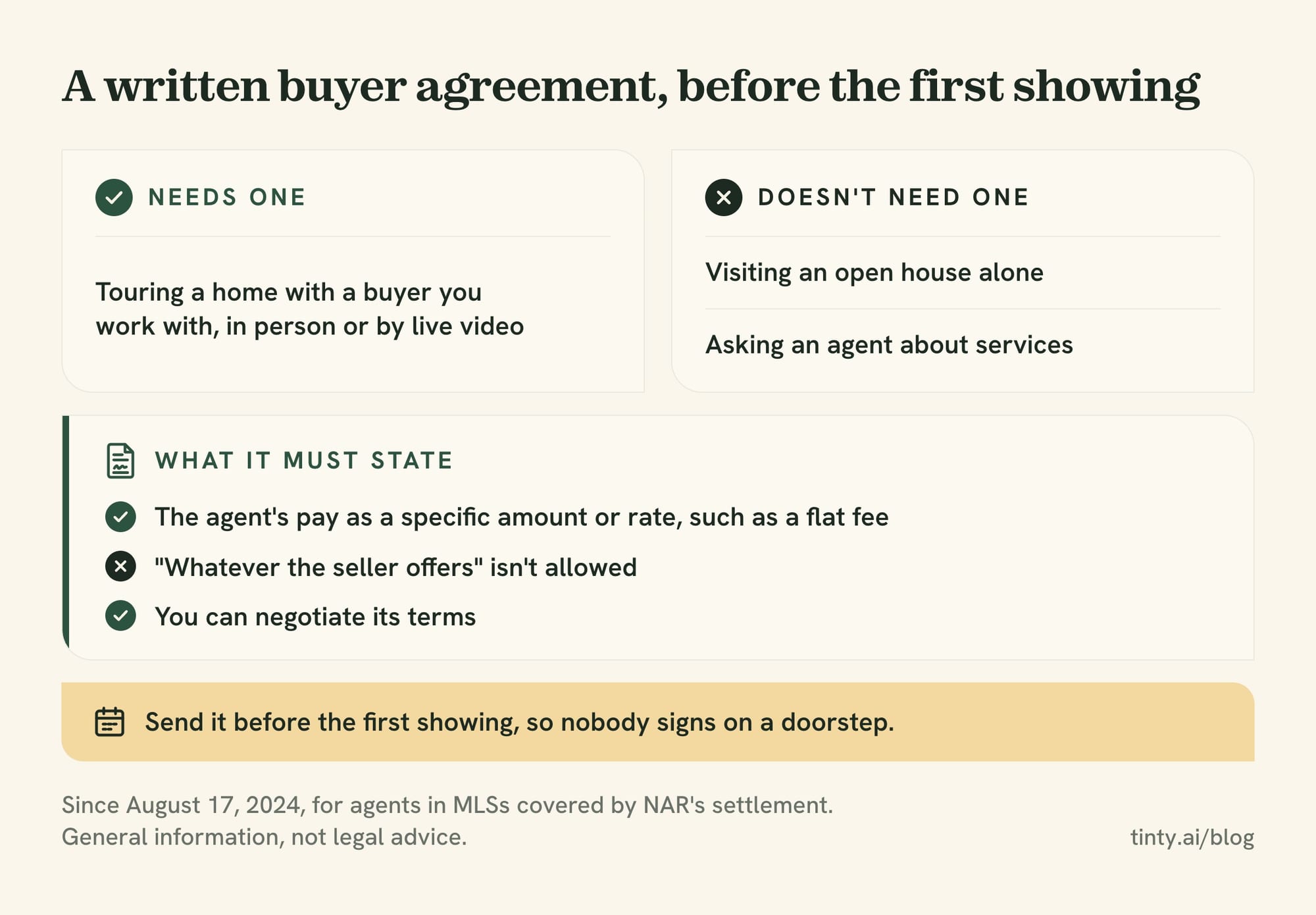
Example answer: “Sure. Under NAR’s rules, I need a written agreement before I tour a home with you, in person or by live video. It states exactly what I’m paid, and we can negotiate its terms. An open house you visit on your own doesn’t need one.”
Send it before the first showing, so nobody signs on a doorstep.
Rule: NAR’s settlement FAQ says the agreement must state the agent’s pay as a specific amount or rate, such as a flat fee. “Whatever the seller offers” isn’t allowed.
“Why should I pay you? The seller should”
Why it comes up: for years buyers rarely saw the bill, so paying their own agent feels new.
Example answer: “A seller may cover some or all of my fee, or give you a closing credit, and I’ll ask. It isn’t guaranteed, though. Our agreement sets my pay, and I can’t take more than that from anyone. Let’s agree on a number that works for you.”
“We want to see more homes before we make an offer”
Why it comes up: buyers worry about missing something better, especially early in a search.
Example answer: “That’s fine, there’s no rush from me. Which home came closest, and what did it lack? Let’s write down your three must-haves. If a home has all three, we’ll talk about an offer.”
Lead call objections: 5 example answers
Lead calls are short, so aim for a small yes: permission to send something useful or to call back. Our guide on how to get listings covers where seller leads come from.
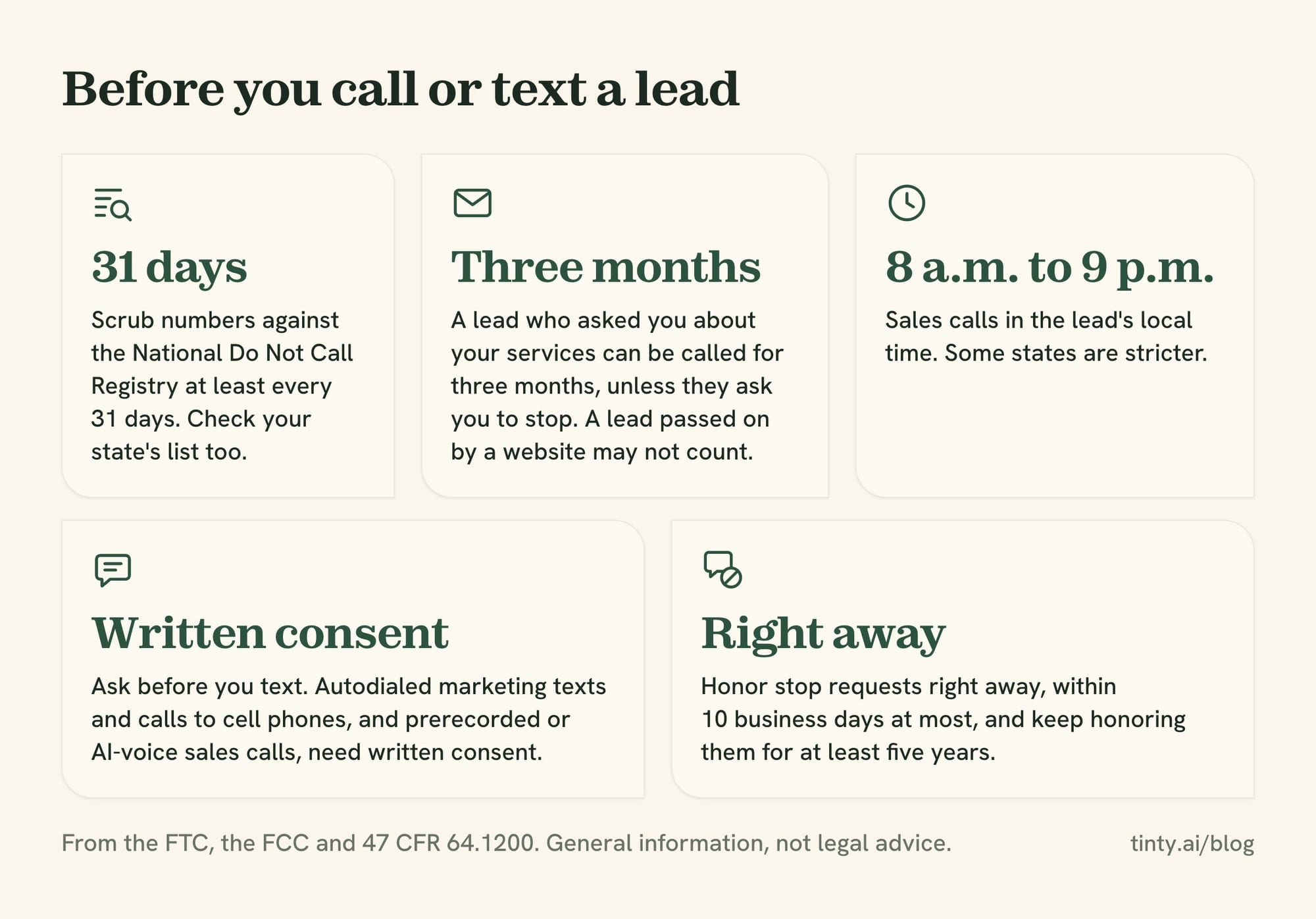
Before you call or text a lead (general information, not legal advice):
- Registry: scrub numbers against the National Do Not Call Registry at least every 31 days, per the Federal Trade Commission (FTC) Do Not Call Q&A. Check your state’s list too.
- Inquiries: a lead who asked you about your services can be called for three months, unless they ask you to stop. A lead passed on by a website may not count, so check its consent terms.
- Hours: sales calls are allowed from 8 a.m. to 9 p.m. in the lead’s local time, per 47 CFR 64.1200. Some states are stricter.
- Texts and dialers: ask before you text. Autodialed marketing texts and calls to cell phones, and prerecorded or AI-voice sales calls, need written consent, per the Federal Communications Commission (FCC).
- Stop requests: honor them right away, within 10 business days at most, and keep honoring them for at least five years.
“I’m just looking”
Why it comes up: many online leads are early, and a call can feel like pressure.
Example answer: “Perfect, that’s the right place to start. What caught your eye about this home? I can email new listings like it each week, with no calls. Would that help?”
“Just send me some information”
Why it comes up: it ends the call politely, and sometimes they really do want it.
Example answer: “Happy to. Which would help most: this home’s details, recent sales nearby, or what your own home might sell for? Is email best, or may I text it?”
Log the yes and the channel in your customer relationship management (CRM) tool.
“I already have an agent”
Why it comes up: many leads already work with someone, often a friend or relative.
Example answer: “Good to hear, and I’ll step back. Are you working with them on this home too? If so, they’re your best contact for it. Good luck with the search.”
NAR’s Code requires Realtors to try to find out whether a prospect already has an exclusive agreement (Standard of Practice 16-9). If so, deal with their agent, unless the client started the contact or their agent agrees (16-13).
“How did you get my number?”
Why it comes up: people are wary of calls from strangers, and they deserve a straight answer.
Example answer: “Fair question. You asked about [the home on Elm Street] on [website] on [date], and it came to me. If you’d rather I not call, I’ll take your number off my list right now.”
“I’m not interested”
Why it comes up: it’s the fastest way to end an unplanned call, and sometimes the timing is just wrong.
Example answer: “No problem, thanks for saying so. Is it the timing, or did the home not fit? Either way, I’ll note it and won’t call again unless you ask.”
If they say “don’t call me again,” confirm it, log it and stop calls and texts. Don’t argue or ask why.
Objection handling scripts real estate agents can practice
Scripts help only when you can say them without reading.
Write your own seller objections script
List every objection from your last ten appointments and lead calls, word for word. Keep the five you hear most.
For each, make a card: the objection, one question and an answer under 50 words, built on the six steps above.
Practice 15 minutes, three times a week
A simple routine to repeat (our suggestion):
- Pick three objections from your cards.
- Say each answer out loud twice, then record it on your phone.
- Play it back and cut any sentence you’d never say in real life.
- Role-play with a partner who pushes back once more after your answer.
- Refresh the facts each week, such as the PMMS rate every Thursday.
Tip: start with the objection you dread most, and practice it until your answer sounds calm and ordinary.
Real estate objection handling FAQ
Can a seller refuse to pay the buyer’s agent?
Yes, offering pay to a buyer’s agent is the seller’s choice. Since August 17, 2024, such offers can’t appear on MLSs covered by NAR’s settlement. The listing agent must disclose any offer to the seller in writing, with the amount or rate, and get approval. Sellers can still offer buyers concessions, such as help with closing costs.
Do buyers have to sign an agreement before seeing a house?
Yes, if their own agent works through an MLS covered by NAR’s settlement. Since August 17, 2024, those agents need a written agreement before touring a home with a buyer, in person or live virtually. Visiting an open house alone, or asking an agent about services, doesn’t require one.
Show 4 more questionsShow fewer questions
What are the most common listing appointment objections?
Price (“another agent said more”), timing (“we’ll wait until spring”), the fee, selling on their own, and “we need to think about it.” All five come up across the top guides we read.
Can you call online leads who are on the Do Not Call list?
For a while, if they asked you or your company: the FTC allows calls for three months after the inquiry, unless the consumer says stop. A lead passed on by a website may not count, so check its consent terms. After that, a registered number needs other permission, such as a signed, written agreement. Prerecorded or AI-voice sales calls, and autodialed ones to cell phones, always need written consent.
What is objection handling in real estate?
It’s how an agent responds when a seller, buyer or lead pushes back on price, fees or timing. Good handling finds the real concern, answers it with facts and agrees on a next step, without pressure or promises.
Should you memorize objection scripts word for word?
Learn the structure, not the exact words (our view). Practice each answer until it sounds like you, then adjust the details for each person. A script you recite sounds like one.
How we researched this
On October 13, 2026, we searched for “objection handling scripts real estate” and “real estate objection handling scripts.” We read the top results: Luxury Presence, three Tom Ferry posts, Follow Up Boss, Market Leader, The Real Estate Trainer and a Mike Ferry PDF. Only Luxury Presence mentions buyer agreements or Do Not Call rules, and none covers the empty-house staging objection.
Rules come from NAR, the FTC, the FCC and the federal code. Data comes from NAR’s 2025 reports and Freddie Mac’s weekly survey, read on FRED. If something here is wrong, email hello@tinty.ai and we’ll fix it.
Sources
All pages read October 13, 2026. Dates in parentheses are publication or update dates.
NAR rules:
- NAR 2026 Code of Ethics and Standards of Practice (effective January 1, 2026; Articles 2, 12 and 15, Standards of Practice 1-3, 1-4, 1-12, 16-9 and 16-13)
- NAR Settlement FAQs (PDF) (last updated September 5, 2024; questions 1, 2, 4, 8, 48 and 60)
Show 18 more sourcesShow fewer sources
Phone and text rules:
- FTC: Q&A for Telemarketers and Sellers About DNC Provisions in the TSR (edited September 2026; 31-day sync, three-month inquiry window)
- eCFR: 47 CFR 64.1200, Delivery restrictions (up to date as of October 8, 2026; calling hours, do-not-call requests, written agreements)
- FCC: Stop Unwanted Robocalls and Texts (updated February 27, 2026)
Market data:
- NAR: FSBOs reach all-time low, more sellers rely on agents (November 11, 2025)
- NAR 2025 Profile of Home Staging (PDF) (May 2025; agent survey of February 2025)
- FRED: 30-Year Fixed Rate Mortgage Average in the United States (source: Freddie Mac PMMS; weeks of October 9, 2025 and October 8, 2026)
- NAR 2025 Profile of Home Buyers and Sellers, full report (PDF) (November 2025; Exhibits 3-6, 4-1 and 4-5; the copy posted by the Long Island Board of REALTORS, since NAR offers the full report free to members only)
Guides that rank for this topic:
- Luxury Presence: Real estate objection handling scripts (August 31, 2026)
- Tom Ferry: Real estate objection handling scripts, 5 common objections (July 2, 2026)
- Tom Ferry: Top 10 objections and the scripts to overcome them (October 19, 2021)
- Tom Ferry: Today’s real estate scripts for buyers (October 13, 2023)
- Follow Up Boss: The top 12 real estate objections (January 12, 2021)
- Market Leader: Objection handling scripts (May 22, 2023, updated May 24, 2023)
- The Real Estate Trainer: The top 10 buyer objections and responses (January 14, 2015, updated February 9, 2026)
- Mike Ferry: 40 Real Estate Objections Handled (PDF)
TINTY and related guides: