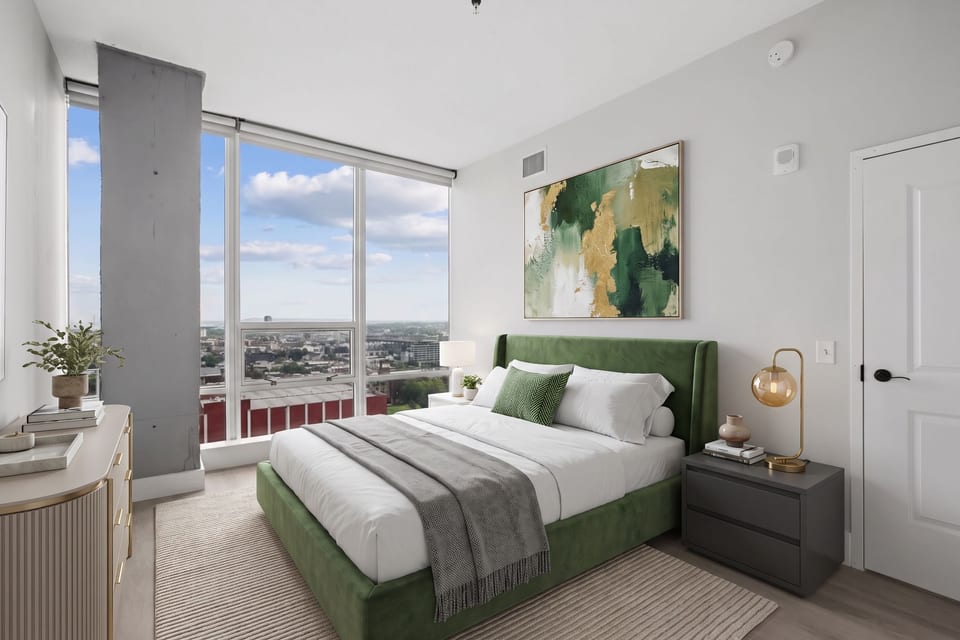
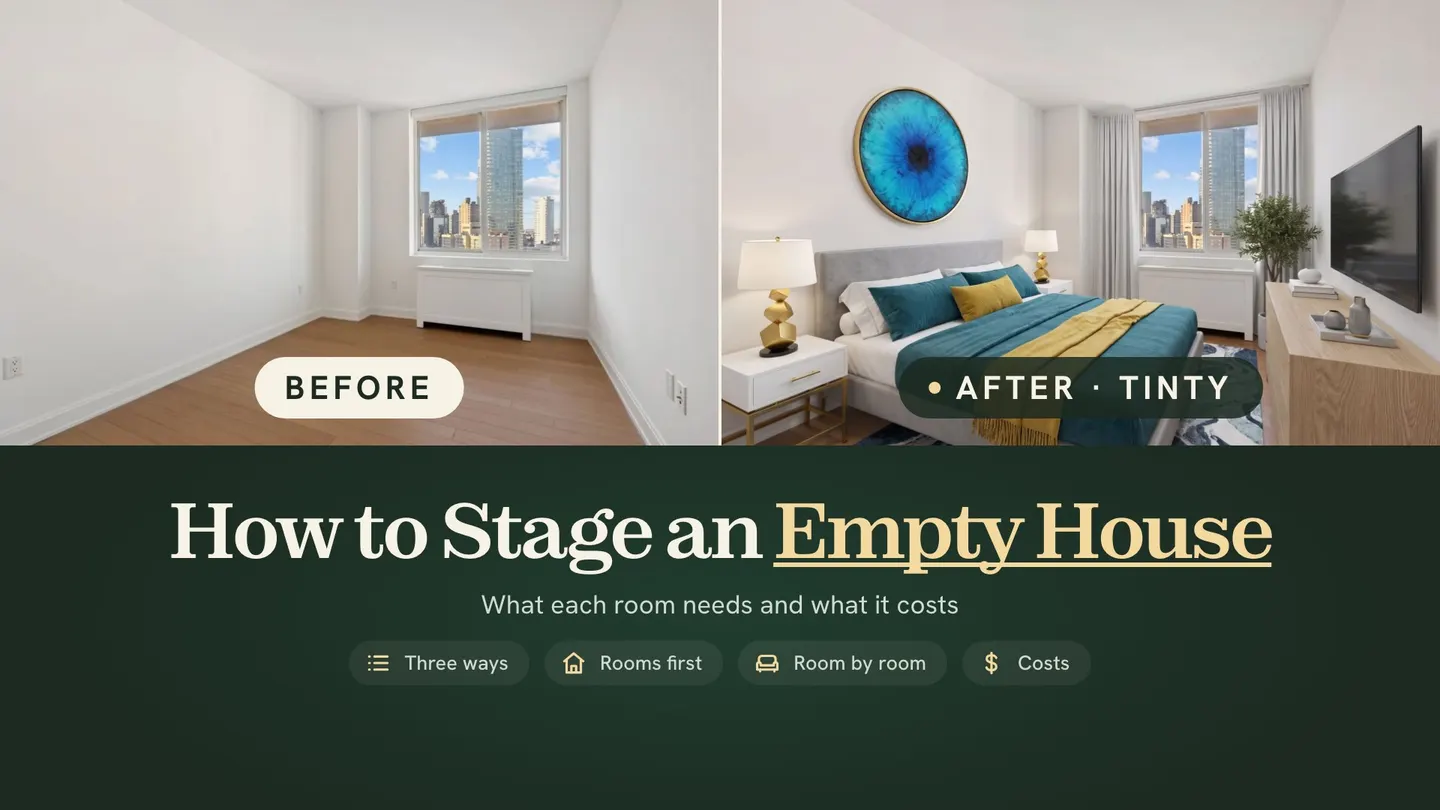
How do you stage an empty house? Stage the rooms buyers care about most first: the living room, the primary bedroom and the kitchen. Give each one a few pieces that show its size and use, then light and clean the whole house. Rent furniture, bring your own or virtually stage the photos if the budget is tight.
We make TINTY, an AI virtual staging app for real estate agents, so one section covers virtual staging. Costs come from published guides and NAR’s survey, and our tips are marked as ours.
Sources and TINTY details checked November 10, 2026.
Key takeaways
- Stage three rooms first: buyers’ agents rated the living room (37%), primary bedroom (34%) and kitchen (23%) as very important to stage, per NAR.
- Full vacant staging costs about $3,000 to $6,000 or more for the first month, per HomeGuide, plus rent for every extra month.
- Don’t stop halfway: a stager told HomeLight that full staging is best, empty is second and half done is worst.
- Virtual staging fixes the photos for a few dollars, but buyers still walk into empty rooms.
On this page: Three ways · Rooms first · Room by room · On a budget · Costs · Virtual staging · Mistakes · FAQ
Staging an empty house: three ways to do it
An empty house shows every wall, but not how big a room is or what it’s for. Staging answers both. In NAR’s 2025 Profile of Home Staging, 83% of buyers’ agents said staging made it easier for buyers to picture the home as their future home.
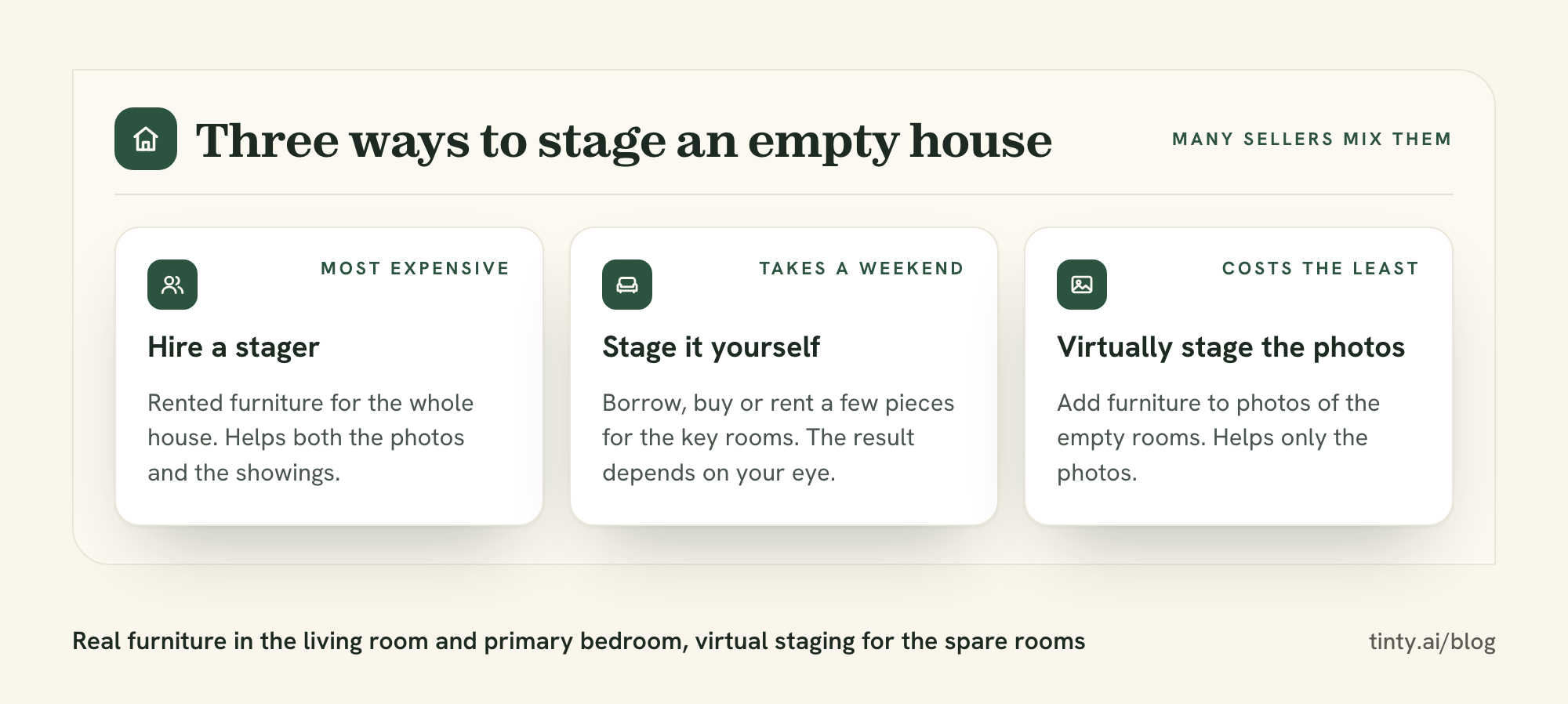
You have three ways to do it:
- Hire a stager: they bring rented furniture for the whole house and take it away after the sale. This is the most expensive option, and it helps both the photos and the showings.
- Stage it yourself: borrow, buy or rent a few pieces for the key rooms. It costs less and takes a weekend, but the result depends on your eye.
- Virtually stage the photos: add furniture to photos of the empty rooms. It costs the least and helps only the photos, so buyers still walk into empty rooms. Our virtual staging cost guide compares prices.
Many sellers mix them: real furniture in the living room and primary bedroom, virtual staging for the spare rooms (our view). The rest of this guide works for any mix.
Which rooms to stage first
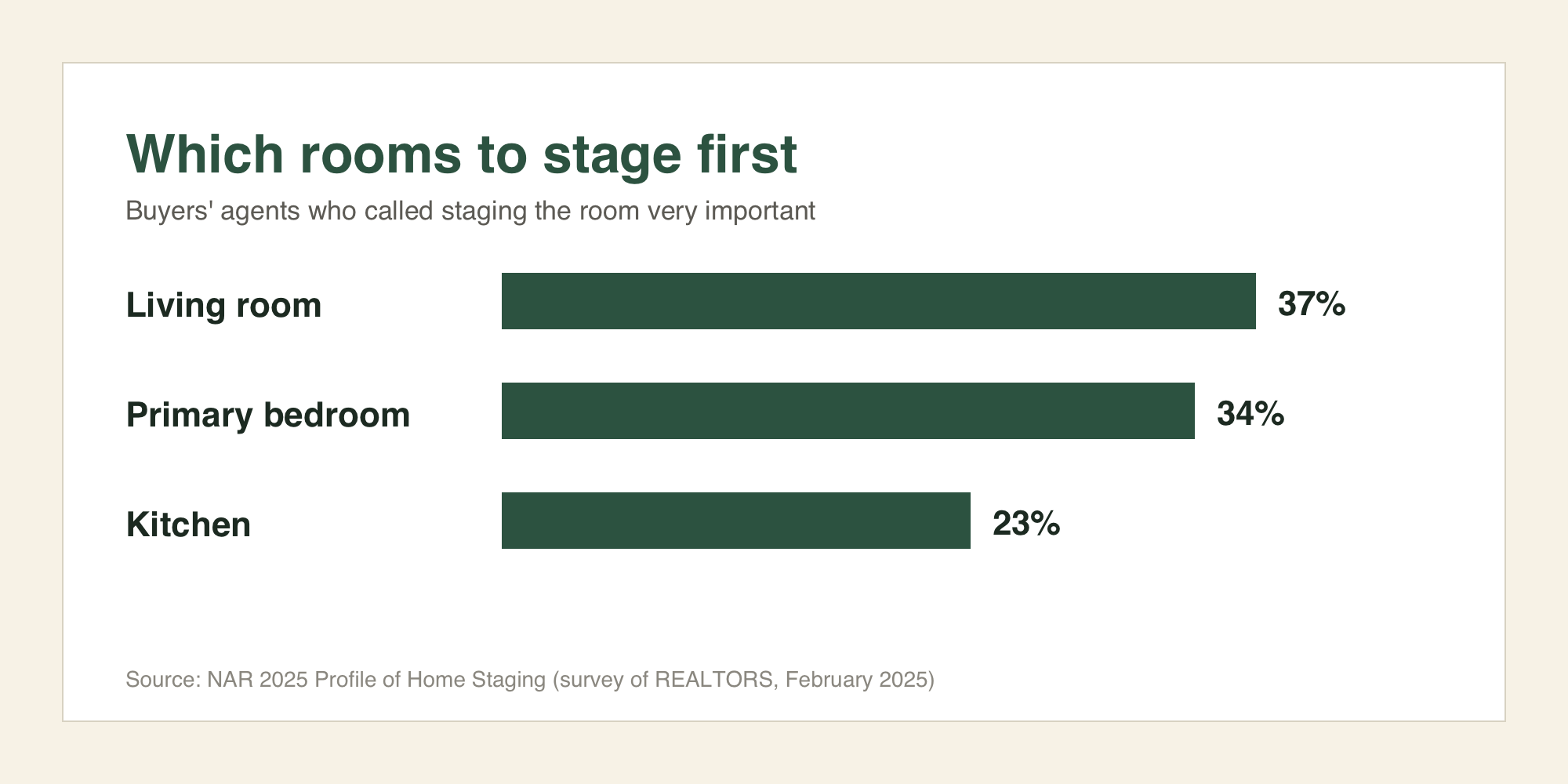
Start where buyers look. NAR asked buyers’ agents which rooms mattered most to stage. The living room came first (37% called it very important), then the primary bedroom (34%) and the kitchen (23%).
So the order for most empty houses is:
- Living room: the room in the lead photo.
- Primary bedroom: it shows that a king or queen bed fits.
- Kitchen: clean and accessorized, not furnished.
- Dining area: a table shows where meals happen in an open plan.
- Odd spaces: a nook, a loft or a small spare room that buyers can’t read empty.
Bathrooms and the entry need only small touches. Secondary bedrooms can stay empty in person if the photos show their use, in our view.
What to put in each room
An empty room needs fewer pieces than you think. The goal is to show the size, the use and the light, not to furnish a home (our view).
Living room
Four things do most of the work:
- Seating: a sofa and one or two chairs, grouped around a rug, not pushed against the walls.
- Rug: big enough for the front legs of the seating to sit on it.
- Light: a floor lamp or two table lamps, so the room doesn’t look dark in the corners.
- Finish: a coffee table, one piece of art at eye level and a plant.
Leave a clear path from the door to the window. Buyers walk through, and the photo should show the way.
Primary bedroom
A bed shows that the room fits one, which is the main question buyers have. Use a queen or king bed with plain white or light bedding, two nightstands with lamps and a rug at the foot of the bed.
An air mattress on a bed frame looks the same under the bedding and is easy to move out later (our tip). Keep the closet doors closed, or show a half-empty closet with a few hangers.
Kitchen and dining
Don’t furnish the kitchen. Clear the counters, then add two or three things: a bowl of fruit, a cutting board and a dish towel. Stools at the island help buyers see where people sit.
In an open plan, a small dining table with four chairs shows where the dining area starts. Our room-by-room staging guide covers each room in more detail.
Bathrooms and the entry
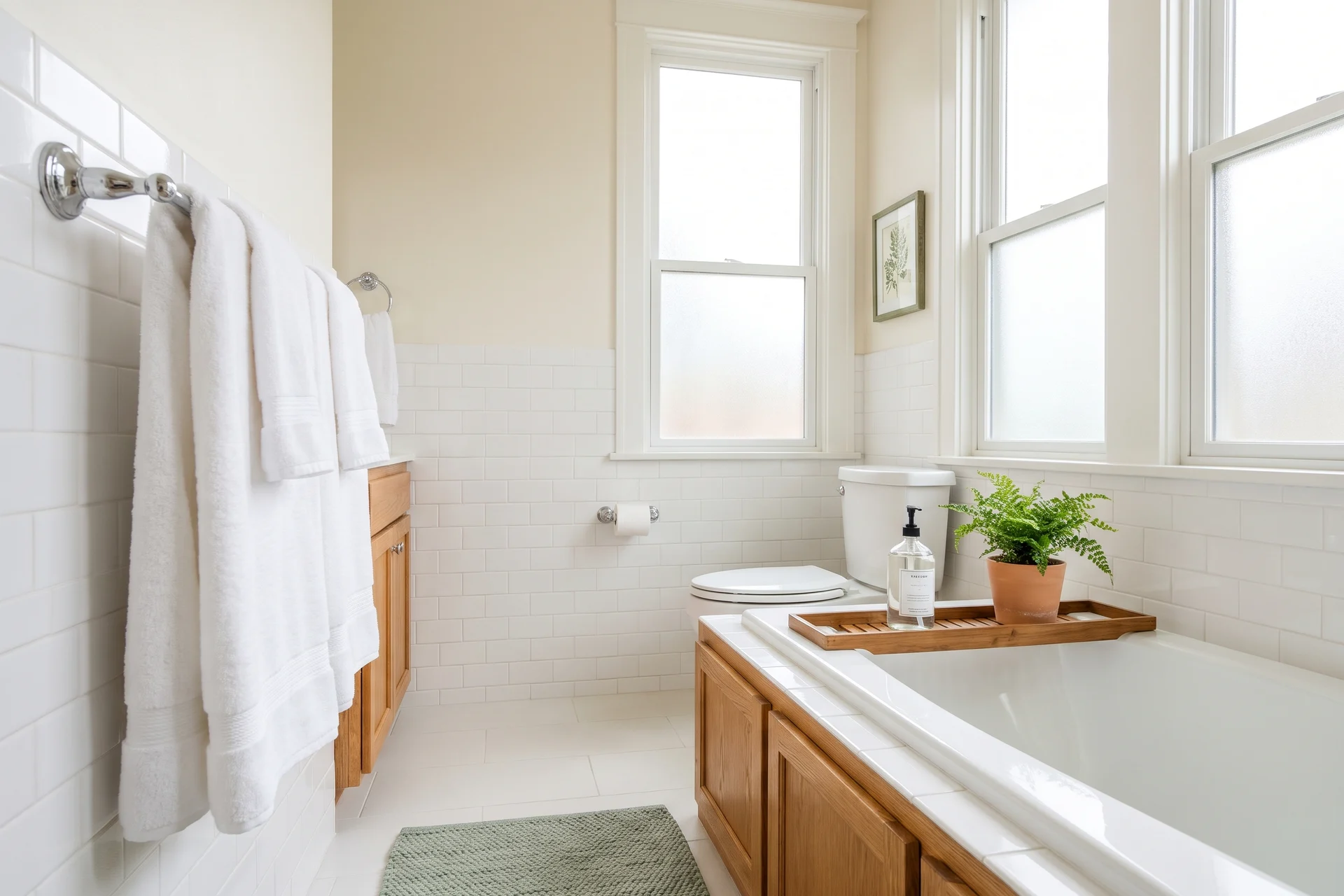
These spaces need small touches, not furniture. In bathrooms: white towels, a new soap bottle, a small plant and a closed toilet lid, plus a shower curtain if the tub needs one.
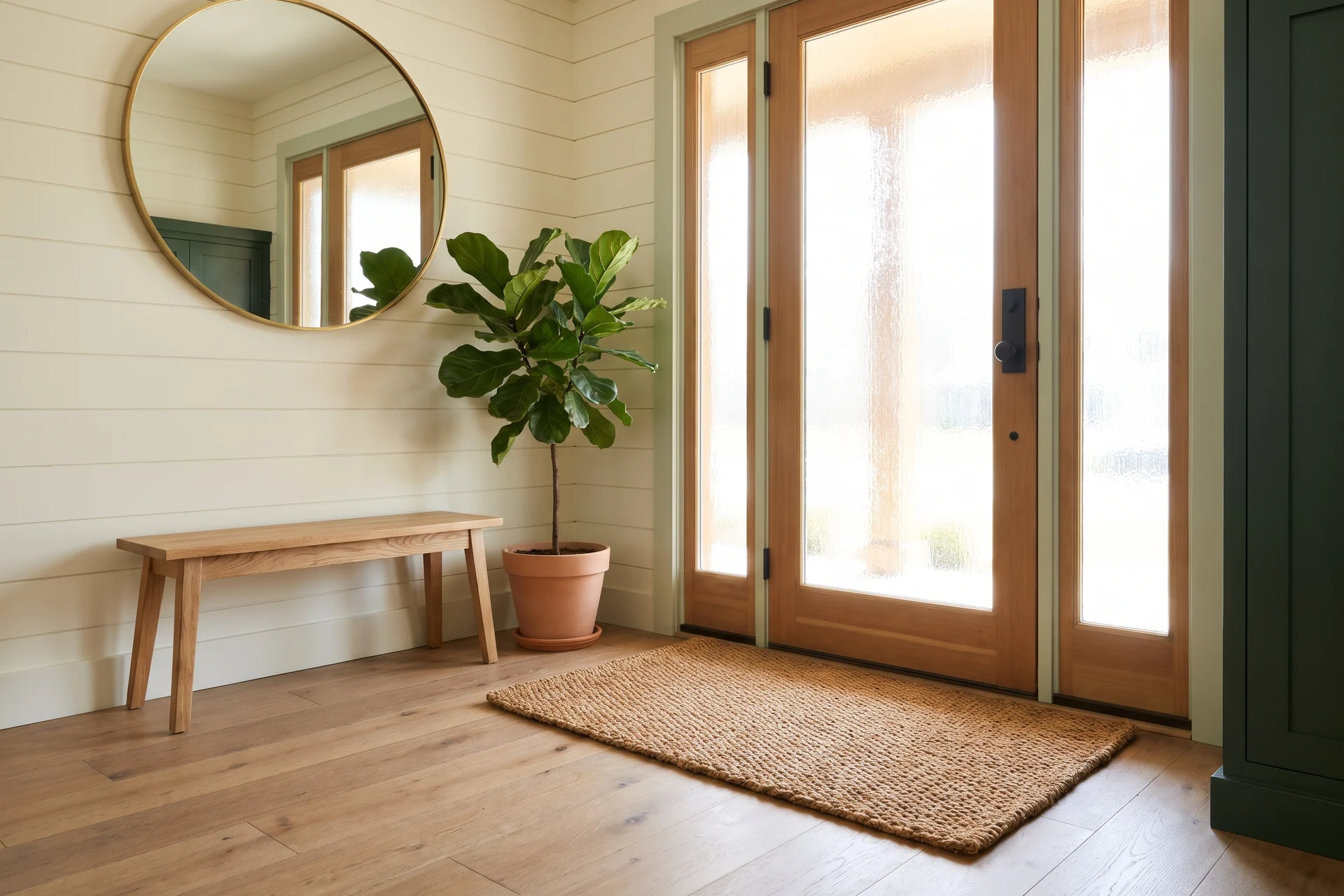
At the entry: a doormat, a small bench or console table, and a mirror or a piece of art.
Patio, deck or terrace
Two chairs, a small table and two potted plants turn a bare deck into an outdoor room (our tip). An outdoor rug helps on a concrete terrace.
DIY staging an empty house on a budget
You can stage the key rooms yourself for far less than a full install if you borrow most of the furniture. The order that works (our advice):
- Clean and repair first: patch holes, touch up paint and clean the windows. Staging can’t hide a stained floor.
- Light every room: replace dead bulbs with one color of bulb, and add lamps where the ceiling light is weak.
- Borrow before you buy: a sofa, a bed frame, two lamps and a rug from family or the seller’s storage.
- Buy the small things: towels, bedding, plants, fruit bowls and one or two pieces of art.
- Rent the gaps: furniture rental stores rent by the month, which can cost less than a stager for one or two rooms (our view).
- Check the photos: take a test photo of each room from the corner. If a room still reads as empty, add one more piece.
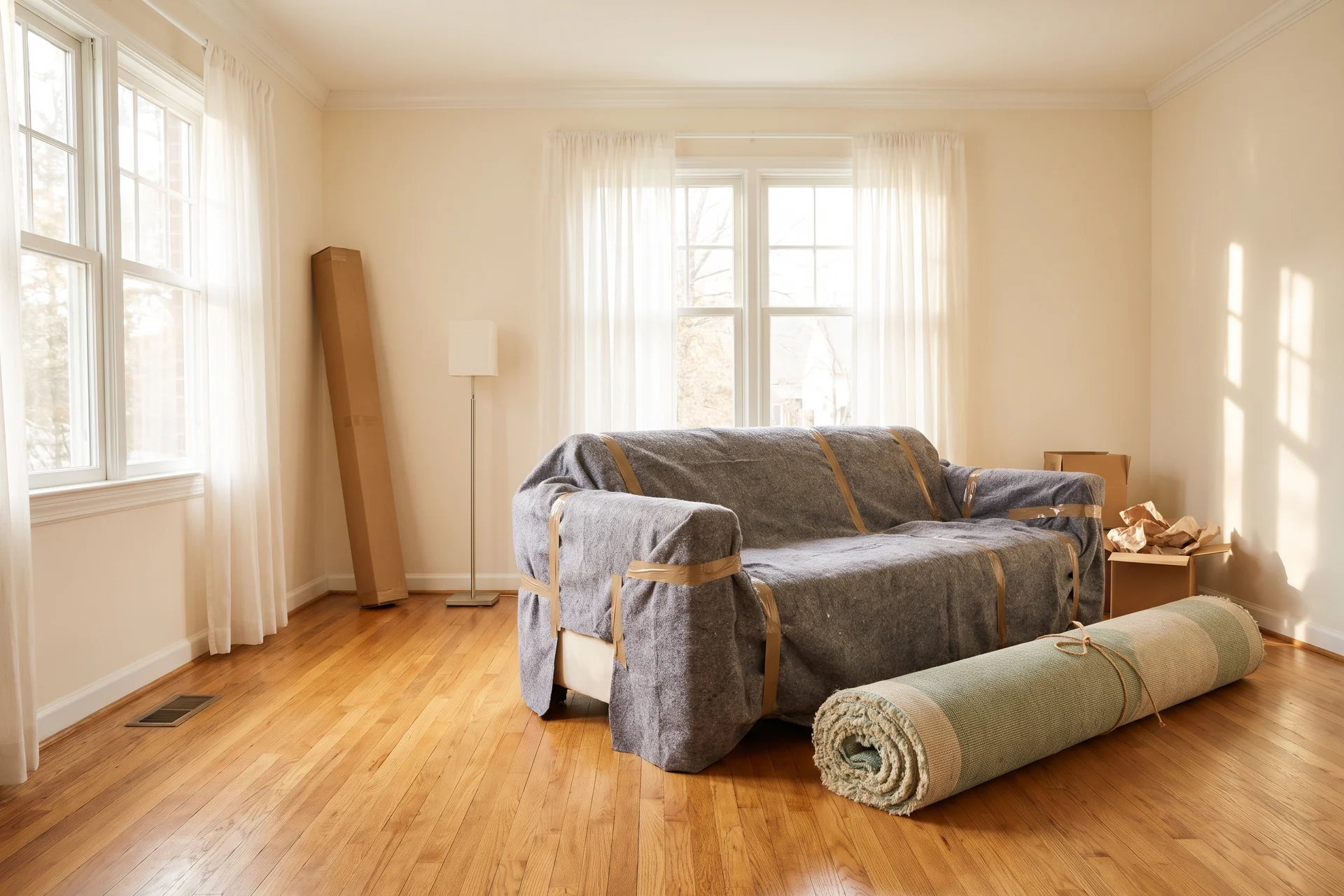
Real furniture also needs care while the house sits empty. Our guide to selling a vacant house covers insurance, heat and security.
What vacant home staging costs
Staging an empty house costs more than staging an occupied one, because every piece is rented, delivered and later removed.
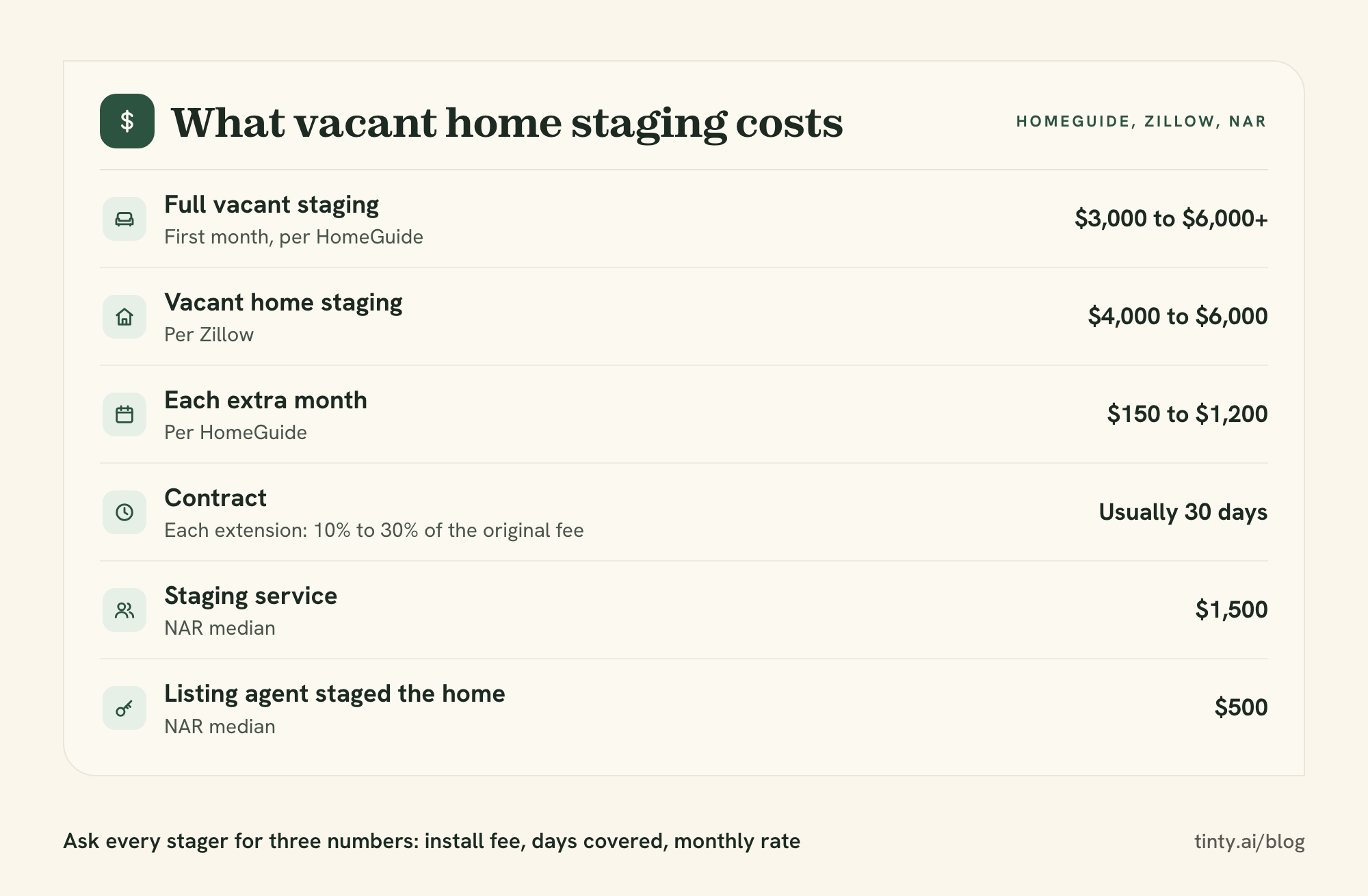
- Full vacant staging: about $3,000 to $6,000 or more for the first month, per HomeGuide’s 2026 guide. Zillow puts vacant home staging at $4,000 to $6,000.
- Each extra month: $150 to $1,200, per HomeGuide. Furniture rental alone can reach $2,000 a month for large homes.
- Contracts: usually 30 days, with each extension at 10% to 30% of the original fee.
- NAR’s survey: a median of $1,500 when sellers used a staging service, and $500 when the listing agent staged the home.
Ask every stager for three numbers: the install fee, the days it covers and the monthly rate after that. Our home staging cost guide compares the full ranges.
Is it worth it? In NAR’s survey, 49% of sellers’ agents said staging cut the time on market, and 29% saw offers rise by 1% to 10%. These are agents’ opinions about staging in general, not a study of vacant homes.
Virtual staging for an empty house
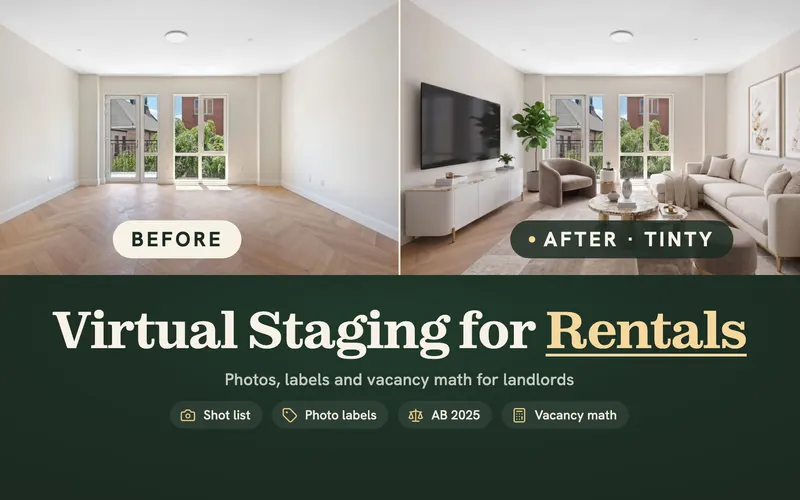
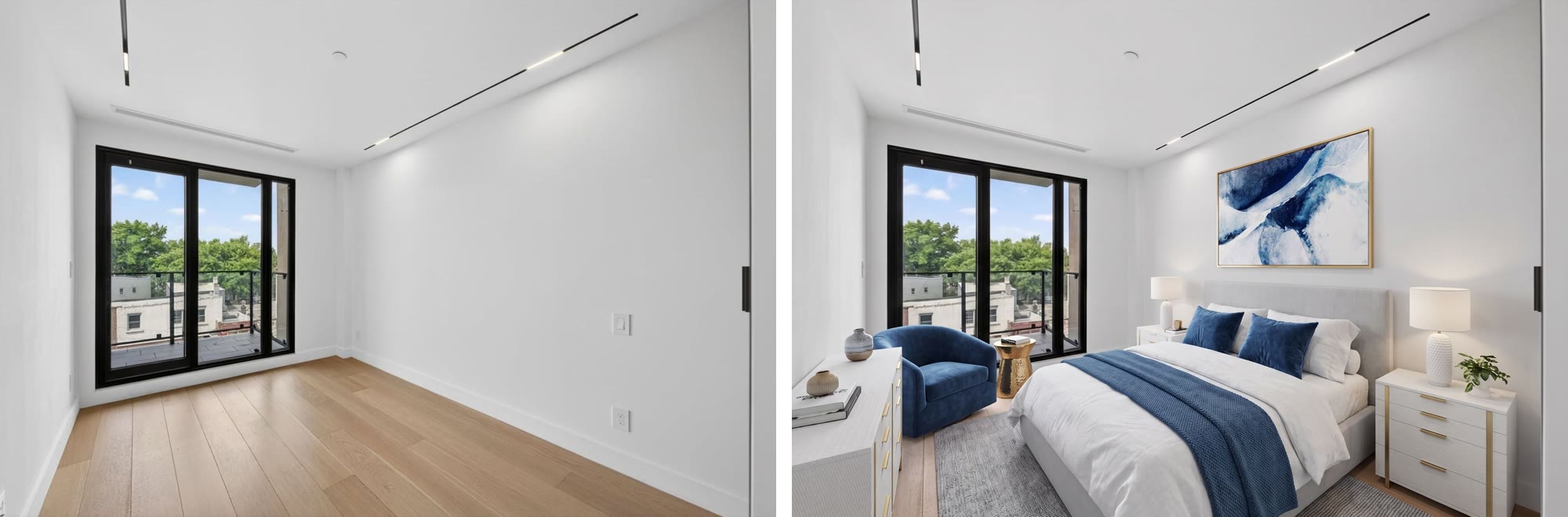
Virtual staging adds furniture to a photo of an empty room. It’s cheaper than renting furniture and fast, but it changes only the photos. Buyers still walk into empty rooms at the showing, so it works best for listings where most first impressions happen online (our view).
TINTY stages an empty room photo in about a minute. Pick the room type and the style, and it adds furniture that fits the room. It stages living rooms, bedrooms, dining rooms, home offices and terraces, but not kitchens, bathrooms or building exteriors. If the seller left a chair or a lamp behind, TINTY can first remove the furniture, then stage the empty room.
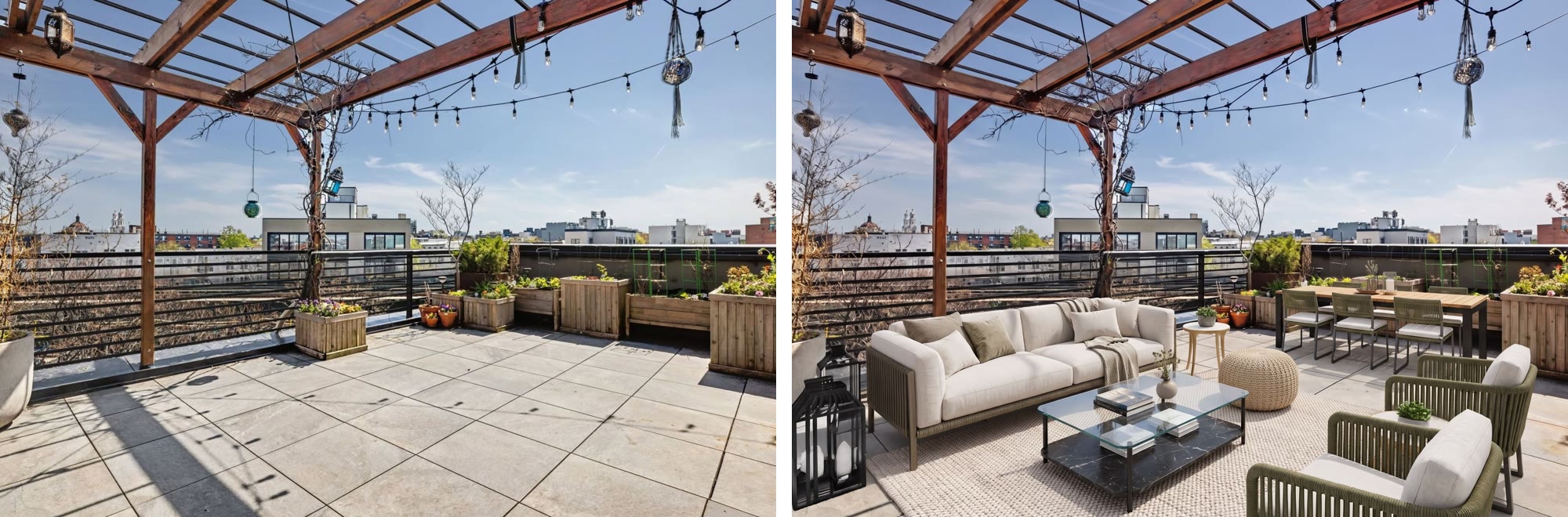
Stage a room photo free with TINTY. The 6 free staged photos carry a light watermark and need no card, so use them to test the look, not on the MLS. Plans start at $9 a month for 10 photos on TINTY’s pricing page. These are launch prices, so they may change.
No time to stage the photos yourself? Email the empty-room photos to hello@tinty.ai with the style and the use of each room. TINTY Studio, our done-for-you virtual staging service, sends them back staged in 2 to 24 hours, at $10 a photo from 3 photos. There’s no prepayment: you pay only if you like them.
Label it and keep the original
Every virtually staged photo needs a label where your MLS wants it, and the original nearby. Never stage a photo to hide a defect, such as a stained floor or a cracked wall. California’s AB 723 requires a label and a link to the original on ads, flyers included. Our virtual staging compliance checklist covers the rules.
Mistakes when staging an empty house
These are the ones we see most in empty listings:
- Stopping halfway: staging company founder Justin Riordan told HomeLight that full staging is best, completely vacant is second best, and halfway done is worst.
- Furniture against the walls: it makes the room look like a waiting room. Pull seating in and group it on a rug (our view).
- Too-small pieces: a twin bed in the primary bedroom makes the room look small, not big.
- Dark corners: one ceiling light leaves an empty room gray in photos. Add lamps.
- Staged photos, empty showings, no warning: if the photos are virtually staged, say so in the listing, so buyers aren’t surprised at the door.
- Forgetting the seasons: a house kept at a low temperature feels cold at showings. Our vacant house guide covers what to do before each visit.
How to stage an empty house: FAQ
What is the best way to stage an empty house?
Stage the living room, primary bedroom and kitchen first, with a few pieces that show each room’s size and use. Light every room and keep the style neutral. Hire a stager for the whole house if the budget allows, or stage the key rooms yourself and virtually stage the photos of the rest.
How much does it cost to stage an empty house?
Full vacant staging runs about $3,000 to $6,000 or more for the first month, per HomeGuide, plus $150 to $1,200 for each extra month. NAR’s 2025 survey found a median of $1,500 with a staging service. Virtual staging costs a few dollars a photo.
Is it better to sell a house empty or staged?
Staged, if you can do it fully. In NAR’s survey, 83% of buyers’ agents said staging helped buyers picture the home as theirs. A Redfin study of 2018 sales found vacant homes sold for less, though it shows a link, not a cause.
What rooms should you stage in an empty house?
The living room, the primary bedroom and the kitchen, in that order. Buyers’ agents rated them very important to stage at 37%, 34% and 23% in NAR’s 2025 survey. Add the dining area in an open plan and any odd space buyers can’t read empty.
Can you virtually stage an empty house?
Yes. Virtual staging adds furniture to photos of the empty rooms for a few dollars a photo. Label each staged photo, keep the original next to it, and remember that buyers will still see empty rooms in person.
How we researched this
We took the room ranking and the cost medians from NAR’s 2025 Profile of Home Staging. Cost ranges come from HomeGuide’s 2026 guide and Zillow, and the vacant home data from Redfin’s study of 2018 sales.
The furniture lists and the budget order are our own advice, marked “our view” or “our tip” where they aren’t sourced. TINTY details come from tinty.ai on November 10, 2026.
Sources
Show 8 sourcesHide sources
- NAR 2025 Profile of Home Staging (PDF) (May 2025; 1,266 responses, February 2025)
- NAR press release on the 2025 Profile of Home Staging (May 6, 2025)
- HomeGuide: How much does it cost to stage a house? (2026 guide, checked November 10, 2026)
- Zillow: How much does it cost to stage a house? (checked November 10, 2026)
- Redfin: Should I Wait to Move Out Until After I Sell My Home? (May 17, 2019, updated October 7, 2020; 2018 sales)
- HomeLight: Is it easier to sell a vacant home? (April 2, 2025)
- tinty.ai · TINTY pricing (launch pricing) · TINTY Studio
- Staging a house · Home staging cost · Selling a vacant house · Is virtual staging legal?