Virtual staging vs real staging: which should you choose? Choose by situation, not by price alone. Virtual staging fits vacant homes, tight budgets, quick launches and secondary rooms. Real (physical) staging fits lived-in homes that need editing, luxury listings, kitchens and bathrooms, and any house where buyers will judge the walkthrough. Many listings do best with a mix.
NAR figures, HomeGuide prices and TINTY prices checked October 6, 2026.
We make TINTY, an AI virtual staging app, so we have a stake in this choice. We still say where physical staging wins, and each figure comes from a named source. Full price lists live in our cost guides, so this guide sticks to which route fits which listing.
Key takeaways
- Start with occupancy: virtual staging works best on empty rooms, so lived-in homes usually need decluttering or real staging first.
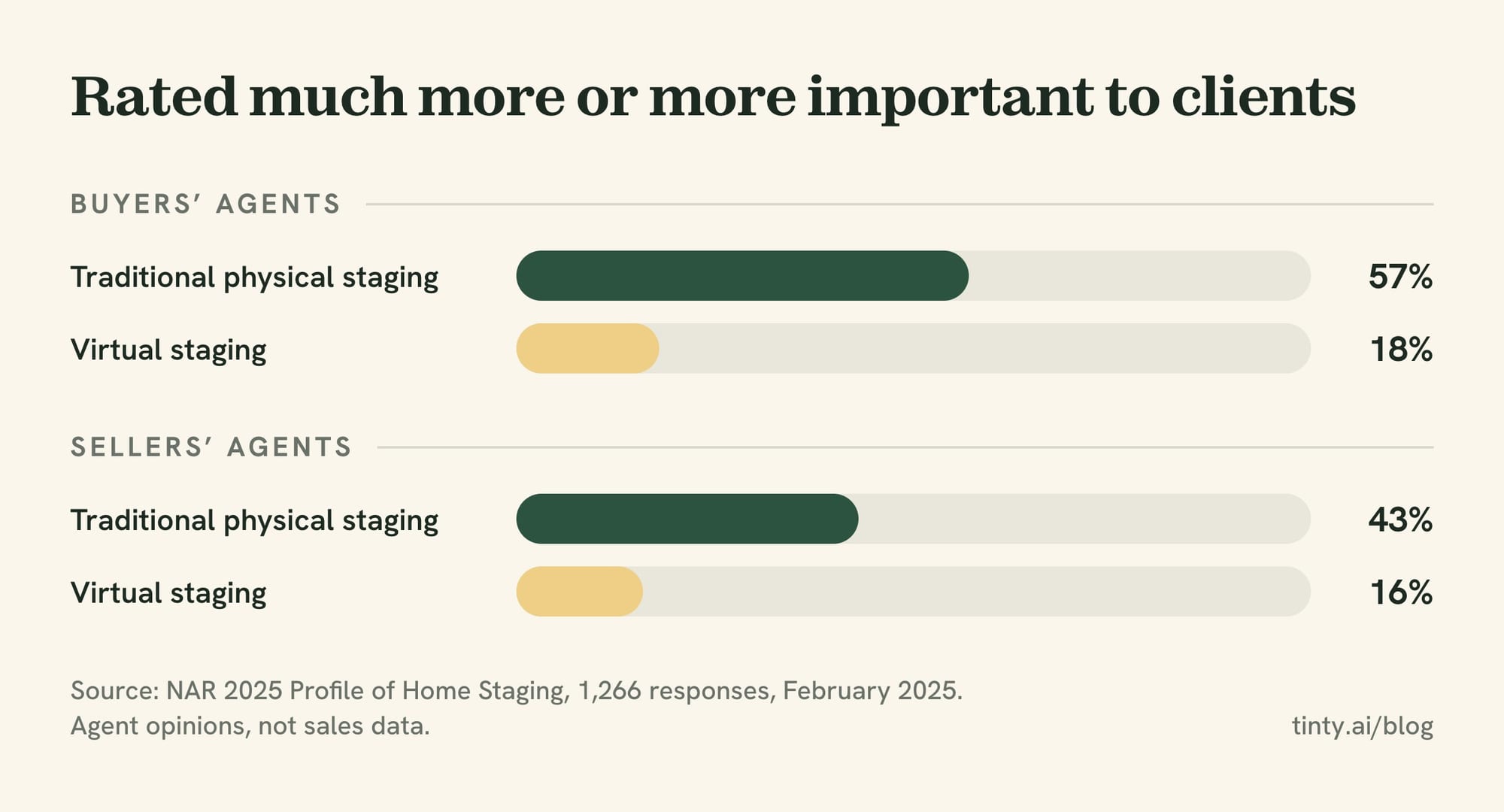
- Agents rate physical higher: 57% of buyers’ agents rated traditional staging much more or more important, against 18% for virtual staging (National Association of Realtors, or NAR, 2025).
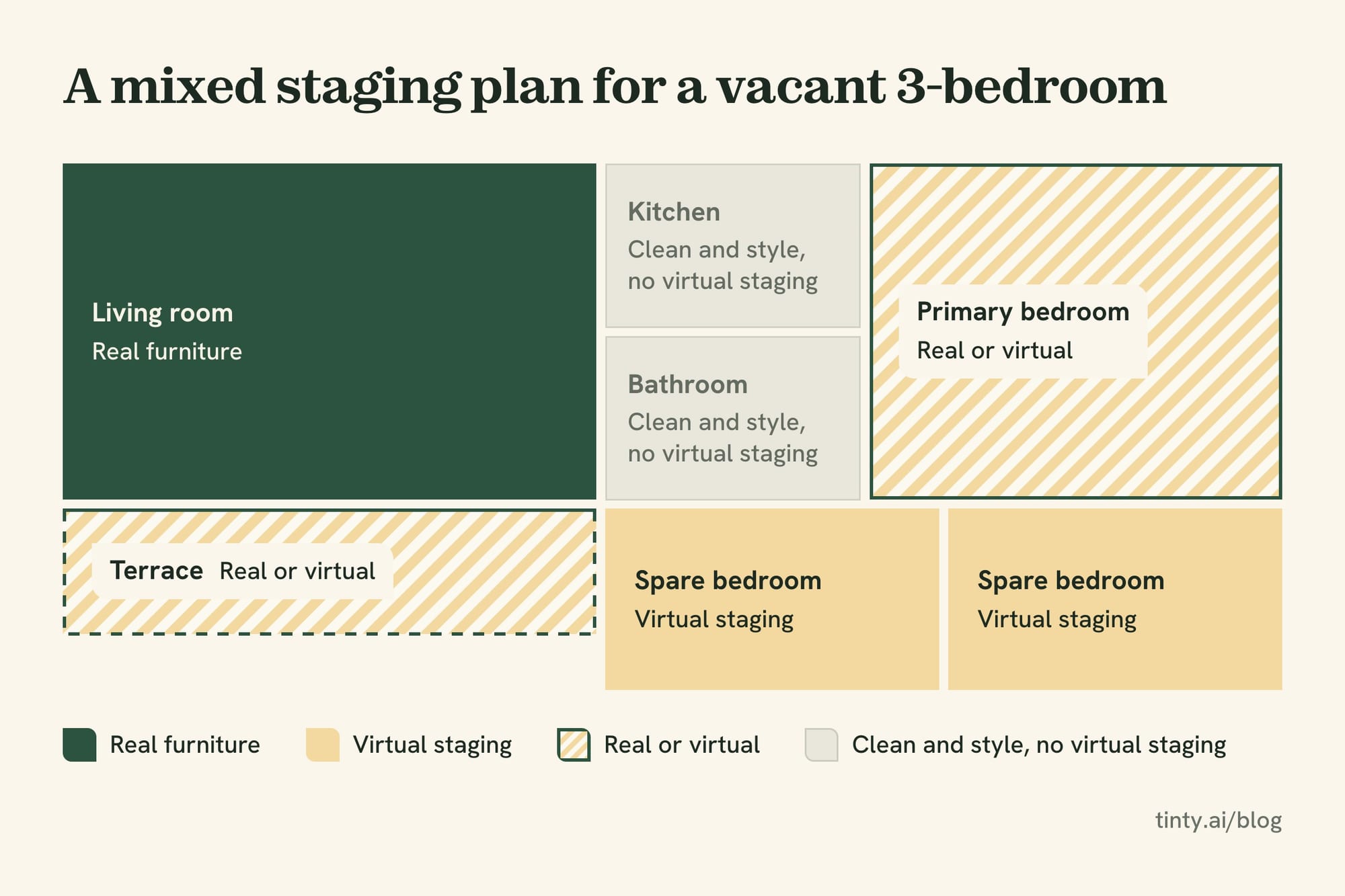
- Mix by room: stage the living room for real and the spare bedrooms in the photos.
- Bad virtual staging backfires: wrong scale, changed windows and hidden flaws mislead buyers and break multiple listing service (MLS) rules.
- Disclose every virtually staged photo: California requires it now. From January 1, 2027, Wisconsin requires disclosure of edits that create a false or misleading impression.
On this page: Six factors · Vacant or occupied · Price tier · Days on market · Rooms · Cost and timing · Worth it? · Bad virtual staging · Disclosure · Showings · What agents say · TINTY · FAQ
Virtual staging vs real staging: six factors that decide it
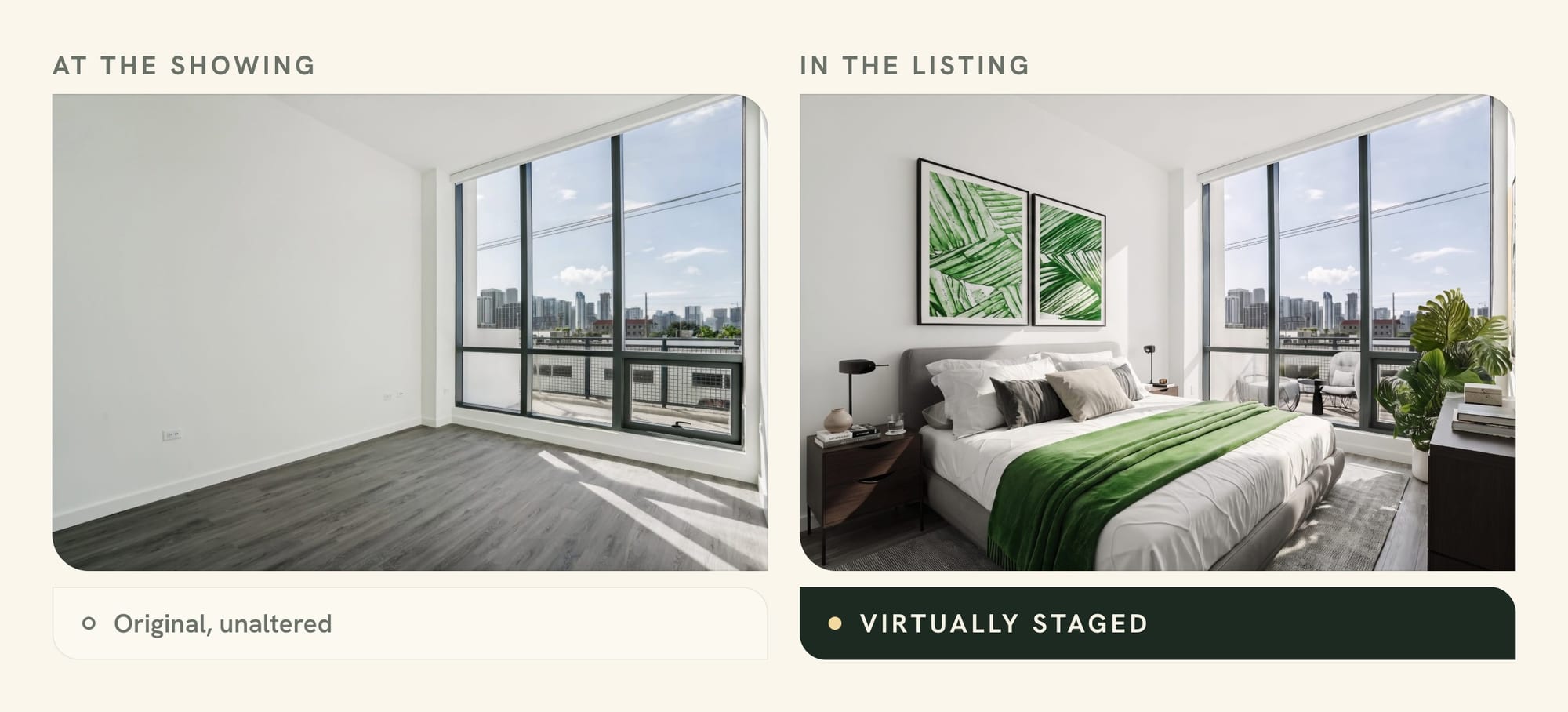
Real staging changes the house, while virtual staging changes only the listing photos. So the better choice depends on where buyers will judge the home: online, in person, or both. Our guide to virtual staging basics covers what it is and how it works; this guide covers the choice.
In the home staging vs virtual staging decision, six factors do most of the work:
Virtual staging vs real staging: when each one fits (our framework; the sections below give the sources)
| Factor | Lean virtual | Lean physical | Why it matters |
|---|---|---|---|
| Occupancy | Vacant home | Lived-in, crowded home | Virtual tools furnish empty rooms |
| Price tier | Entry-level, condo, rental | Luxury or one of a kind | Top buyers judge the walkthrough |
| Expected days on market | Long, uncertain or already stale | Short, with a busy first weekend | Physical staging rent runs monthly |
| Rooms | Spare bedrooms, office, terrace | Living room, primary bedroom | Buyers’ agents rank these two first |
| Budget | About $9 to $500 | $500 to $1,500 or more | NAR medians: $500 if the agent stages, $1,500 with a stager |
| Listing date | Live within days | A few days to over a week to prepare | Installs need a stager’s calendar |
Read the table as a starting point, not a verdict. If four or more rows point one way, go that way (our rule of thumb). If they split, mix the two: real furniture where buyers look hardest, and virtual staging everywhere else.
Tip: ask the seller two questions first. Will they still live in the house during showings, and what can they spend? Those two answers settle most of the table.
Vacant or occupied: start with what’s in the rooms
Virtual staging for homes that sit empty is the classic use case. The software adds furniture to a photo of an empty room, so buyers online can judge its size and purpose. A lived-in home has the opposite problem: the photos already show furniture, often too much of it.
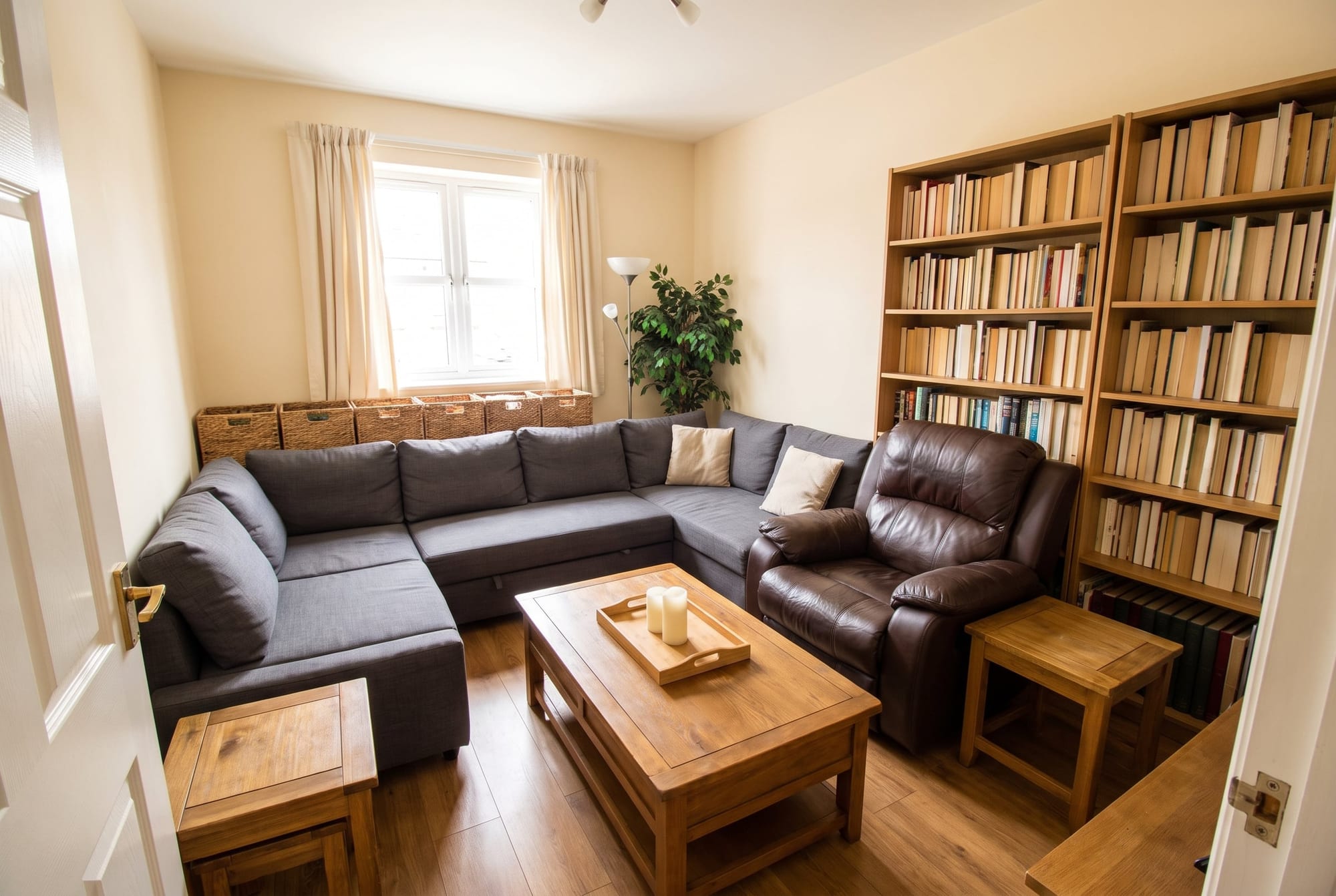
For an occupied home, these routes usually come before any virtual work:
- Declutter and rearrange: often enough for a home in good shape. In NAR’s 2025 survey, 51% of sellers’ agents didn’t stage, but asked sellers to declutter or fix faults.
- A staging consultation: a stager walks through and leaves a to-do list. Our home staging cost guide puts it at $150 to $600.
- Occupied staging: a stager edits your furniture and brings in accessories, for $1,000 to $3,000 in HomeGuide’s 2026 cost guide.
Virtual staging an occupied room means erasing the furniture from the photo first. Some human services do that. TINTY doesn’t remove furniture yet, so it works on empty rooms only.
Partly vacant homes
Many listings sit in between. The seller has moved out but left a sofa and a bed, or one room is empty while the rest is furnished.
Treat each room on its own. Edit and rearrange the rooms that still have furniture, and virtually stage the ones that are fully empty. A room with one leftover chair can look emptier than a bare one, in our view, so clear it or furnish it properly.
Shoot empty rooms with staging in mind
Shoot each empty room from a corner with every light on, and keep the unstaged original for disclosure. Our photo day checklist covers the rest, and our iPhone listing photo guide covers shooting empty rooms on a phone.
Watch out: never stage over damage. Stellar MLS rules ban edits that hide “negative visual elements” such as holes in the wall or damaged flooring. Buyers will see the flaw at the showing anyway.
Price tier: what buyers expect to see in person
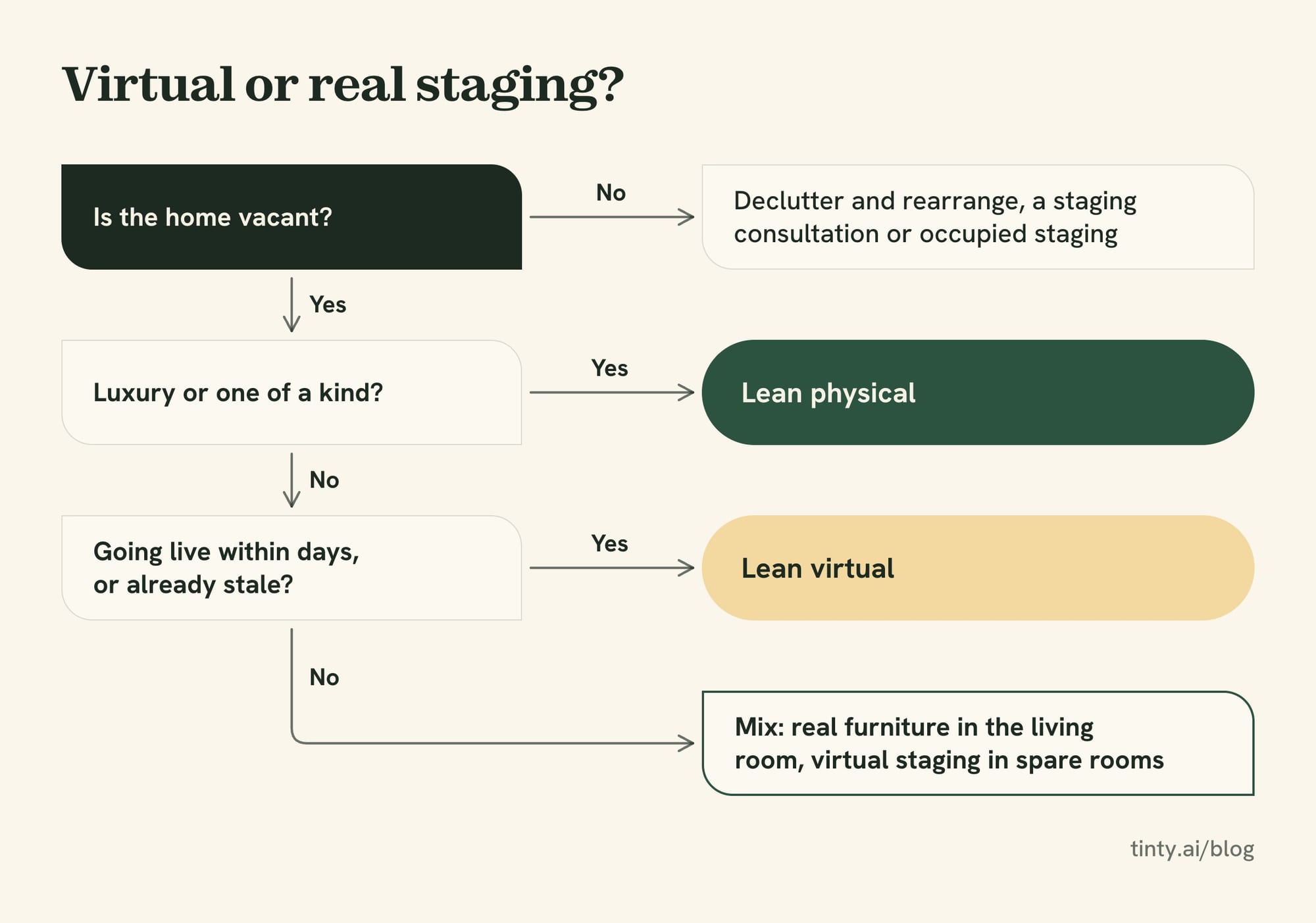
The higher the price, the more buyers judge the walkthrough, in our view. So we’d lean physical for luxury homes, mix in the middle of the market, and lean virtual for entry-level homes, condos and rentals.
How the tiers usually play out:
- Entry-level homes and condos: buyers compare many listings online, and a staged photo shows that a bed and a sofa fit. The rooms they tour will be empty, so keep them spotless.
- Mid-market homes: a mix often works, with real furniture in the living room and virtual staging in spare bedrooms and the office.
- Luxury homes: buyers expect a finished home in person. Physical staging also costs more here, since some stagers price by the home’s value.
- Rentals: some forum posters use virtual staging for rentals, but they split on whether it speeds up leasing (see what agents say below).
Price alone rarely decides for agents. In NAR’s survey, only 5% of sellers’ agents staged just high-priced homes, while 21% staged every listing.
Soft staging: a middle route
Soft staging sits between the two. HomeLight’s staging guide describes it as adding art, mirrors, rugs and throw pillows without bringing in large furniture. Some agents offer it as part of the listing agreement.
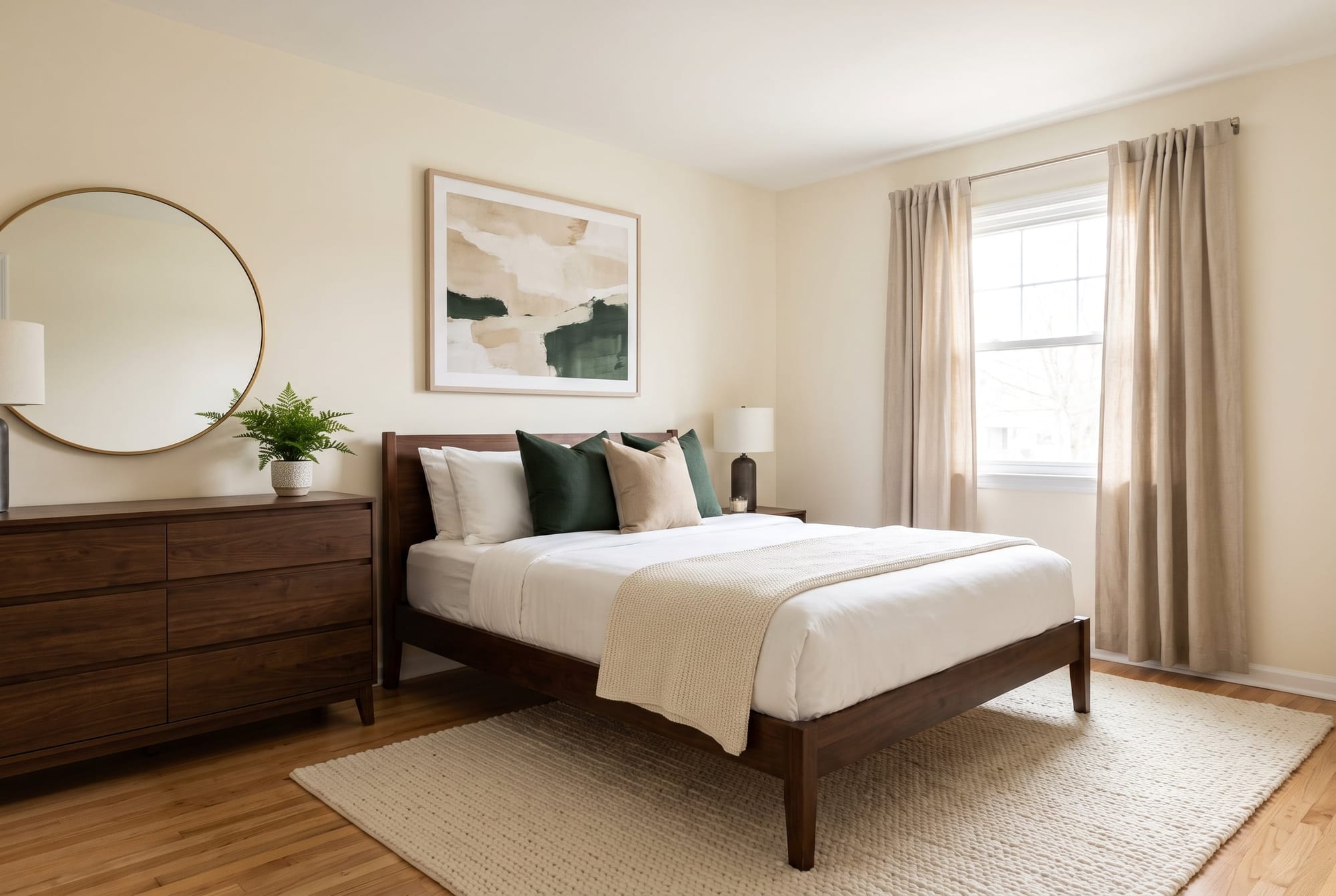
It suits a lived-in home that’s tidy but bland, in our view. We’d also try it in a vacant home: a few real accessories in the main room make the walk-in feel less bare. Add them before the photo shoot, so the photos and the showing match.
Days on market: quick launch, long wait or stale listing
Expected days on market can change the math more than the sticker price. Physical staging bills an install fee and then rent each month, while a virtually staged photo is paid for once, per photo or from a plan’s allowance.
Three common timelines:
- Going live next week: AI previews take seconds to minutes, and human services a few hours to two business days. A physical install needs a stager’s calendar, delivery and setup.
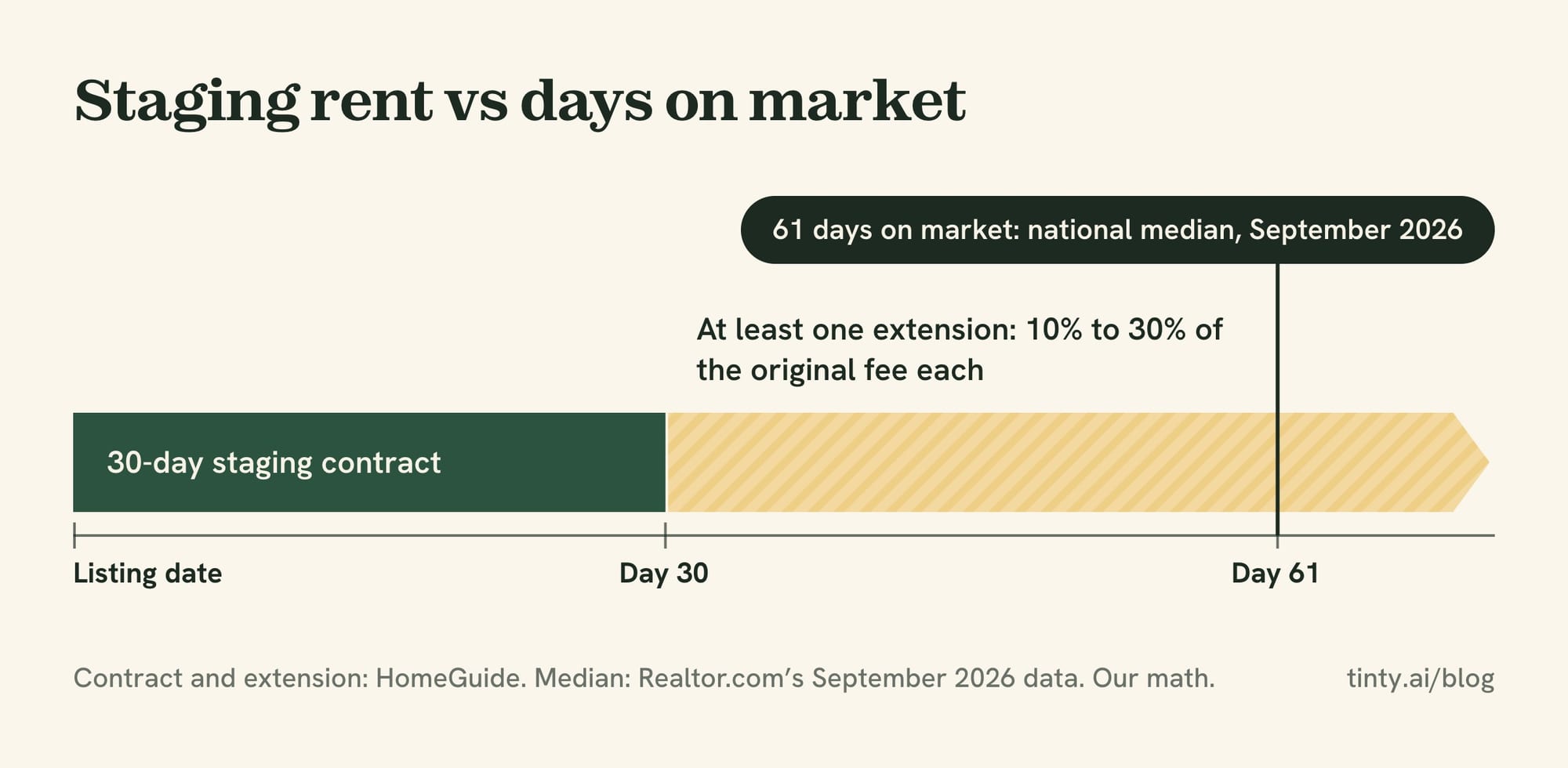
- A long or uncertain wait: staging contracts typically run 30 days, and each extension costs 10% to 30% of the original fee, per HomeGuide.
- A stale listing: new photos are often the cheapest refresh, in our view. Virtual staging can replace empty-room shots without a reshoot.
Realtor.com’s September 2026 data put the national median at 61 days on market. At that pace, a 30-day staging contract would likely need at least one extension (our math). The house also costs money to hold: about $3,000 a month in our vacant house example.
If the listing has already gone stale, staging is only one fix. Our guide to reviving a stale listing covers photos, price and access in order.
Tip: where homes sell in days, any clean, well-lit listing may draw offers (our view). If you do stage, one month of real furniture is the cheapest it gets. Our cost guide covers when staging is less likely to pay off.
Which rooms to stage for real and which in photos
Put real furniture where buyers look hardest. In NAR’s 2025 survey, buyers’ agents called the living room (37%), primary bedroom (34%) and kitchen (23%) the most important rooms to stage. Guest bedrooms came last, at 7%. Our room-by-room staging guide has the full ranking.
A room-by-room split we’d use:
- Living room: physical if the budget allows. It ranks first with buyers’ agents, and 91% of sellers’ agents who stage include it.
- Primary bedroom: physical or virtual. In our view, a real, well-made bed beats a rendered one at the showing.
- Kitchen and bathrooms: real cleaning, clear counters and fresh towels. TINTY doesn’t stage these rooms, and cleaning matters more than furniture there.
- Spare bedrooms, nursery and office: virtual staging fits. Buyers’ agents rate guest and children’s bedrooms lowest, and a staged photo shows what each room is for.
- Terrace or balcony: two chairs and a rug, real or virtual. Terrace is the one outdoor room type TINTY stages.
Studios and open-plan rooms
Open plans are where virtual staging earns its keep, in our view. One big empty room reads as a hall in photos, and buyers can’t tell where the sofa or the table would go.
Furnishing every zone for real takes a lot of rented pieces. A staged photo can mark each zone with a rug, a sofa and a table instead. TINTY has living-dining and studio room types for exactly this.
Our home staging cost guide prices this kind of mixed staging plan for a vacant 3-bedroom. For do-it-yourself room tips, see DIY staging vs a stager vs virtual staging.
Physical vs virtual staging cost and timing, in brief
Physical staging usually costs hundreds to thousands of dollars per listing, while virtual staging costs about $9 to $500 per listing. The headline numbers, all from our two cost guides:
- Staging service: a $1,500 median in NAR’s 2025 survey, and $500 when the agent stages.
- Vacant install: $3,000 to $6,000 or more for the first month, per HomeGuide.
- AI virtual staging: under $1 to about $5 a photo, and five photos usually cost $12 to $50.
- Human design services: $14.40 to $70 a photo, delivered in a few hours to two business days.
Timing differs as much as price. HomeLight puts traditional staging at a few days to over a week from consultation to setup.
For the full ranges and a quick break-even check, see what it costs to stage a house. Our virtual staging cost comparison covers 29 services, with prices checked September 30, 2026. Our history of home staging and AI virtual staging shows how virtual staging grew as a cheaper alternative to renting furniture.
Is virtual staging worth it?
For a vacant home with clean, empty rooms, usually yes: it costs little and makes the photos easier to read. It’s worth less when buyers will judge the house mostly in person, or when the rooms need work no photo can fix.
Agents still rate physical staging higher. In NAR’s 2025 Profile of Home Staging, agents rated how much each listing feature mattered to their clients:
- Buyers’ agents: 57% called traditional physical staging much more or more important. Only 18% said that of virtual staging, and 38% called it less important.
- Sellers’ agents: 43% rated traditional staging that highly, against 16% for virtual staging. Another 34% called virtual staging less important, and 24% equally important.
- Virtual only: 8% of sellers’ agents said they only stage homes virtually.
Photos still filter the shortlist. Agents in the same survey said buyers with a set number in mind expected to view a median of 20 homes virtually and 8 in person.
Watch out: we found no independent study of what virtual staging alone does to price or days on market. A virtual staging page on NAR’s site, with its “72% increase in online traffic”, is sponsored content citing a vendor’s internal data.
When virtual staging is not worth it
Skip it, or do something else first, in these cases (our view, with sources where noted). Our general pros and cons of virtual staging list the trade-offs; this list is about situations:
- Crowded, lived-in rooms: the furniture has to come out of the photo first. Decluttering costs less and also helps at the showing.
- Rooms with damage: fix the floor or wall first. Staging over flaws breaks MLS rules such as Stellar’s.
- Luxury listings: buyers at this level judge the walkthrough, so real furniture earns its cost.
- Kitchens and bathrooms: cleaning and light do more than added decor. TINTY doesn’t stage them, though some other tools and human services do.
- Homes that sell in days: in a hot market, clean and well lit may be enough.
Does virtual staging make it better or worse?
It makes a listing better online when the furniture is realistic, sized right and labeled. It makes it worse when the photos promise a home that buyers can’t find at the showing.
That risk is growing. In November 2025, New York’s Department of State warned that AI tools “may produce misleading or exaggerated” pictures of properties. It also cited a study finding that consumers see AI-generated images as less authentic.
Real Estate News reported in September 2026, citing NAR, that some buyers now call misleading listings “housefished.” It also cited a Coraly study: nearly 11% of about 40,000 main listing photos from early 2026 showed signs of digital alteration.
Bad virtual staging: what makes it look fake
Bad virtual staging is usually a problem of scale, light or honesty, not of style.
Seven signs of bad virtual staging
Check each staged photo against the original for these:
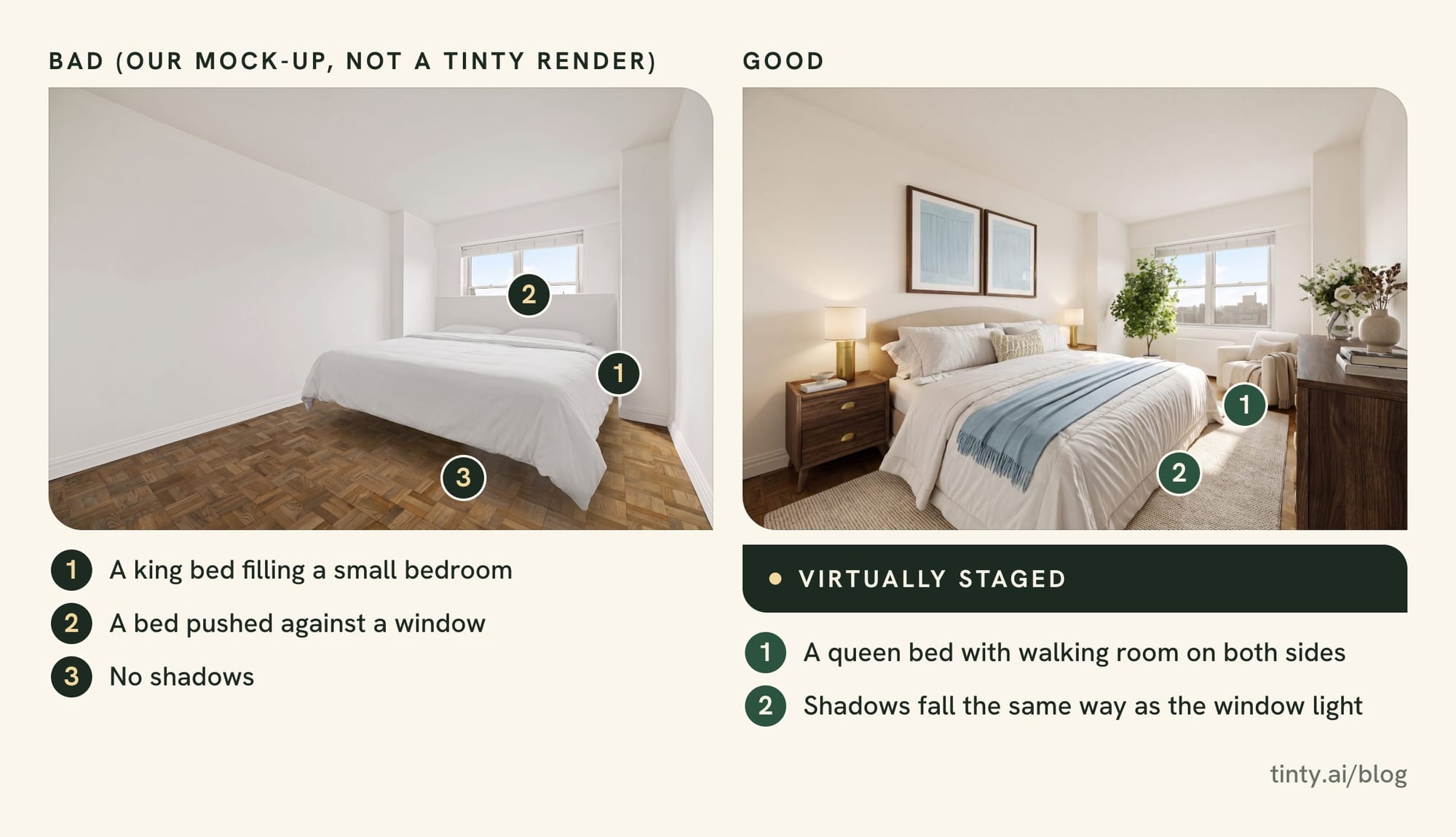
- Wrong scale: a king bed filling a small bedroom, or a sofa longer than its wall. Stellar MLS also bans small furniture that makes a room look larger.
- Blocked doors and windows: a dresser across a closet door, or a bed pushed against a window.
- Floating furniture: no shadows, legs that hover over the rug, or light falling from the wrong side.
- Changed windows or views: New York’s alert lists inconsistent window views as a sign of AI editing. California Regional MLS (CRMLS) rules ban altered views through windows.
- Invented features: Real Estate News described AI edits that added a fireplace that doesn’t exist.
- A crowded room: too many pieces make a bedroom look small, and buyers find it empty anyway.
- Mismatched angles: one room shown twice with different furniture. TINTY doesn’t match furniture across angles yet, so use one angle per room.
Tip: use any door in the frame as a ruler. The most common interior door is 80 inches tall, per door maker Mastercraft. Furniture that looks oversized next to it probably is.
What good virtual staging looks like
Good virtual staging doesn’t draw the eye. Signs it was done well:
- Right-size pieces: a queen bed with walking room on both sides, and a sofa that leaves the path to the door clear.
- A style that fits the house: furniture a buyer at that price would own, not a showroom set.
- Matching light: shadows fall the same way as the window light.
- Nothing permanent changed: walls, windows, floors, fixtures and views match the original photo.
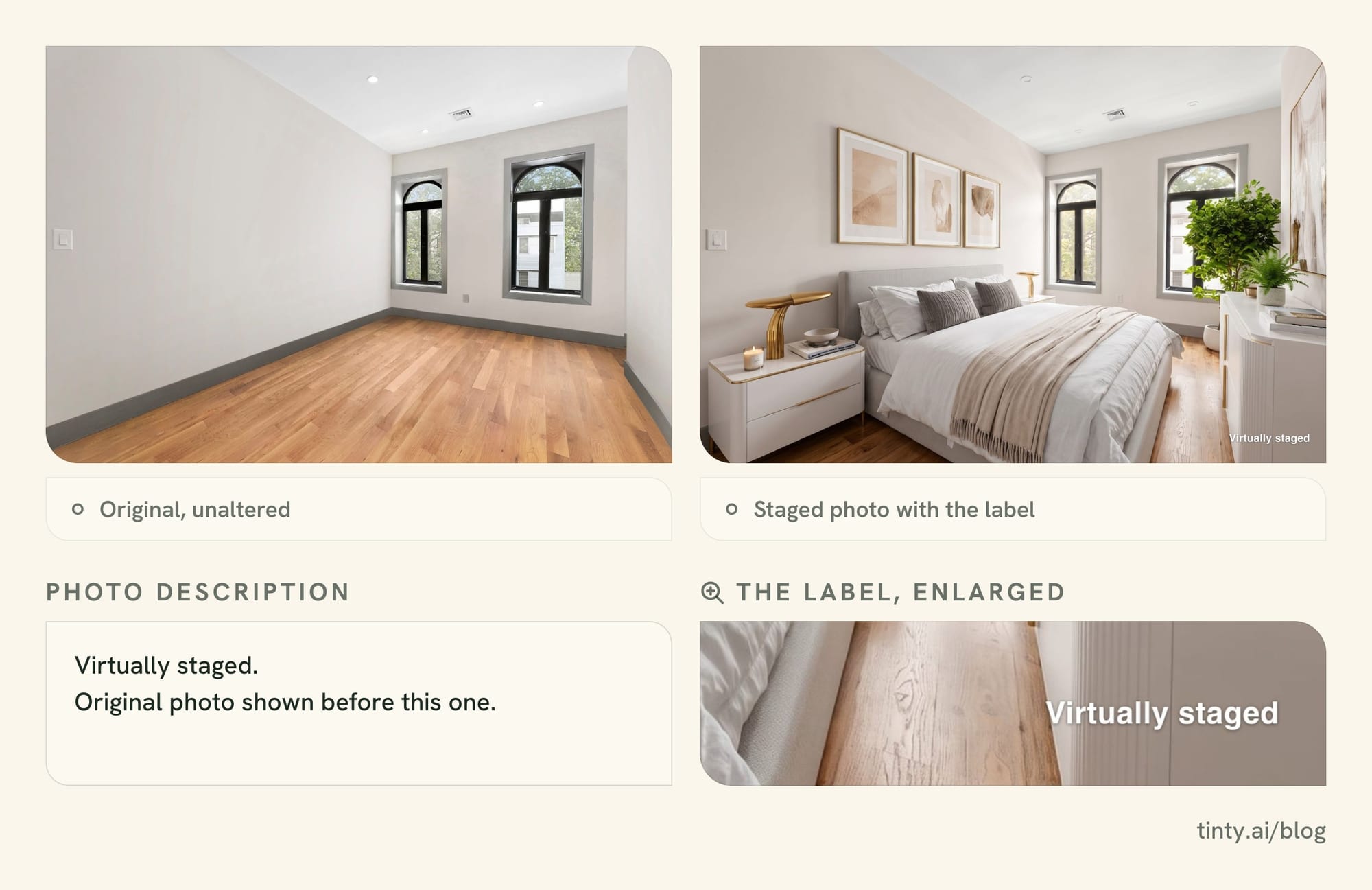
- A label and the original: each staged photo is marked and sits next to its unstaged version.
What to do with a bad render
Don’t publish it. Pick another preview, render again with fewer or smaller pieces, or ask the service for a revision. Never fix a bad render by editing walls, floors or windows.
At TINTY, previews are free, and rendering a finished photo again uses another finished photo. Human services set their own revision rules, so check them before you order.
For a short checklist before you pick a tool, see the quality red flags in our software comparison.
Disclosure: label virtual staging, not real staging
Physical staging needs no label, because the furniture is really in the house. Virtually staged photos do, under a growing set of laws and MLS rules.
Rule: California’s AB 723 has applied since January 1, 2026. A listing must disclose that an image was altered and give access to the unaltered original.
Wisconsin’s Act 69 takes effect on January 1, 2027. MLS rules differ on where the label goes, and some fine agents. CRMLS’s disclosure FAQ says it warns first, then fines $250 if the problem isn’t fixed in time. NAR’s Standard of Practice 12-10 also bars Realtors from using “misleading images.”
What we’d do on every virtually staged listing:
- Label each staged photo the way your MLS asks.
- Place the original right before or after it.
- Mention virtual staging in the public remarks if your MLS expects it.
Our guide on whether virtual staging is legal covers state laws and MLS rules in detail. TINTY can add a “Virtually staged” label to the photos you download, but only if you turn it on. Leave it off where your MLS bans words on photos: Stellar MLS wants the label in the photo description field instead.
Showings: close the gap between photo and walkthrough
The biggest risk with virtual staging shows up at the front door, not online. Buyers who saw furnished photos walk into empty rooms, so plan the showing as carefully as the photos.
What we’d do before the first showing (our view, except where a source is named):
- Fix small faults: an empty room shows every scuff and stain. A Colorado investor relayed this point from his agent wife in the forum thread below.
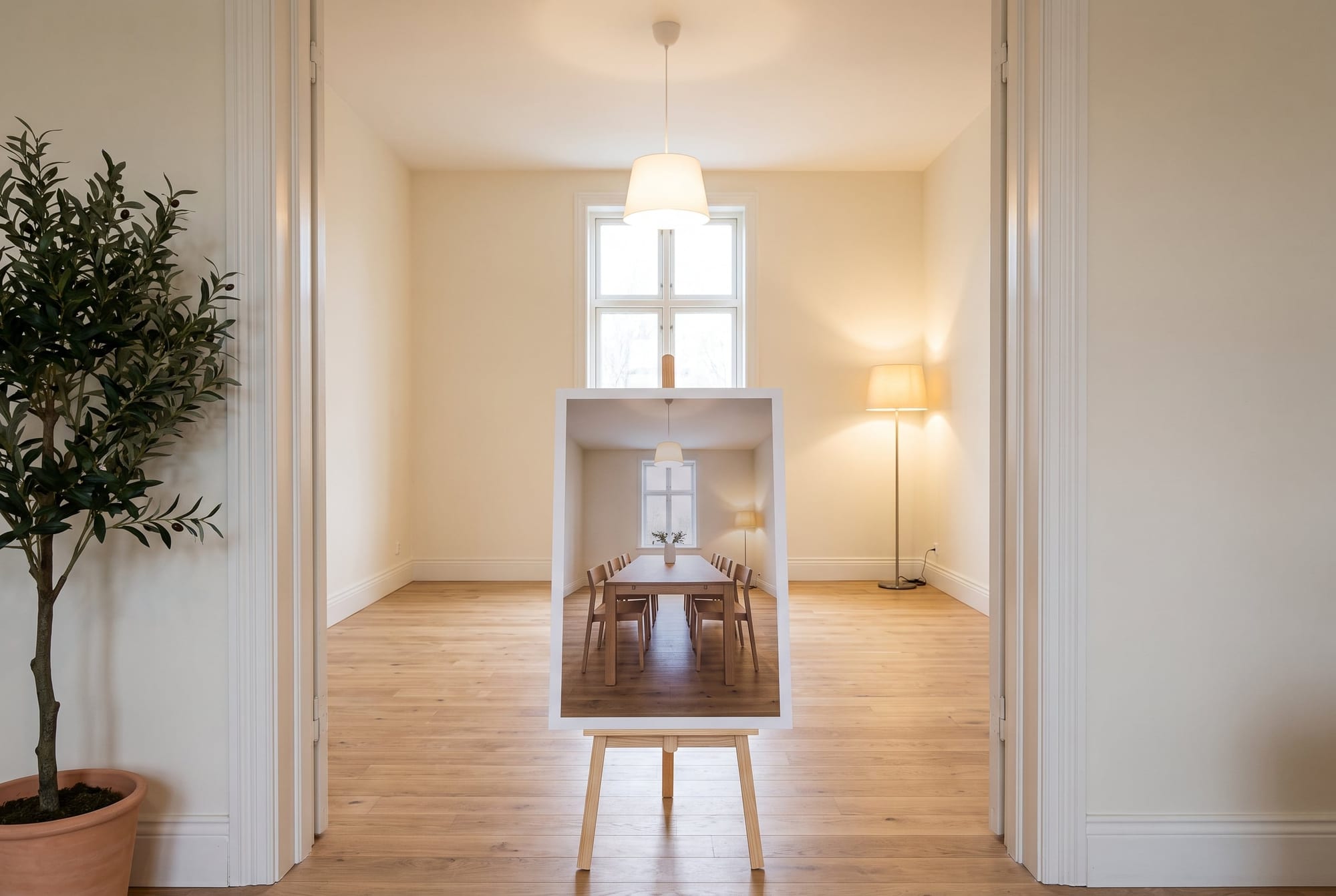
- Bring the staged photos: a South Florida agent told HomeLight he advises clients to display enlarged prints in each room, so buyers can match photo and space.
- Leave a floor plan with room sizes: it answers the question empty rooms raise most, which is whether the buyer’s own furniture fits.
- Add a few real touches: fresh towels in the bathroom, a plant by the door and a lamp in any dark corner.
- Ask showing agents about the photos: if buyers keep saying the rooms looked bigger online, re-stage with smaller pieces.
What agents say about virtual staging vs physical staging
In the forum threads we could read, skeptics worry most about the gap between the photo and the showing. The one fan who described a routine labels each image and shows the original. This section draws on three BiggerPockets and ActiveRain threads. They’re individual opinions, not data.
BiggerPockets, 2024: four objections and a disclosure routine
In an April 2024 BiggerPockets thread on virtual staging, a Wyoming broker asked whether it helps homes sell or rent faster. The answers split:
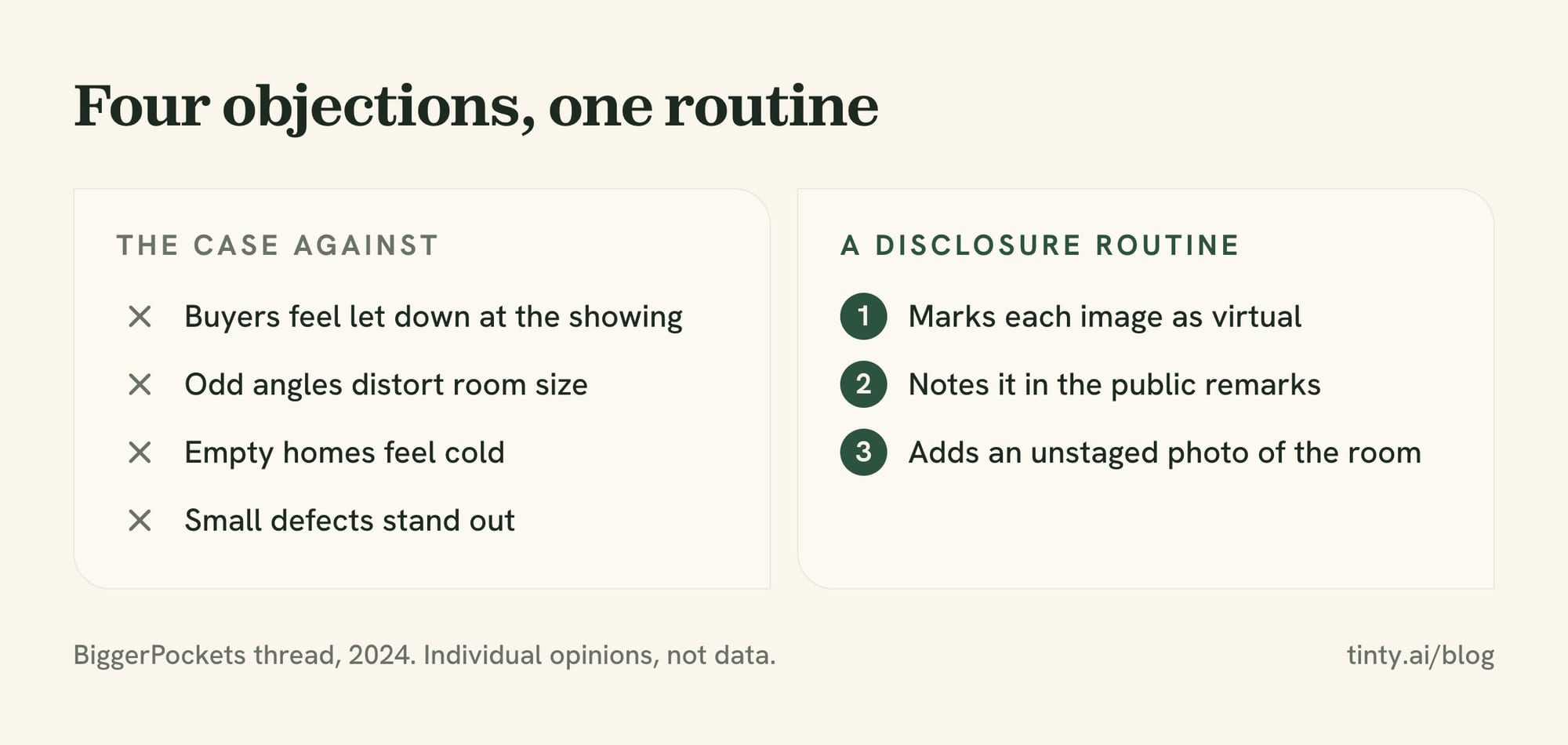
- The case against: a Colorado investor relayed his agent wife’s four objections. Buyers feel let down at the showing, odd angles distort room size, empty homes feel cold, and small defects stand out.
- A disclosure routine: the broker replied that he marks each image as virtual, notes it in the public remarks and adds an unstaged photo of the room.
- Sales vs rentals: he finds it helpful for sales, but said rentals lease too fast for it to matter. A San Antonio broker said it didn’t help her rent homes faster.
- Odd layouts: a consultant in Columbus, Ohio, uses it for apartments with odd floor plans and said the average renter can’t tell.
- Margins: a Texas consultant thought it makes more sense for sales than rentals, since sales have higher margins.
BiggerPockets, 2025: a flipper who skips real staging
In a July 2025 thread on flipping and staging, a Connecticut flipper said he never found the need to pay for staging in his flips. He uses virtually staged photos instead. A Pennsylvania broker answered that the statistics favor staged homes, then posted a list that included a “73% less time” claim.
The flipper pushed back: surveys measure sentiment, and in the Northeast a home often gets an offer within three days of listing. We couldn’t find a study behind the “73% less time” claim either. Our guide explains where the 73% stat comes from.
ActiveRain, 2025: agents who have used it for years
Under a September 2025 ActiveRain post on virtual staging by a staging software founder, a Charlotte broker said she has used virtual staging for years. She uses it on vacant homes and to dress up furnished ones, because buyers start online. A Manhattan agent said he has used it for years too, and his firm has never charged agents for it.
Where TINTY fits, and where it doesn’t
We make TINTY, so here are its limits right next to its strengths:
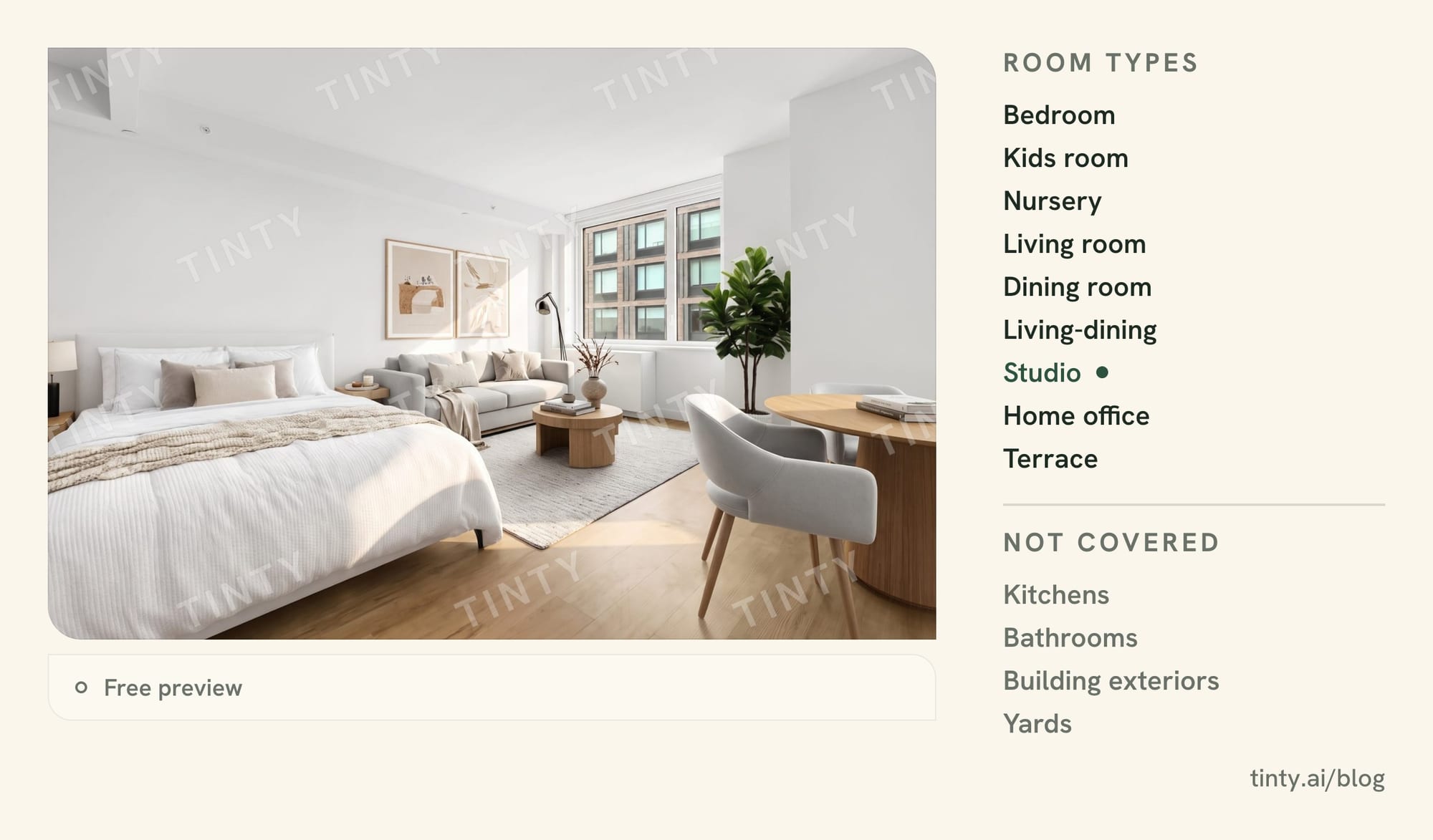
- Rooms: bedroom, kids room, nursery, living room, dining room, living-dining, studio, home office and terrace.
- Not covered: kitchens, bathrooms, building exteriors and yards.
- Empty rooms only: no furniture removal yet, and no decluttering.
- Output: six styles and 2K files, about 2,500 px on the long side. It doesn’t match furniture across several angles of one room.
- Price: free previews in about 30 seconds. Plans start at $9 a month for 4 finished photos. Across plans and the $29 one-time pack, a finished photo costs $1.32 to $2.90. See our virtual staging pricing.
Try TINTY’s AI virtual staging free on one of your own empty rooms. Previews take about 30 seconds, cost nothing and need no card.
No time to stage photos yourself? TINTY Studio, our done-for-you virtual staging service, handles it for busy agents, including multi-angle sets of one room. Email the empty-room photos to hello@tinty.ai with the style you want and what each room is for. Our team stages them with TINTY’s AI tools and finishes every photo by hand.
Staged photos arrive on a private link in 2 to 24 hours. It’s $10 a photo from 3 photos, with no account and no prepayment: you pay only if you’re happy with the result.
See more rooms in our virtual staging before and after examples, or how it fits a listing on our page about virtual staging for realtors.
Virtual staging vs real staging FAQ
Is virtual staging cheaper than real staging?
Yes, by a wide margin. Five AI-staged photos usually cost $12 to $50, while NAR’s 2025 median for a staging service is $1,500. Physical staging also adds rent if the house sits: HomeGuide puts each extension at 10% to 30% of the original fee.
Can you virtually stage an occupied home?
Only after the furniture is removed from the photo, which some human services do. TINTY doesn’t remove furniture yet. For a lived-in home, decluttering, a staging consultation or occupied staging usually does more, and it also helps at showings.
Show 6 more questionsShow fewer questions
Do buyers feel misled by virtual staging?
Some do, when the photos oversell the house. New York’s Department of State warned in November 2025 that AI images can mislead buyers. In a 2024 BiggerPockets thread, an investor listed buyer letdown at showings first among his agent wife’s four objections. A label, the original photo and realistic furniture lower that risk.
Can you combine virtual and physical staging?
Yes, and for many vacant listings it’s the best value, in our view. Stage the living room with real furniture and the spare bedrooms in the photos. Our home staging cost guide prices a mixed plan for a vacant 3-bedroom.
Is virtual staging worth it for rentals?
Opinions split. In a 2024 BiggerPockets thread, a Wyoming broker said rentals lease too fast for it to matter. A San Antonio broker said it didn’t help her rent homes faster, while a Columbus consultant uses it for apartments with odd floor plans.
How can you tell if virtual staging is bad?
Compare it with the original photo. Windows, views, floors and fixtures should match, furniture should fit the room, and shadows should follow the window light. Watch for blocked doors, floating furniture and features the house doesn’t have.
How long does physical staging take compared with virtual staging?
Physical staging takes a few days to over a week from consultation to setup, per HomeLight. AI virtual staging takes seconds to minutes, and human virtual staging services deliver in a few hours to two business days.
Does physical staging need a disclosure label?
No, because the furniture is really in the house. Virtually staged photos do: California’s AB 723 has required a disclosure and access to the original since January 1, 2026, and many MLSs require a label.
How we researched this
On October 6, 2026, we reread NAR’s full 2025 Profile of Home Staging and our own cost guides, and checked Realtor.com’s September 2026 data. We read New York’s Department of State alert, Real Estate News’s September 2026 report and Stellar MLS’s rules. We also read the top search results for “virtual staging vs real staging”, “is virtual staging worth it” and “bad virtual staging”.
We couldn’t open the Reddit and Facebook threads in those results, so we used three BiggerPockets and ActiveRain threads we could open. We didn’t test competing tools, and points marked “our view” are our own judgment.
TINTY facts come from our live pages, checked October 6, 2026. If something here is wrong, email hello@tinty.ai and we’ll fix it.
Sources
All pages read October 6, 2026, unless a date is given.
Survey and market data:
- NAR 2025 Profile of Home Staging (full report, PDF) (May 2025; 1,266 responses, February 2025)
- Realtor.com September 2026 housing data (Jake Krimmel, September 30, 2026)
Show 17 more sourcesShow fewer sources
Rules and regulators:
- California Business and Professions Code §10140.8 (AB 723) (checked October 3, 2026)
- Stellar MLS Rules and Regulations, PDF (last updated September 15, 2025), Article 04.04
- CRMLS digitally altered image FAQ (updated July 24, 2026; checked October 1, 2026)
- CRMLS Rules and Policies, PDF (effective July 10, 2026; checked October 1, 2026)
- NAR 2026 Code of Ethics and Standards of Practice (Standard of Practice 12-10)
- New York Department of State: trend alert on AI-generated listings (November 13, 2025)
Reporting and guides:
- HomeGuide: How much does it cost to stage a house? (2026) (Kristen Cramer, February 4, 2026; figures rechecked October 6, 2026)
- Real Estate News: AI-modified listing photos blur line between enhancement, deception (September 8, 2026)
- HomeLight: Staging vs virtual staging (November 13, 2025)
- NAR Styled, Staged and Sold: Rethinking virtual staging (sponsored content) (June 12, 2025)
- Mastercraft Doors: understanding door dimensions
Forum threads:
- BiggerPockets: Virtual staging, have you used it? (April to May 2024)
- BiggerPockets: Flipping and staging (July 2025)
- ActiveRain: Why are more agents turning to virtual staging? (September 21, 2025, with comments)
Our pages and related guides:
- TINTY (ours): AI virtual staging app · Virtual staging pricing · Done-for-you virtual staging service · Virtual staging examples · Virtual staging for realtors
- Home staging cost (prices checked October 3, 2026) · Virtual staging cost (prices checked September 30, 2026) · What is virtual staging · Best virtual staging software · History of AI virtual staging
- Is virtual staging legal? · Wisconsin Act 69 · Staging a house · Selling a vacant house · How to sell a stale listing · How to take real estate photos with an iPhone