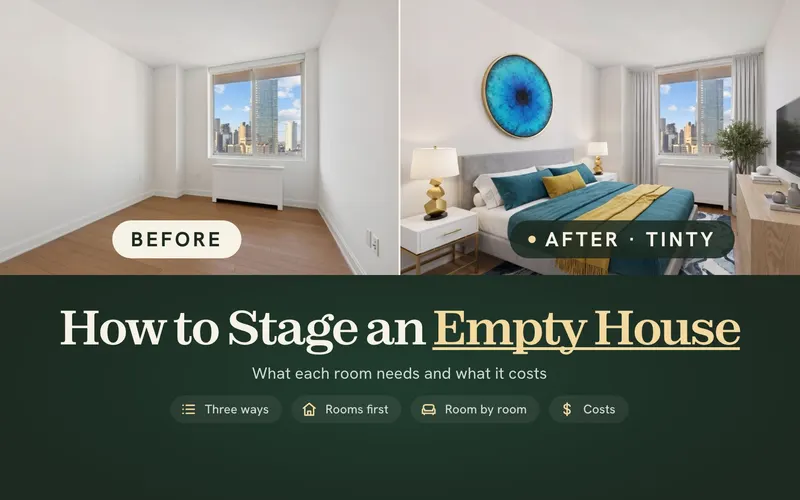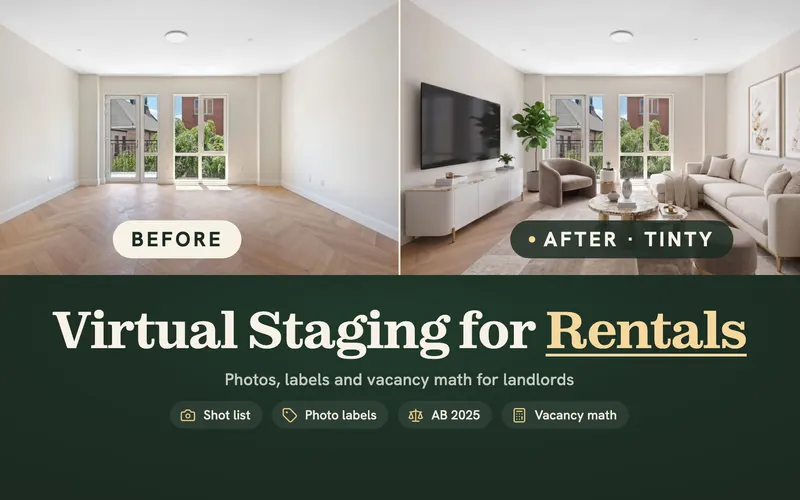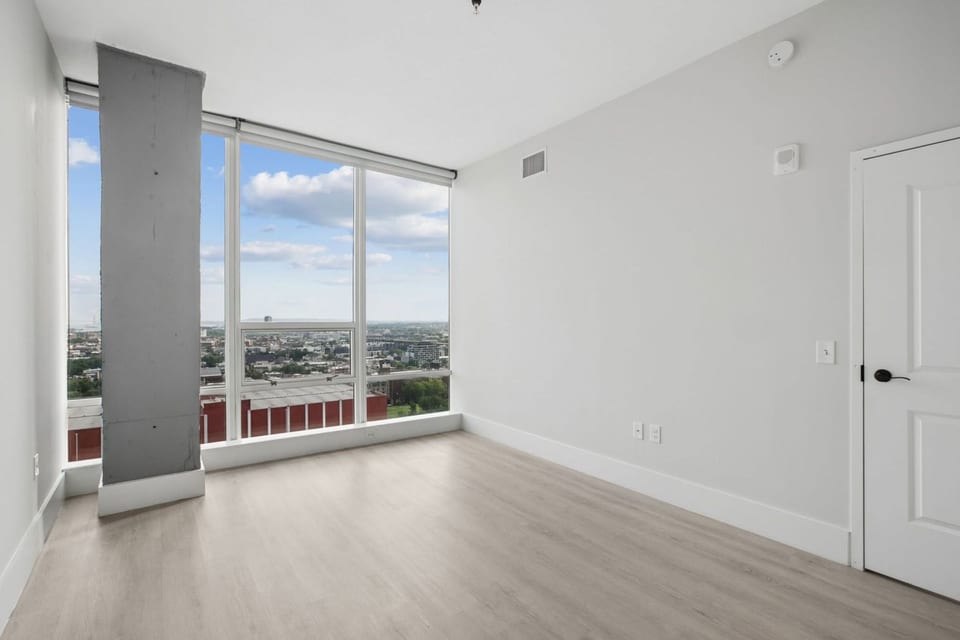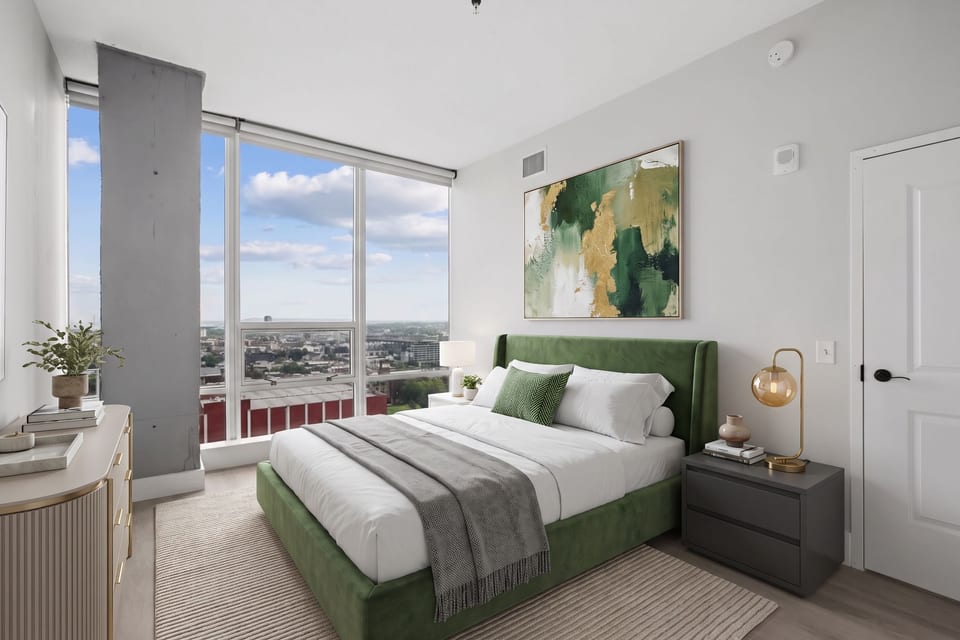
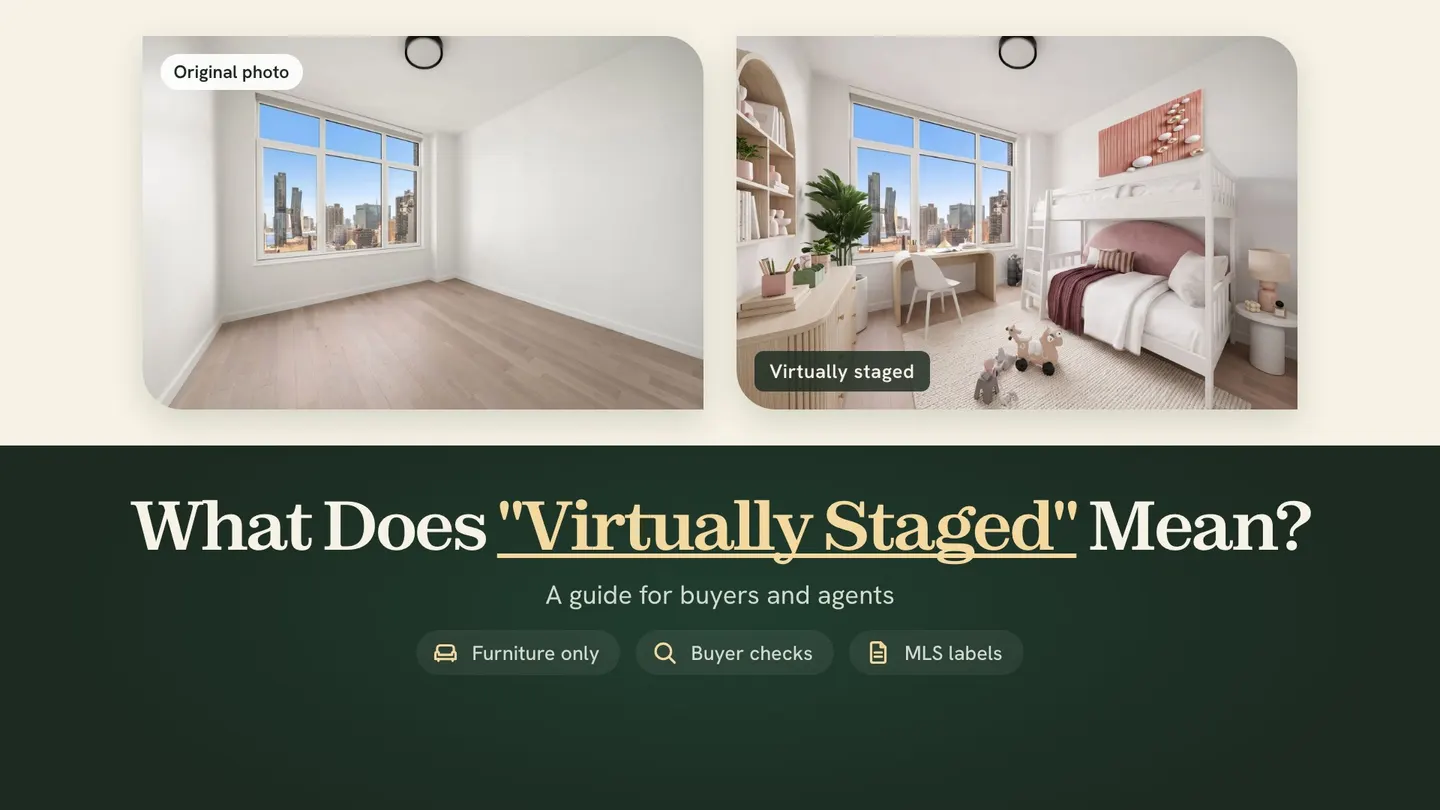
What does “virtually staged” mean? It means software added furniture and decor to a listing photo. The room itself should look the same as in person: same walls, windows, floors and view. The furniture isn’t there and doesn’t come with the house. Most multiple listing services (MLSs) require a label on these photos.
We make TINTY, an AI virtual staging app for real estate agents, so we stage photos like these every day. Notes on MLS rules and laws are general information, not legal advice. Rules and sources checked November 23, 2026.
Key takeaways
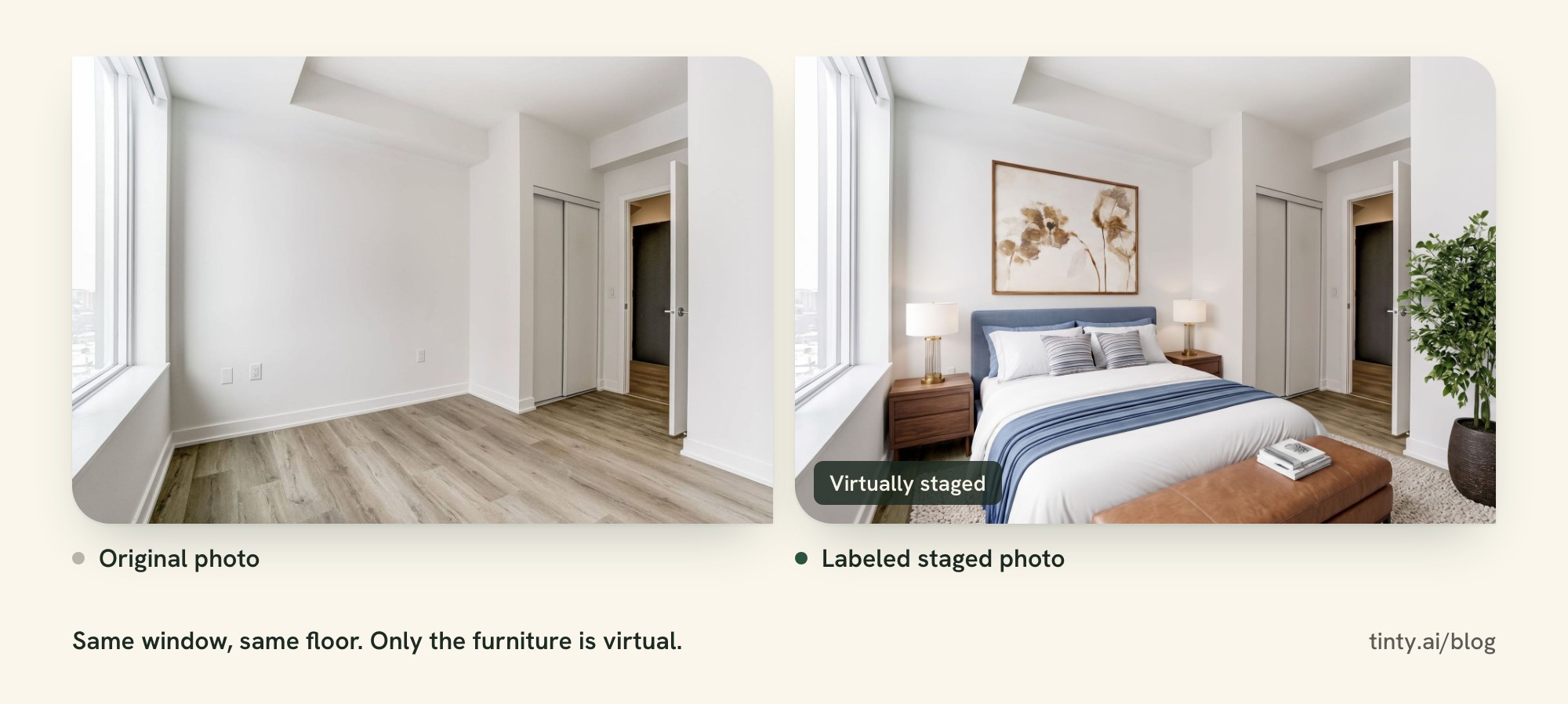
- Only the furniture is fake: a virtually staged photo adds furniture and decor. Walls, windows, floors and the view should stay as they are.
- The house is usually empty: the sofa in the photo won’t be there at the showing, and it isn’t included in the sale.
- Look for the original: many listings show the empty “as is” photo next to the staged one. Compare them.
- Agents, check your MLS: some MLSs require the label on the photo, while others ban text on photos.
On this page: Meaning · Related terms · Why agents use it · Buyer checks · How to label · Is it misleading? · Stage it right · FAQ
What “virtually staged” means in a listing
A virtually staged photo is a real photo of the room with furniture added by software. A designer or an AI tool places a sofa, a bed, rugs and art into the picture. The house itself isn’t touched.
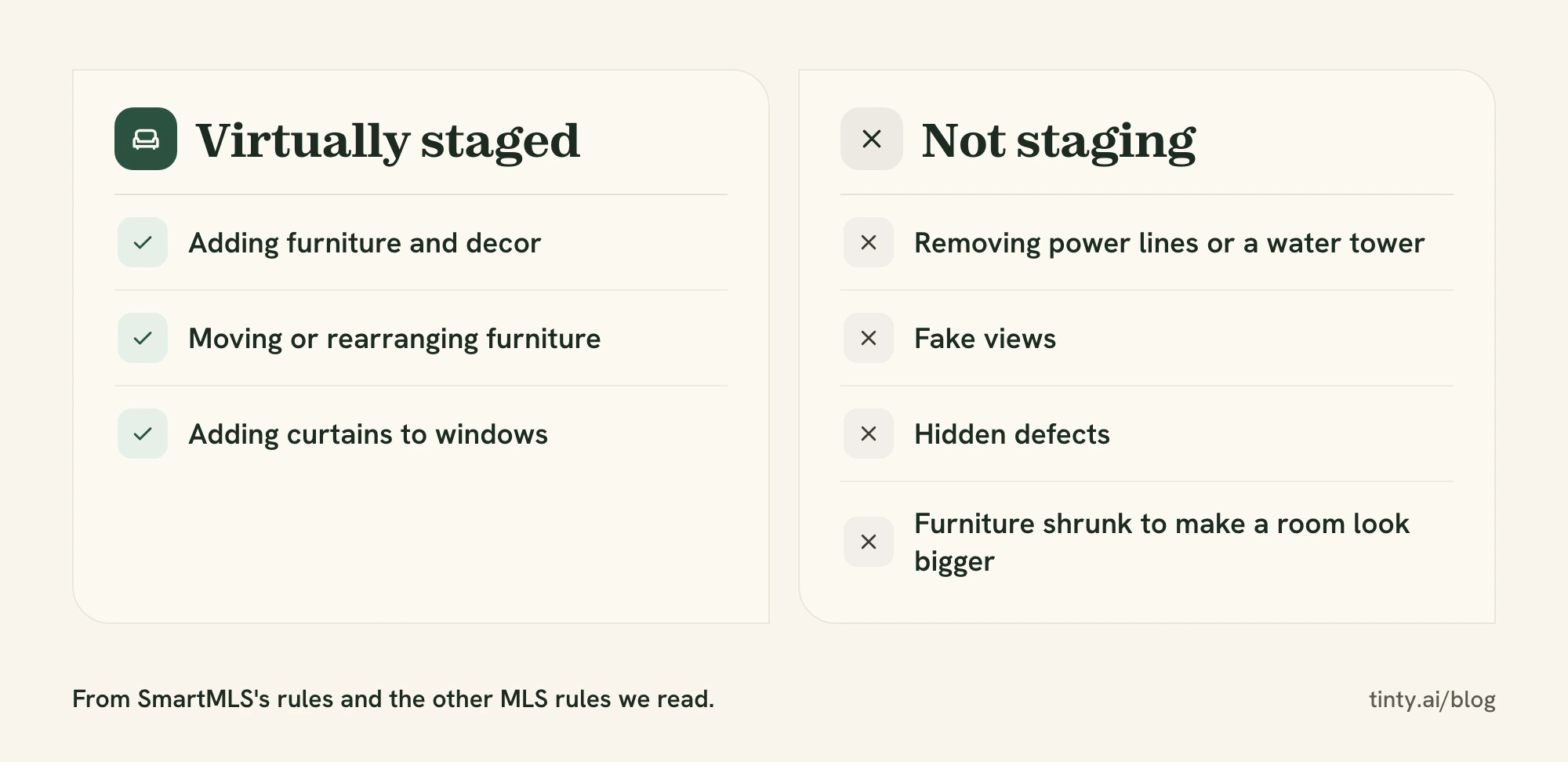
SmartMLS in Connecticut lists what virtual staging covers:
- Adding furniture and decor to empty rooms.
- Moving or rearranging furniture that’s already in the photo.
- Adding curtains to windows.
It doesn’t cover changes to the property. SmartMLS says you can’t remove permanent structures such as high power lines or a water tower. Most MLSs we read also ban fake views, hidden defects and furniture shrunk to make a room look bigger.
So when you see “virtually staged,” read it as: this is the real room, furnished in a picture. What you’ll walk into is the same room, empty.
Virtually staged vs digitally altered and other labels
Listings use several labels that sound alike. They don’t mean the same thing:
| Label | What changed in the photo |
|---|---|
| Virtually staged | Furniture and decor added or moved; the room is unchanged |
| Digitally altered | The property itself: paint, flooring, cabinets or fixtures |
| Virtually renovated | A redesign of the room, showing what it could look like after work |
| Rendering | A computer drawing, common for homes not built yet |
The difference matters to buyers. At SmartMLS, a digitally altered photo must come with the “as is” photo first, while a virtually staged photo doesn’t need one. Other MLSs ask for the original with every edited photo.
Why agents virtually stage photos
Empty rooms photograph small and cold, and buyers struggle to judge the size of a bare room. Furniture gives them a scale.
In NAR’s 2025 Profile of Home Staging, 83% of buyers’ agents said staging made it easier for buyers to picture the home as their future home. Physical staging is expensive, with a median of $1,500 for a staging service in the same survey.
Virtual staging costs far less. AI tools charge from under $1 to about $5 a photo, and human design services charge more. Our home staging statistics cover what the data does and doesn’t show.
What buyers should check in a virtually staged listing
A virtually staged photo is fine as long as you know what you’re looking at. Run these six checks before you book a showing:
- Find the label. It may sit on the photo, in the photo caption or in the listing remarks.
- Look for the original photo. Many listings place the empty “as is” photo right before or after the staged one.
- Compare the fixed parts. Windows, doors, floors, walls, ceiling lights and the view outside should match.
- Check the furniture scale. A queen bed that looks small may be a trick of the picture. Use the room sizes in the listing.
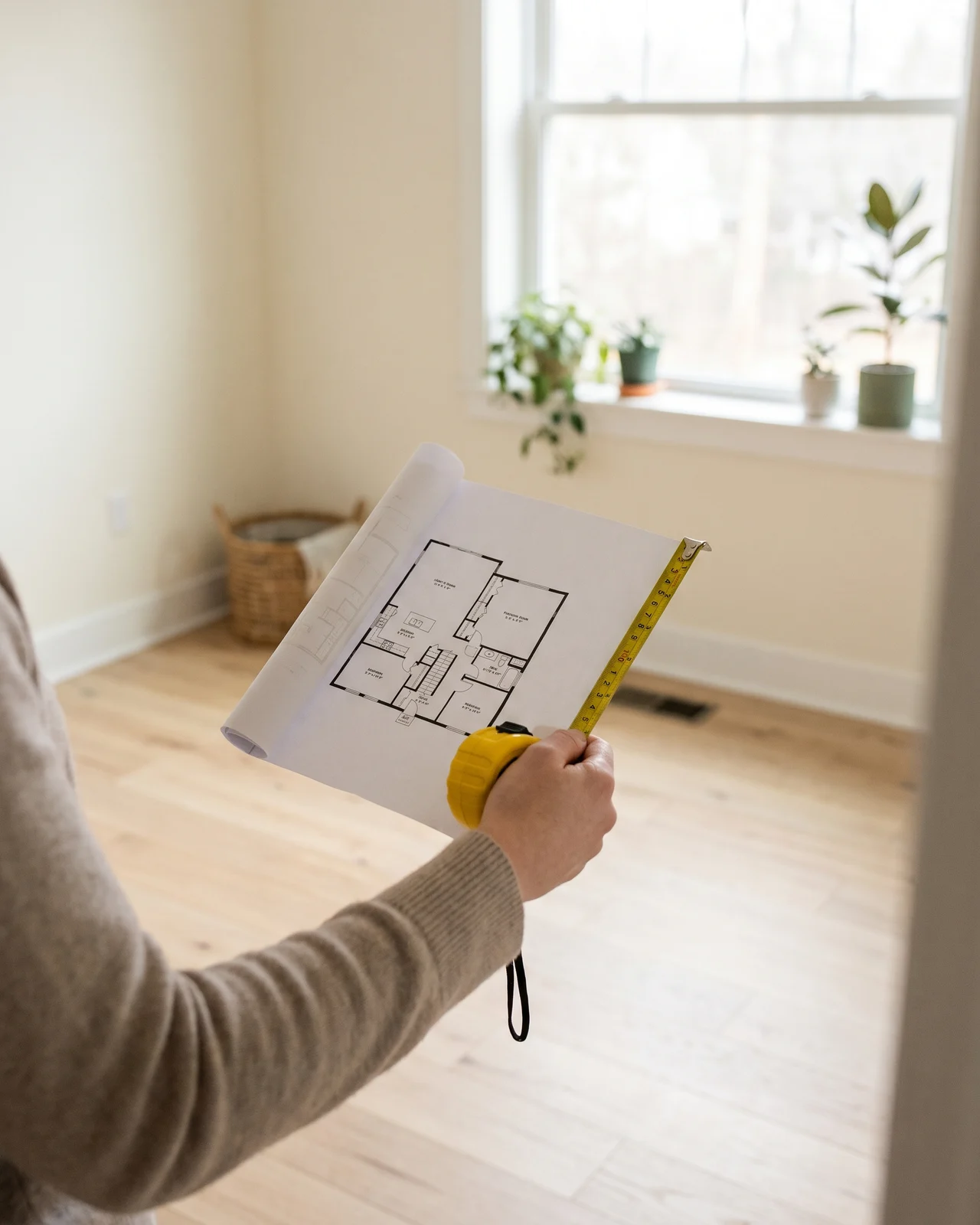
- Read the floor plan. It tells you more about space than any staged photo.
- Ask the agent. Which photos are staged, and is the home empty now?
If a photo hides a crack, a stain or a power line, that’s not staging. Tell your agent, and ask for the original photo or a video tour.
How agents should label virtually staged photos
There’s no national rule. Each MLS writes its own, and they disagree on where the label goes. Examples from the rules we read:
- SmartMLS (Connecticut): a “virtually staged” stamp or watermark on the photo. The MLS adds one if you check the box. A caption alone doesn’t count, because captions don’t reach third-party and IDX sites.
- Canopy MLS (Charlotte): the disclosure must sit directly on the image.
- ARMLS (Arizona): since May 28, 2026, the MLS’s own “Digitally Altered” watermark, paired with the original.
- CRMLS (California): “Virtually Staged” or similar in the photo’s text field, with the original right before or after it.
- Stellar MLS (Florida): “Virtually staged” in the photo description, plus a line in the public remarks. No label on the photo.
- Bright MLS: no text or graphics added to listing photos at all.
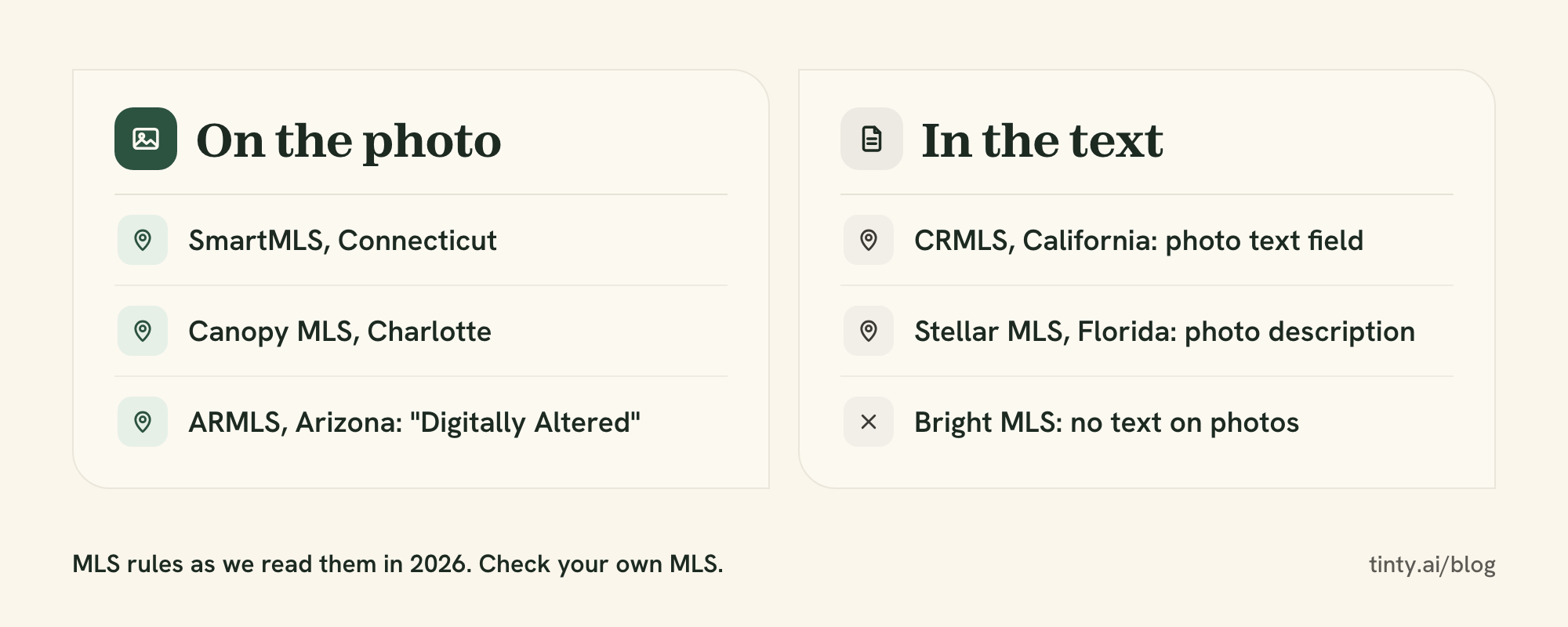
State law adds to MLS rules. California has required a label on altered listing photos since January 1, 2026, with access to the original through a link, URL or QR code. Wisconsin’s law starts January 1, 2027. Our guide on whether virtual staging is legal covers each rule in detail.
Is virtual staging misleading?
Not when it’s labeled and leaves the house as it is. Showing how an empty room could be furnished is presentation. Changing what the buyer would get is misrepresentation.
A label doesn’t fix a misleading photo. If the edit hides a defect, adds a view or changes the floors, the label won’t protect the agent. The Federal Trade Commission (FTC) says disclaimers may not cure an otherwise deceptive message.
How to virtually stage a photo the right way
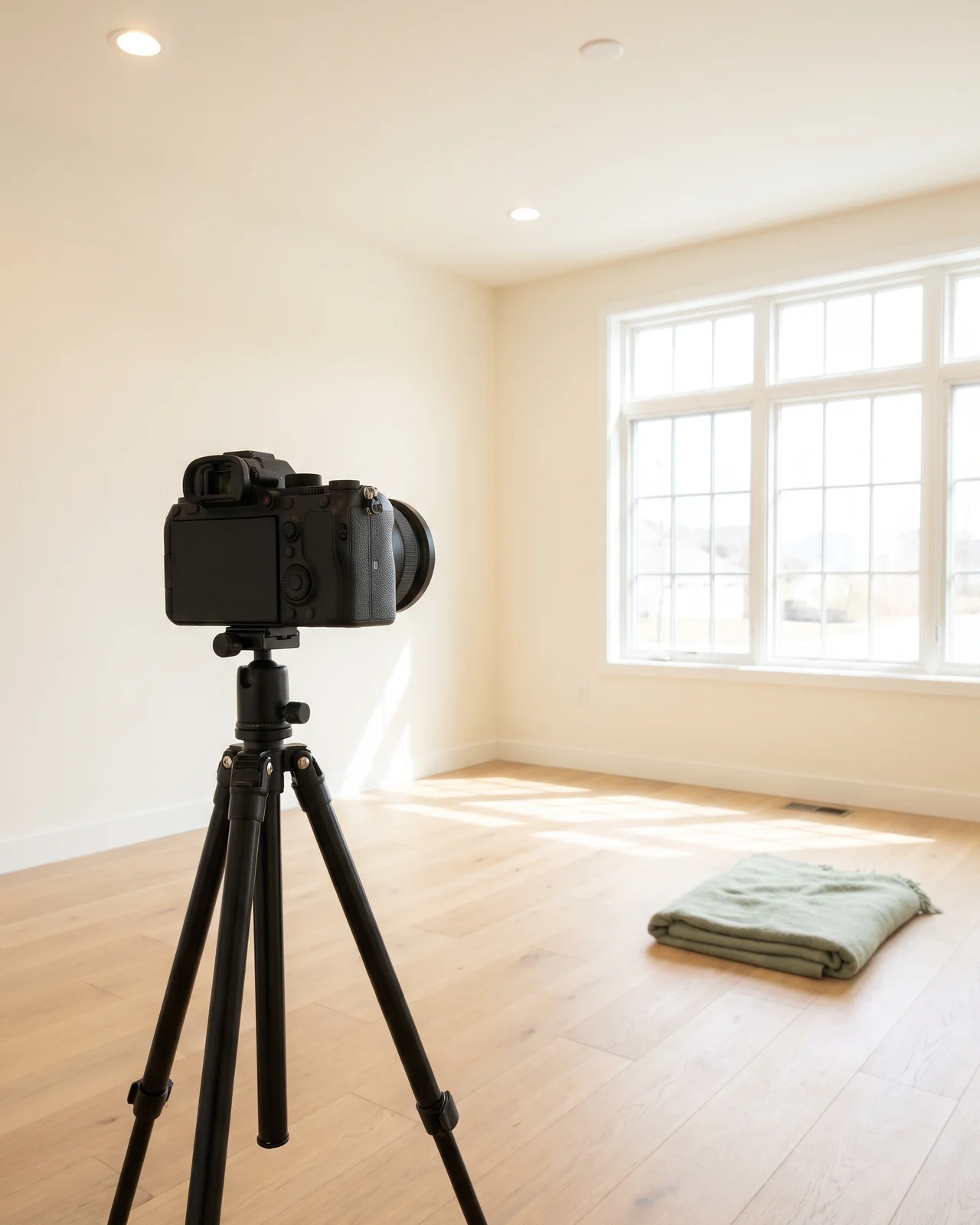
Stage furniture only. That’s the simplest rule for agents, and it’s what buyers expect when they read “virtually staged.” Four habits keep a staged photo honest:
- Start from a good original: a bright, level photo taken from a corner. Staging can’t fix a dark or tilted shot.
- Keep the room as it is: no new paint, floors, windows or views. Those turn a staged photo into an altered one.
- Match the real size: pick furniture that fits the room’s measurements, so buyers aren’t surprised at the showing.
- Keep the original: upload it next to the staged photo when your MLS asks, and keep a copy for any questions.
Our guide on how to stage an empty house covers which rooms to stage first.
If you need staged photos, the TINTY app adds furniture to an empty room in about a minute and leaves the walls, windows and floors alone. The first six photos are free with a light watermark, and plans start at $9 a month, per our pricing page. Or send three or more photos to TINTY Studio and pay $10 a photo only if you like the result.
Virtually staged FAQ
Does “virtually staged” mean the furniture is included?
No. The furniture in a virtually staged photo doesn’t exist in the home, so it can’t be part of the sale. If a listing shows real furniture you’d like to buy, ask the seller’s agent.
Is a virtually staged house empty?
Usually, yes. Most virtual staging is done on vacant homes. Some photos show occupied rooms with the owner’s furniture swapped or removed, which many MLSs also treat as virtual staging or an altered photo.
What does “virtually staged” mean on Zillow?
The same as on the MLS. Zillow and other sites show the photos from the listing feed. The label may appear on the photo itself or in the description, depending on the MLS rules where the home is listed.
Do agents have to disclose virtual staging?
Almost always, yes. Most MLSs require a label, and California law requires one. Even where no rule names it, an unlabeled staged photo can count as misleading advertising.
What is a virtual staging disclaimer?
It’s a short line that tells buyers a photo was edited. Examples are “Virtually staged” on the photo or “One or more photos were virtually staged” in the remarks. Use the exact wording your MLS asks for.
Can virtual staging hide damage?
It shouldn’t. Hiding cracks, stains or other defects is banned by the MLS rules we read and can break misrepresentation law. If you suspect a photo hides something, ask for the original.
How we researched this
We pulled US search data for “virtually staged” and related terms in Ahrefs on November 23, 2026, and read the top Google results. We read the label rules of six MLSs, California’s statute and the FTC’s deception policy. Most details come from our longer guide on virtual staging law, checked in October and November 2026.
Sources
Show 11 sourcesHide sources
- SmartMLS: What’s the difference between virtually staged and digitally altered photos? (connectMLS help center)
- CRMLS: Digitally altered image guidance FAQs
- ARMLS: Digitally altered media
- Canopy MLS: Digital, virtually staged and AI-enhanced images
- Stellar MLS Rules and Regulations (September 15, 2025, PDF)
- Bright MLS: Policy on Images and Documents (PDF)
- California Business and Professions Code §10140.8 (AB 723)
- FTC Policy Statement on Deception
- NAR: 2025 Profile of Home Staging
- tinty.ai · TINTY Studio · TINTY pricing
- What is virtual staging? · Is virtual staging legal? · Wisconsin Act 69 · Home staging statistics · How to stage an empty house