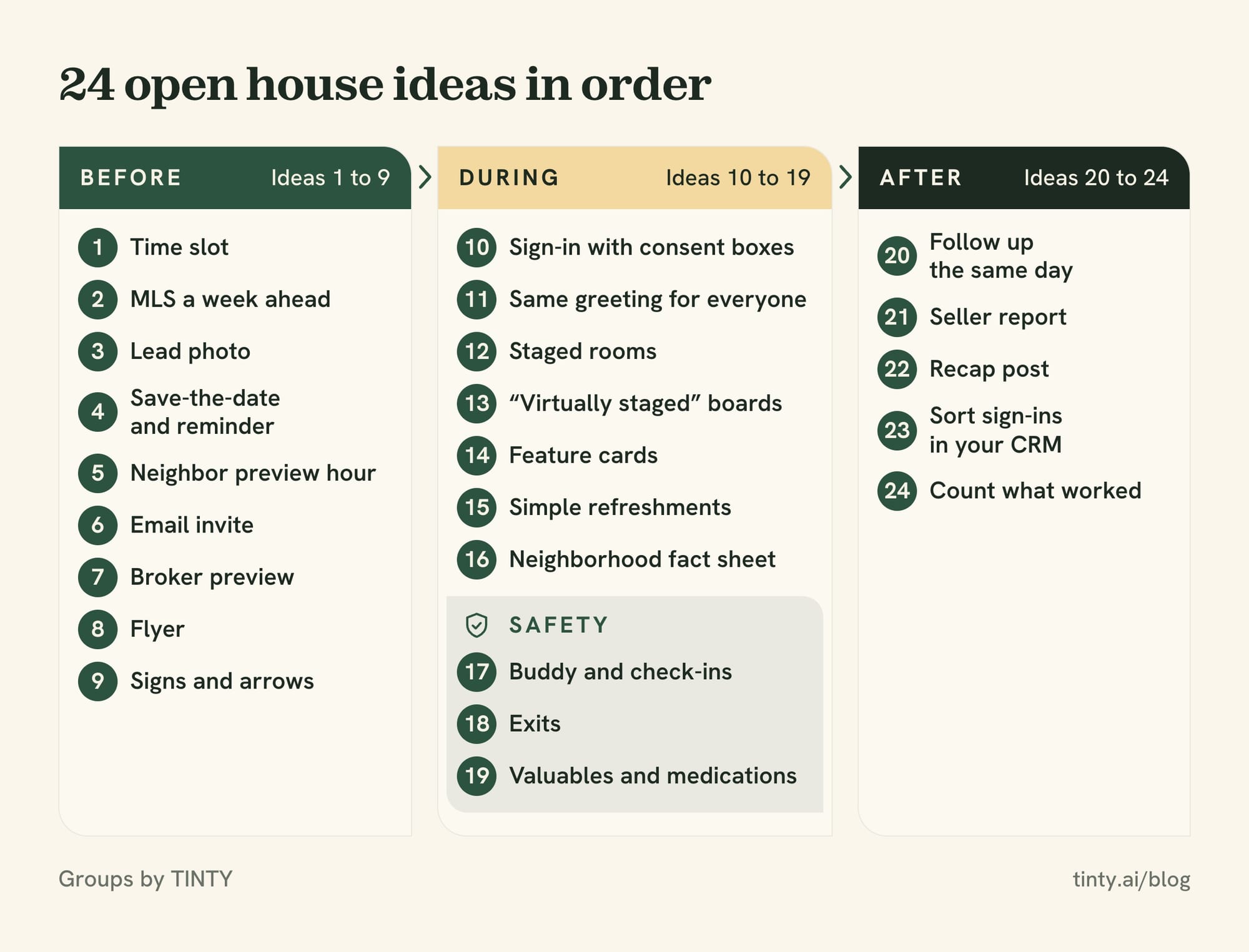
What are the best open house ideas? The ones that bring the right people in, help them picture living there and give you a way to follow up. Promote the date in your multiple listing service (MLS), online and with neighbors. Then show empty rooms clearly, use a sign-in with consent boxes, host with a buddy and follow up the same day.
We make TINTY, an AI virtual staging app, so two of these ideas cover staged photos of empty rooms. The 24 open house ideas below run in order: before, during and after. Effort and cost lines are our estimates, and the rules notes are general information, not legal advice.
Key takeaways
- Mostly research: 49% of buyers used open houses in their search. Most found the home they bought online (51%), and only 4% through a yard or open house sign.
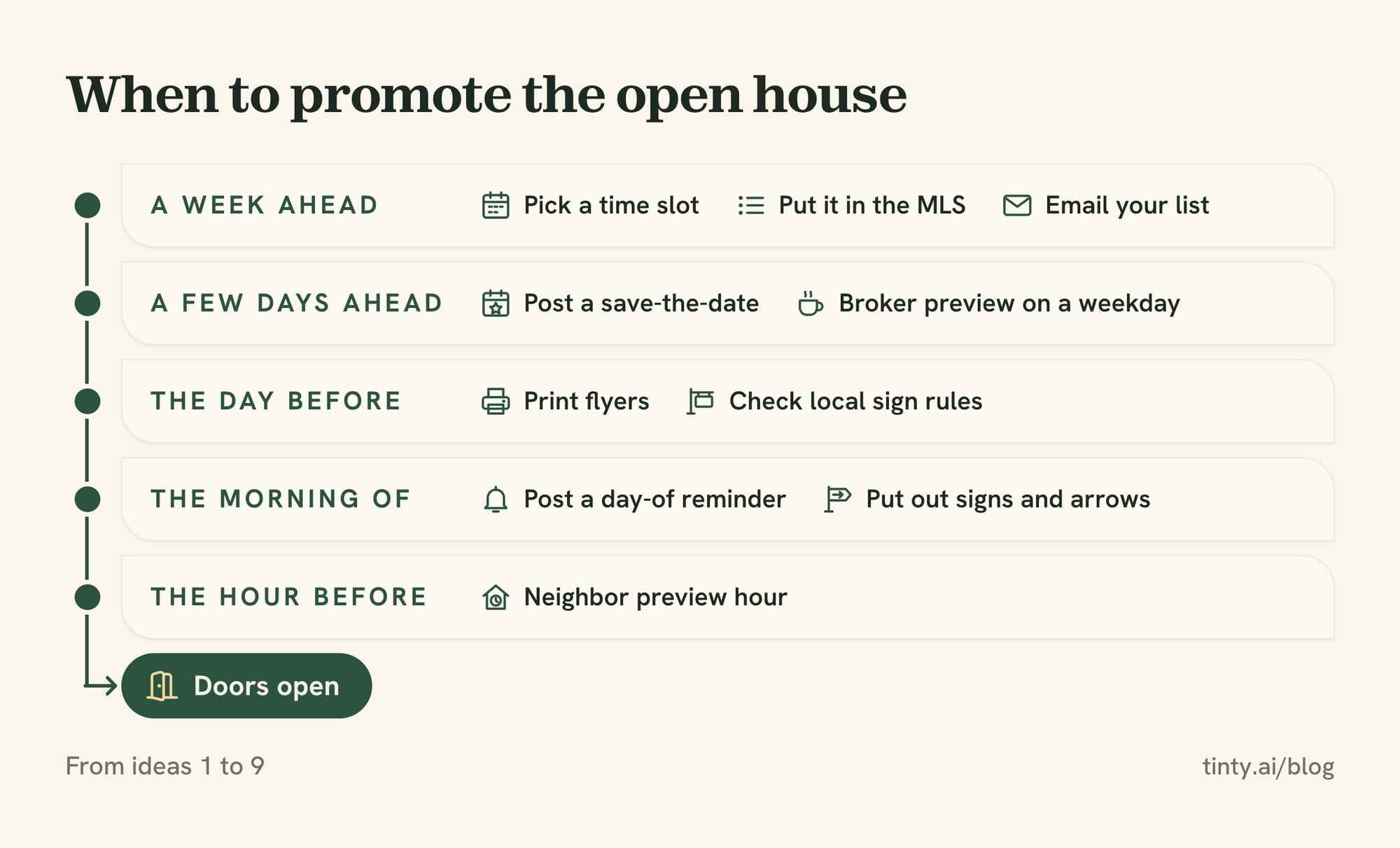
- Promote early: put the date in the MLS about a week ahead, then post, email and invite the neighbors.
- Show empty rooms clearly: stage the key rooms or print boards labeled “Virtually staged”, and never imply furniture is included.
- Ask before you text: commercial texts sent with an autodialer need written consent. Put separate text and email checkboxes on the sign-in.
- Host with a buddy: in a 2024 Realtor safety survey, open houses topped the list of situations where agents felt unsafe.
On this page: By the numbers · Before · During · Safety · After · TINTY for vacant homes · Checklist · FAQ · How we researched
Open houses by the numbers
Open houses are common, but they rarely sell a home on their own. In National Association of Realtors (NAR) data, they work as a research step for buyers and a standard part of a listing plan. So aim each open house at three results: a useful visit, follow-up leads and feedback for your seller (our reading).
Open houses in NAR’s numbers. Source: NAR, 2025 Home Buyers and Sellers Generational Trends, sales from July 2023 to June 2024.
| What NAR measured | Share |
|---|---|
| Sellers whose agent marketed the home with an open house | 58% |
| Buyers who used open houses in their home search | 49% |
| Online buyers who rated upcoming open house info “very useful” | 24% |
| Buyers who met their agent at an open house | 5% |
| Buyers who found their home through a yard or open house sign | 4% |
| Sellers who met their agent at an open house | 3% |
Price still comes first. In an r/realtors thread about a home that sat for a year, most of the highest-voted replies said price, not a party theme, was the problem. If your listing is stale, our stale listing guide helps you check whether price or presentation is the problem, with a script for one price cut.
Before: open house ideas to promote the listing
Most of the work happens in the week before the doors open.
1. Pick a time slot that doesn’t compete
Check the local calendar before you set the date: big games, school events and other open houses nearby. Ask the seller to stay out for the whole window. Redfin’s open house guide says weekends, especially Sundays, are generally the most popular days.
Effort and cost: 15 minutes, free.
2. Put the open house in the MLS a week ahead
Enter the date and time in your MLS as soon as the seller agrees. HousingWire’s open house guide notes that MLS entries reach portals such as Zillow and Realtor.com, so check how yours handles it. About one in four online buyers (24%) rated upcoming open house information “very useful.”
Effort and cost: 10 minutes, free.
3. Lead with photos that show the space
Use your best photo in every invite, post and flyer. Photos were “very useful” to 83% of buyers who searched online, the top feature in NAR’s report. For a vacant home, show at least one living space virtually staged, labeled “Virtually staged” wherever it appears.
TINTY stages living rooms, bedrooms and other living spaces from one empty photo, with free previews in about 30 seconds.
Effort and cost: an hour if the photos exist. TINTY previews are free.
4. Post a save-the-date and a day-of reminder
Post the date, time and address a few days ahead, then a short story on the morning. Add a short video walk-through for buyers who can’t come (our suggestion). Reuse the lead photo so people recognize the home. Our open house post ideas include captions you can copy.
Effort and cost: 30 minutes, free unless you pay to boost a post.
5. Invite the neighbors to a preview hour
Hand-deliver or mail an invite for the hour before the public opening, as HousingWire suggests. Neighbors are curious, they know people who want to live nearby, and some will sell one day (our reading). Only 3% of sellers met their agent at an open house, so treat this as long-term prospecting. Our guide on how to get listings covers the rest of that plan.
Neighbors aren’t the only listing leads: our expired listings guide covers owners whose listings didn’t sell.
Effort and cost: one to two hours of door knocking, or a short print run.
6. Email your sphere and buyer leads
Send one short invite to past clients, friends and buyers who asked about similar homes, and ask them to forward it. Under the CAN-SPAM Act, every marketing email needs your postal address and a clear opt-out.
Effort and cost: 30 minutes, free with your email tool.
7. Hold a broker preview first
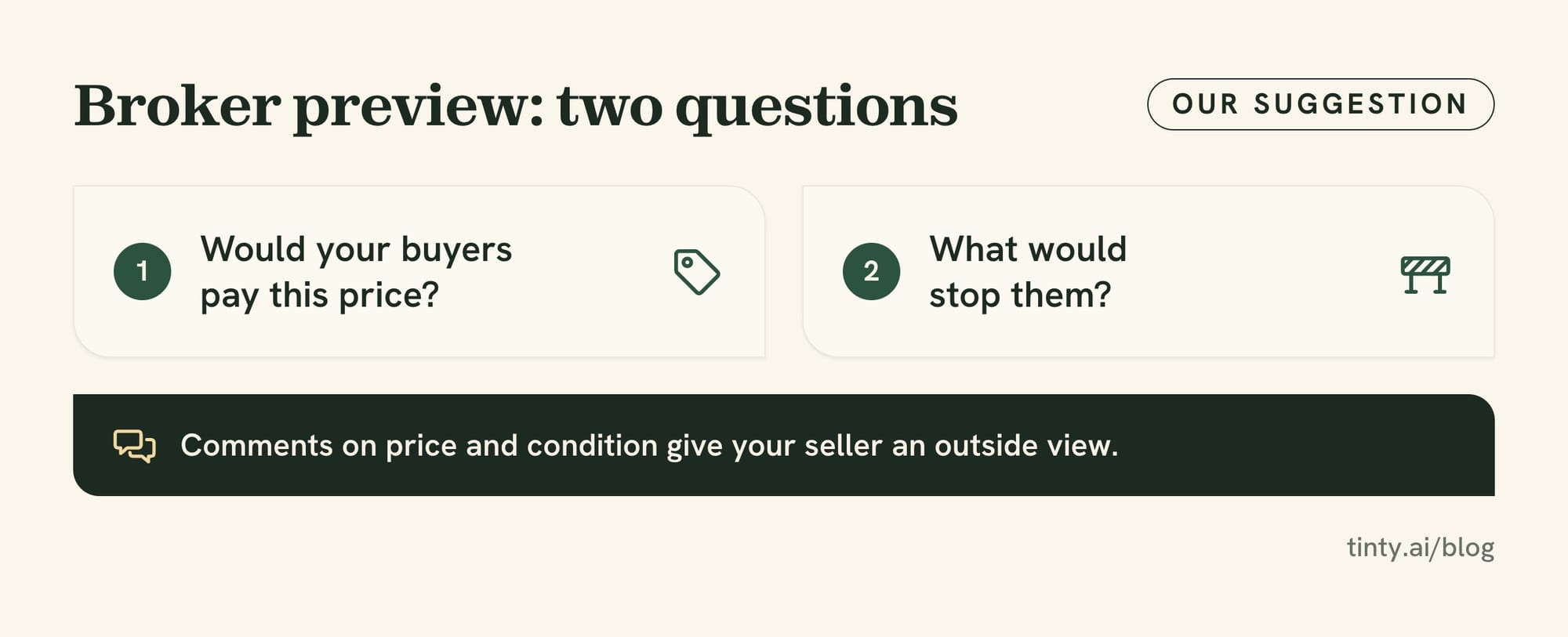
Invite local agents to a short preview on a weekday before the public open house (our suggestion). Agents with active buyers may bring them back. Their comments on price and condition also give your seller an outside view. Ask two questions: would your buyers pay this price, and what would stop them?
Effort and cost: one to two hours, plus coffee.
8. Print a one-page open house flyer
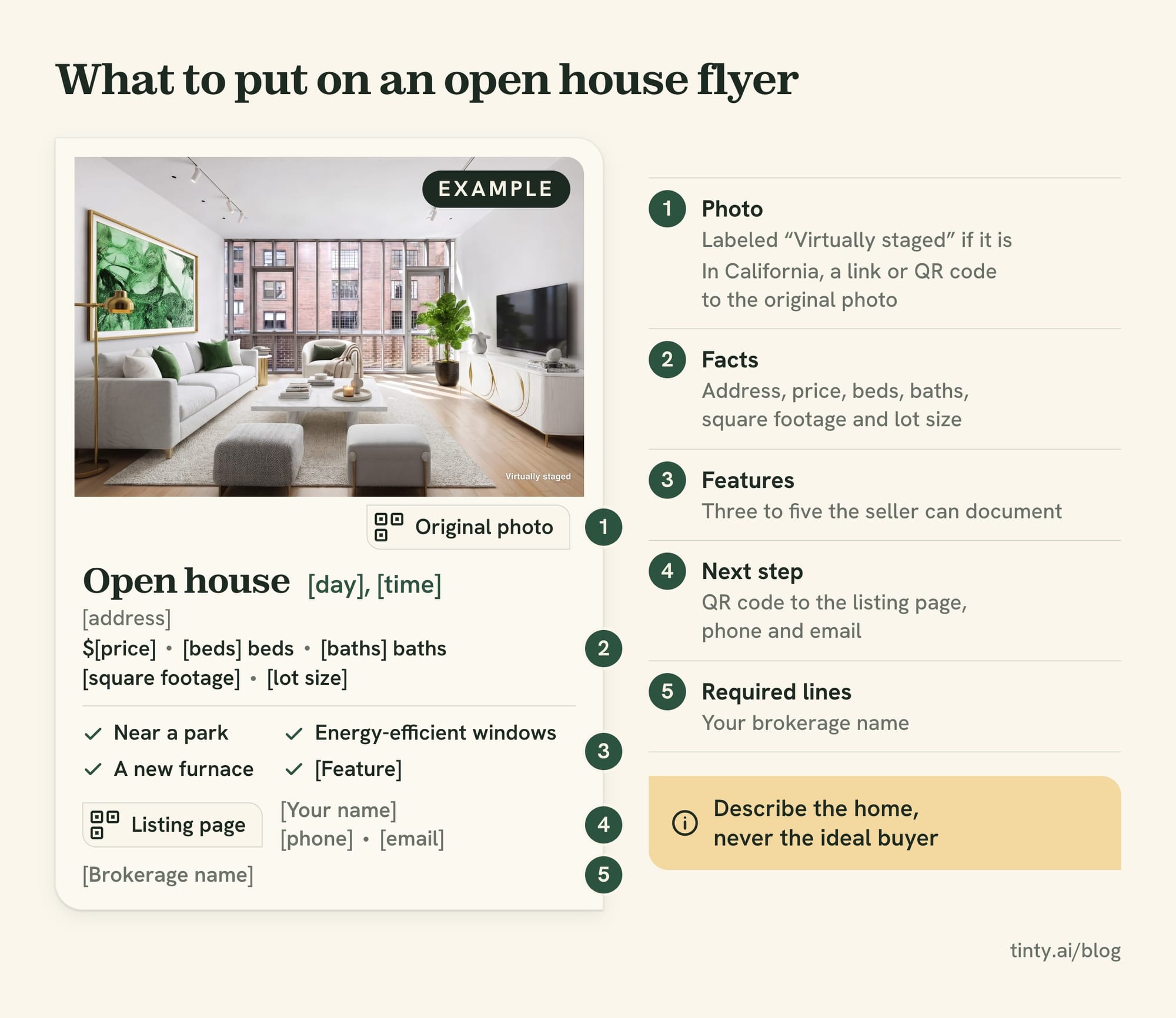
A flyer answers the first questions during the visit and goes home with people. Template sites handle the design, so focus on the content.
What to put on an open house flyer:
- Photo: the lead image, labeled “Virtually staged” if it is. In California, also add a link or QR code to the original photo.
- Facts: address, price, beds, baths, square footage and lot size.
- Features: three to five, each one the seller can document.
- Next step: a QR code to the listing page, plus your phone and email.
- Required lines: your brokerage name and anything else your state’s ad rules require.
Rule: a federal fair housing regulation bans ads that show a preference based on race, color, religion, sex, disability, familial status or national origin. It names flyers, signs and posters. So describe the home (“three bedrooms near a park”), never the ideal buyer.
Effort and cost: an hour, plus printing.
9. Put out signs and arrows the morning of
Place directional signs from the nearest main road to the door, and collect them when you leave. Check city and homeowners association (HOA) sign rules first, because some limit where and when signs can go. Signs still get seen: 32% of buyers used yard signs in their search, per NAR.
Effort and cost: 30 minutes on the day, and signs are a one-time cost.
During: make the visit useful
During the open house, your job is to let people see the home clearly, answer questions and collect contact details with permission.
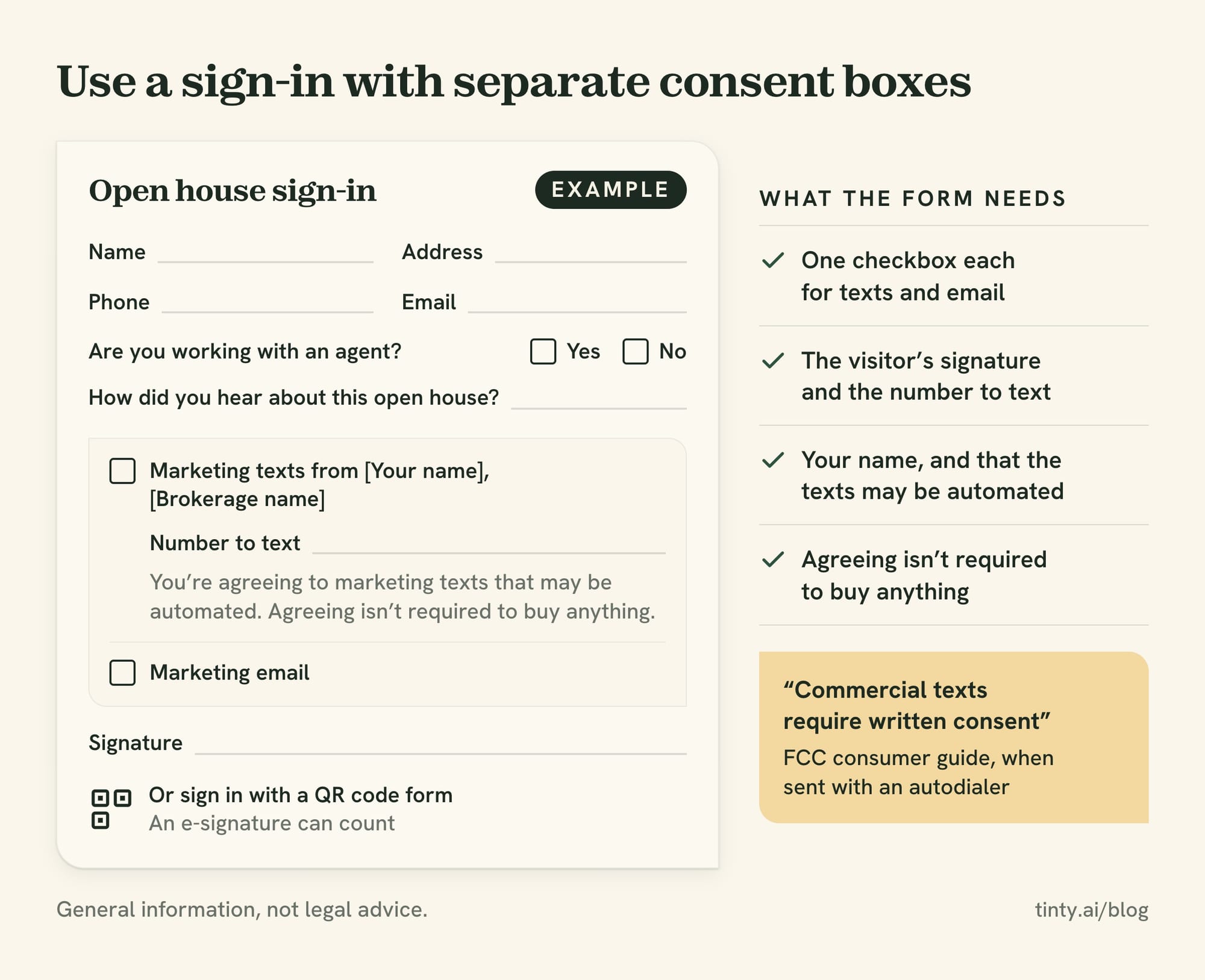
10. Use a sign-in with separate consent boxes
Ask every visitor to sign in, on paper or with a QR code form. NAR’s safety tips suggest asking for name, address, phone and email. Add a question about whether they work with an agent, and one checkbox each for texts and email. Text consent also needs the visitor’s signature and the number to text, and an e-signature can count.
Rule: the Federal Communications Commission (FCC) consumer guide says “Commercial texts require written consent” when they’re sent with an autodialer, under the Telephone Consumer Protection Act (TCPA). The FCC’s written consent rule says the form must name you and tell them they’re agreeing to marketing texts that may be automated. It must also say agreeing isn’t required to buy anything.
Effort and cost: 20 minutes to set up, free.
11. Greet every visitor the same way
Use one greeting for everyone, and give every group the same tour, flyer and follow-up. NAR’s Code of Ethics, Article 10, bars denying equal professional services for protected reasons. A fixed routine also makes the afternoon easier to run.
Example greeting: “Welcome in. I’m [name] with [brokerage]. Please sign in and take a flyer. Are you working with an agent? Look around, and I’m here for questions.”
Effort and cost: none beyond practice.
12. Stage the rooms buyers care about most
Staging for open house visitors starts with the living room and primary bedroom. Buyers’ agents in NAR’s 2025 Profile of Home Staging put them on top: 37% and 34% rated them very important to stage. Our room-by-room staging guide covers what each room needs.
Effort and cost: a day of setup. A staging service cost a median of $1,500 in the same NAR survey, and our home staging cost guide breaks down the rest.
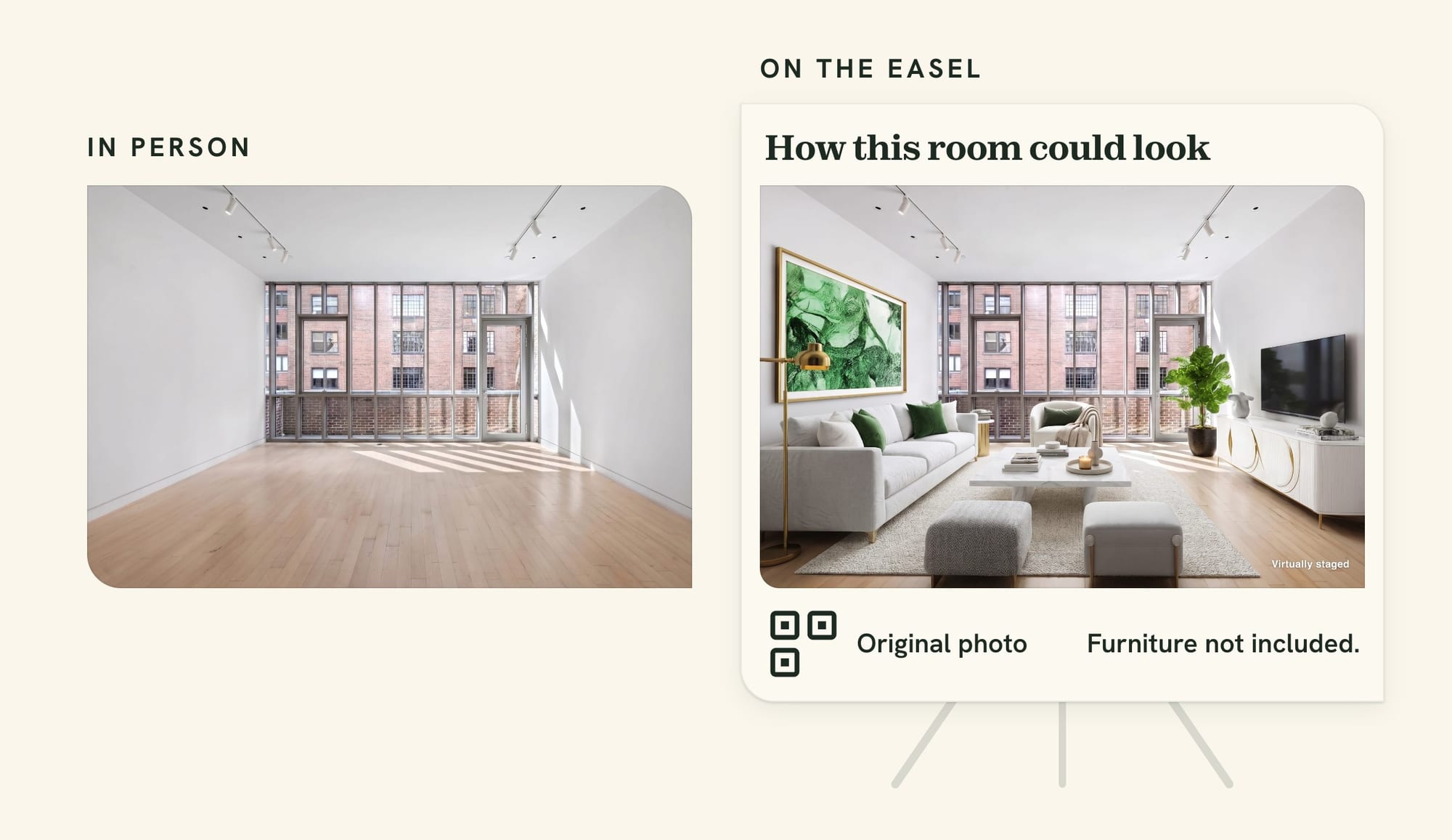
13. Show empty rooms on labeled “Virtually staged” boards
In a vacant home, put a letter-size print on an easel in each empty living space, showing the same room virtually staged. Title it “How this room could look” and keep the “Virtually staged” label on the image. In NAR’s survey, 83% of buyers’ agents said staging in general makes it easier for buyers to picture a home as their future home.
Watch out: a board must never suggest the furniture comes with the house. Print the label, show the real room around it, and skip kitchens and bathrooms. TINTY doesn’t stage them. California’s AB 723 also requires a link or QR code to the original photo on promotional material. Our guide to virtual staging rules covers labels.
Effort and cost: an hour to stage and print. TINTY’s Base plan is $9 a month for 4 finished photos, per TINTY’s plans.
14. Leave a feature card in each room
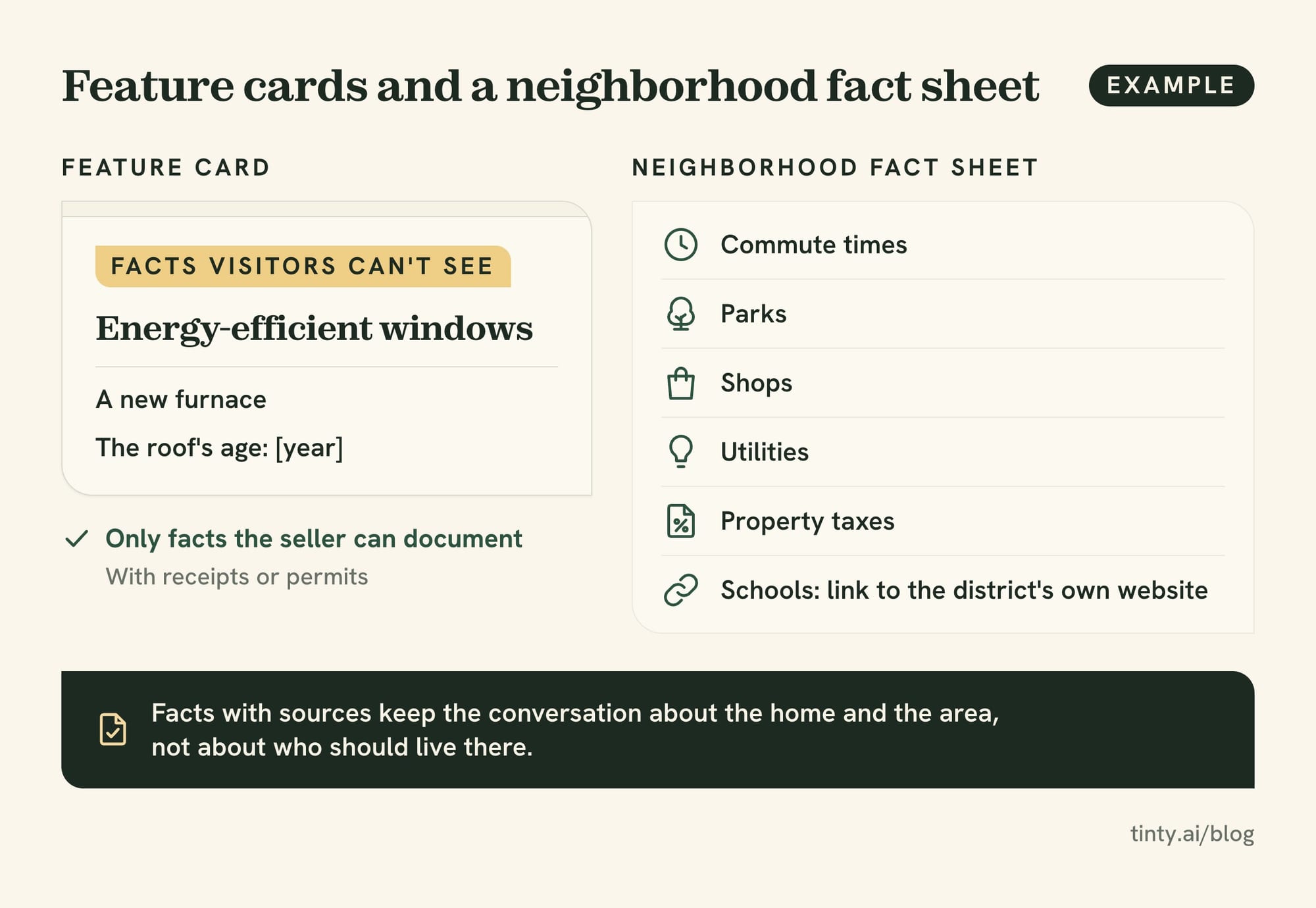
Put a small card in each room with one or two facts visitors can’t see, such as the roof’s age or a new furnace. Use only facts the seller can document with receipts or permits. Redfin suggests small signs for features buyers might miss, like energy-efficient windows.
Effort and cost: an hour to write and print.
15. Keep refreshments simple
Bottled water near the entry is enough. HousingWire suggests skipping messy food, which avoids food allergy problems and crumbs. If you add snacks, keep them wrapped and ask the seller first (our suggestion).
Effort and cost: a small grocery run.
16. Hand out a neighborhood fact sheet
List what buyers ask about: commute times, parks, shops, utilities and property taxes. For schools, link to the district’s own website instead of rating them (our caution). Facts with sources keep the conversation about the home and the area, not about who should live there.
Effort and cost: two hours the first time, then a quick update for each listing.
Safety for you, the seller and visitors
You host strangers in a private home, so plan safety before the open house starts. In NAR’s 2024 member safety survey, 22% of residential members had a situation that year that made them fear for their safety or personal information. An open house was the most common setting (34% of them). And 17% felt unsafe while hosting one alone in the past 12 months.
17. Bring a buddy and set check-ins
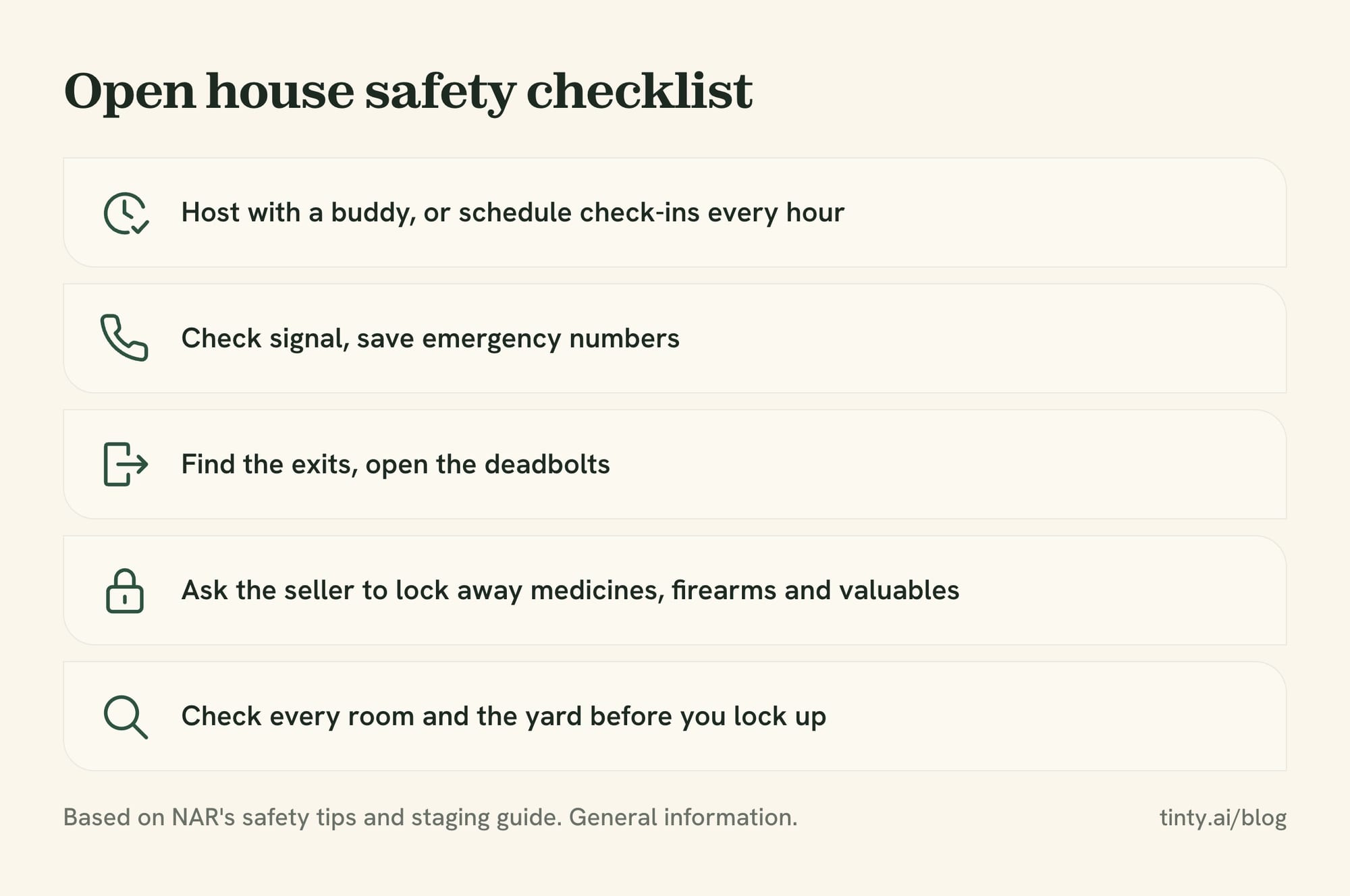
Ask a colleague, a lender partner or a friend to host with you. If you can’t, these steps from NAR’s open house safety tips help:
- Check-ins: tell your office or a friend you’ll call every hour, and have them call you if you don’t.
- Phone: check the signal and save emergency numbers before visitors arrive.
- Neighbor: ask one to keep an eye and ear open for anything unusual.
If your brokerage asks visitors for photo ID, ask every visitor, never only some (our caution).
Effort and cost: a few calls to set up, free.
18. Know your exits and close up carefully
Walk the house before anyone arrives and find several ways out. Leave the deadbolts open so you can get out fast. During tours, walk behind visitors and direct them, and avoid attics, basements and small rooms. At the end, check every room and the backyard before you lock up, as NAR advises.
Effort and cost: 15 minutes, free.
19. Lock away valuables and medications
Ask the seller to pack away medicines, firearms and valuables, as NAR’s consumer staging guide advises. In NAR’s 2024 survey, 5% of members had a client report a theft during an open house. And 52% had encouraged clients to keep medications with them.
Effort and cost: one conversation with the seller, free.
After: follow-up that turns visits into leads
Follow-up is where an open house pays off. Send it the same day, while visitors still remember the home.
20. Follow up the same day, by consent
Write to each visitor only through the channel they agreed to:
- Email: a thank-you, the listing link and an offer to answer questions, for visitors who checked the email box.
- Text: a short version, only for visitors who checked the text box.
- Buyers with an agent: follow up through that agent instead, as HousingWire advises.
- Email opt-outs: honor email opt-outs within 10 business days, as the CAN-SPAM Act requires, per the Federal Trade Commission (FTC) guide.
- Text opt-outs: stop texting anyone who replies “stop” or asks to stop in another reasonable way. The FCC’s opt-out rule gives you at most 10 business days to comply.
NAR’s Code of Ethics, Standard of Practice 16-13, points the same way. Dealings with buyers under an exclusive agreement go through their agent, unless that agent agrees or the buyer starts the contact.
Tip: write the follow-up email before the open house. Afterward, you only add each visitor’s name and one detail from your conversation.
Effort and cost: 30 minutes, free.
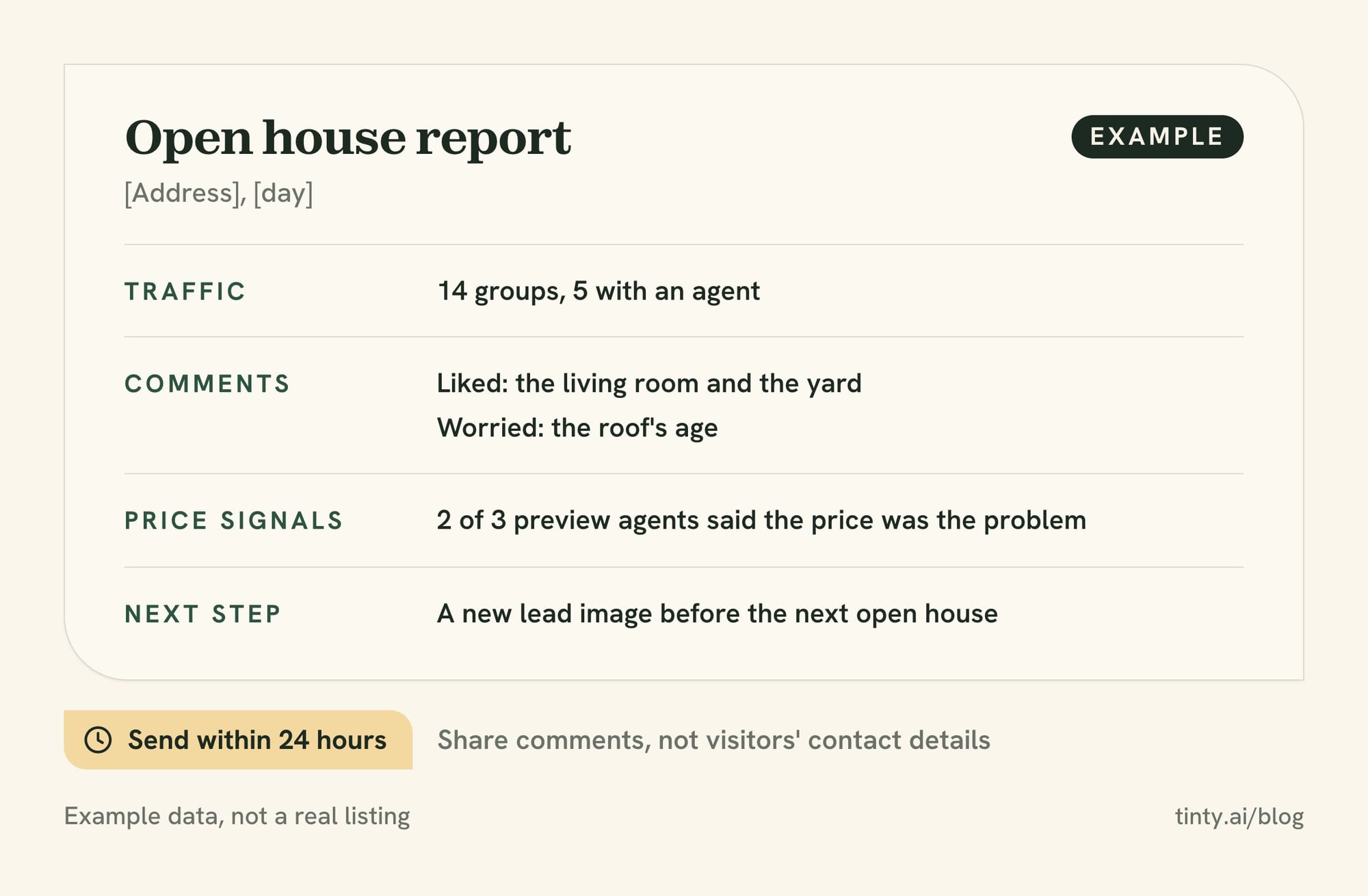
21. Send the seller feedback within 24 hours
Your seller wants to know how it went, and a short written report shows your work. Keep it factual:
- Traffic: the number of groups and how many came with an agent.
- Comments: what visitors liked and what worried them, in their words.
- Price signals: what the broker preview and visitors said about price.
- Next step: one change you recommend before the next open house.
Share comments, not visitors’ contact details (our view).
Effort and cost: 30 minutes, free.
22. Post a recap
Thank visitors in a short post and invite anyone who missed it to book a showing. Don’t post photos of visitors without their permission, and keep the label on any staged photo you reuse.
Effort and cost: 15 minutes, free.
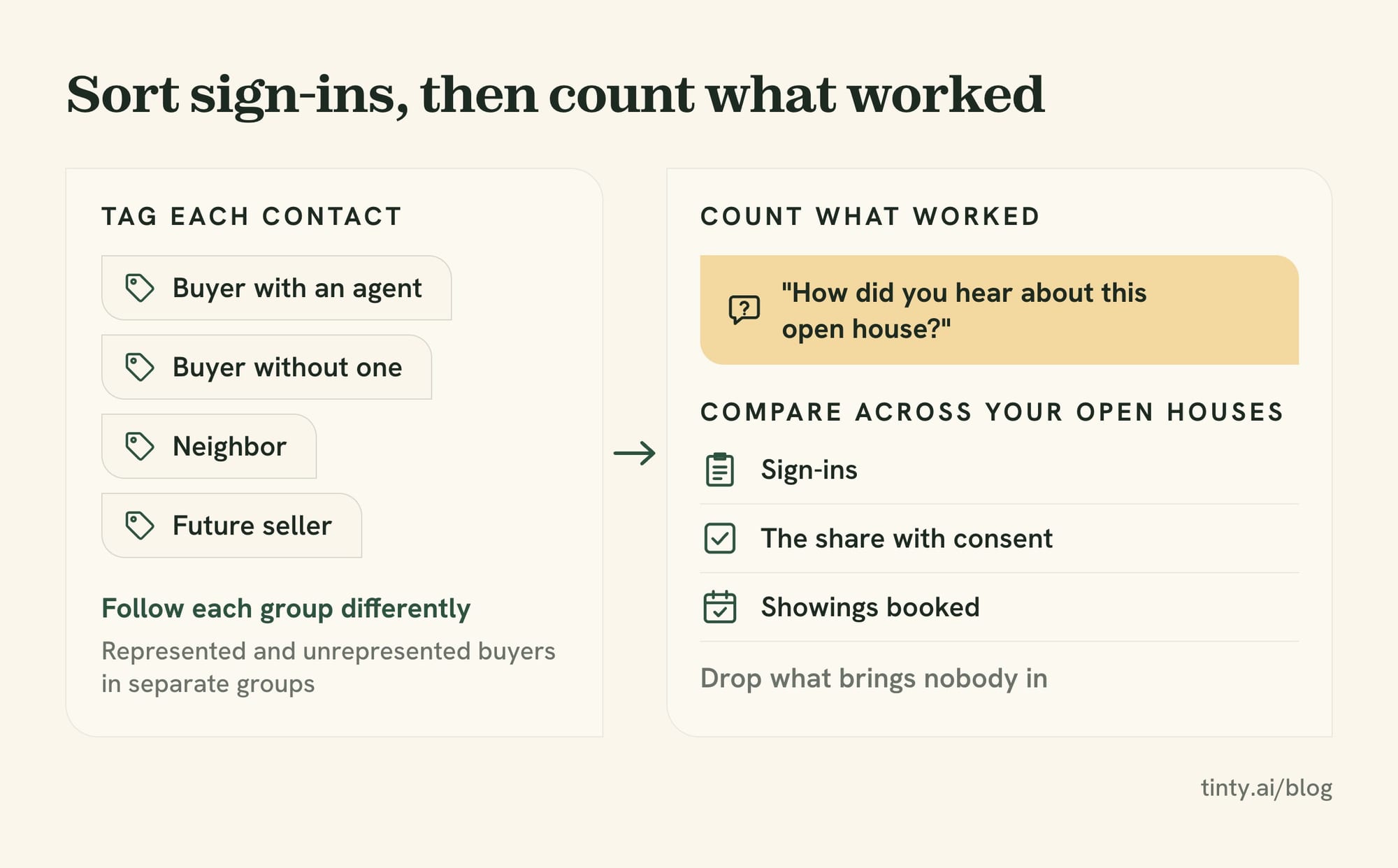
23. Sort sign-ins in your CRM
Tag each contact in your customer relationship management (CRM) tool: buyer with an agent, buyer without one, neighbor or future seller. HousingWire recommends keeping represented and unrepresented buyers in separate groups. Then follow each group differently.
Effort and cost: 20 minutes, free if you already use a CRM.
24. Count what worked
Add “How did you hear about this open house?” to your sign-in, then count the answers. Compare sign-ins, the share with consent and showings booked across your open houses. Drop what brings nobody in (our suggestion).
Effort and cost: 15 minutes after each open house.
Where TINTY fits for a vacant home
We make TINTY, so here’s how it helps an open house in an empty home, limits included:
- Promotion photos: stage a living room or bedroom from one photo, on a phone or laptop, with free previews in about 30 seconds.
- Printed boards: finished files are 2K, about 2,500 px on the long side, sized for print up to letter size.
- Rooms: nine room types, from bedrooms and nurseries to living rooms, dining rooms and home offices. No kitchens, bathrooms, building exteriors or yards.
- Empty rooms only: TINTY doesn’t remove furniture yet.
- Labels: you can add a “Virtually staged” label when you download. Free photos carry a watermark, so print paid ones.
Try a free TINTY preview of one empty room before you print anything. No card is needed.
Short on time? TINTY Studio, our done-for-you virtual staging service, stages photos you email to hello@tinty.ai in 2 to 24 hours. It’s $10 a photo from 3 photos, per TINTY’s pricing page, and you pay only if you’re happy.
For the rest of a vacant listing, from utilities to insurance, see our guide to selling a vacant house.
Open house prep checklist
Use this short checklist for every open house.
The week before:
- MLS: enter the date and time.
- Photos: pick the lead image and stage empty living spaces.
- Invites: post a save-the-date and email your list.
- Neighbors: deliver preview-hour invites.
- Seller: confirm they’ll be out and will lock away valuables.
The day before:
- Print: flyers, feature cards, boards and sign-in sheets.
- Signs: check local rules and load the car.
- Buddy: confirm who hosts with you or who takes check-in calls.
- Refreshments: buy bottled water.
On the day and after:
- Walk-through: find the exits, open the deadbolts, turn on lights.
- Close: check every room and the yard, then lock up.
- Same day: send thank-yous by consent.
- Within 24 hours: send the seller report.
Open house FAQ
What do you need for an open house?
You need signs and arrows, a sign-in sheet or QR form, flyers, a phone with emergency numbers saved and, ideally, a second person. For a vacant home, add staged photos or labeled boards. Bottled water is an optional extra.
How do you get people to come to an open house?
Put the date in the MLS about a week ahead, post it online, email your list and invite the neighbors in person. Add directional signs on the day. A strong lead photo helps every channel, because 83% of online buyers in NAR’s 2025 report rated photos very useful.
Show 4 more questionsShow fewer questions
How long should an open house last?
Most run two to four hours, according to Redfin. HousingWire suggests limiting an open house to one hour so visitors overlap and the house feels busy. Pick the window that fits your market and your seller’s schedule.
Do open houses sell homes?
Rarely on their own, in our reading of NAR data. In NAR’s 2025 Generational Trends report, 49% of buyers used open houses in their search. Most found the home they bought online (51%), and only 4% through a yard or open house sign. Open houses support the sale and bring you leads.
Can you virtually stage a house for an open house?
Yes, for the photos and printed boards, if each staged image is labeled “Virtually staged” and meets your MLS and state rules. In California, ads and promotional material with a staged image also need a link or QR code to the original photo. Visitors still walk into empty rooms, so keep them clean and bright. Never suggest the furniture is included.
Do visitors need a buyer agreement at an open house?
No. NAR’s consumer guide says visitors touring an open house on their own don’t need one, and the hosting agent doesn’t need one with them either. A written agreement comes once an agent starts working with the buyer, before they tour homes together. NAR adds that practices may vary by state and local law, so check your state’s rules.
How we researched this
On October 9, 2026, we read the pages that rank in Google for “open house ideas,” including HousingWire and Redfin, plus an r/realtors thread. Zillow’s page blocked our tools, so we didn’t use it.
Open house and staging data come from NAR’s 2025 Generational Trends report, the latest free edition, and its 2025 Profile of Home Staging. NAR’s 2026 Generational Trends edition is free only to members. Safety figures come from NAR’s 2024 member safety report and its safety tips. Rules come from FCC, FTC and NAR pages, the Electronic Code of Federal Regulations and the California code, read the same day.
The effort and cost lines are our estimates, and we didn’t test response rates. TINTY facts come from our live pages and product notes, checked October 9, 2026. If something here is wrong, email hello@tinty.ai and we’ll fix it.
Sources
All pages read October 9, 2026. Dates in parentheses are publication or update dates.
NAR data:
- NAR 2025 Home Buyers and Sellers Generational Trends (PDF) (April 2025; Exhibits 3-2, 3-4, 3-6, 4-4, 7-1 and 7-8)
- NAR 2025 Profile of Home Staging (PDF) (May 2025)
Show 23 more sourcesShow fewer sources
- NAR 2024 Member Safety Residential Report (PDF) (September 2024; 1,423 respondents)
- NAR: Home Buyers and Sellers Generational Trends page (2026 edition free for members; infographic April 15, 2026)
Safety, fair housing and consent rules:
- FTC: CAN-SPAM Act, A Compliance Guide for Business (August 2023, edited January 2024)
- eCFR: 24 CFR 100.75, discriminatory advertisements, statements and notices
- FCC: Stop Unwanted Robocalls and Texts (updated February 27, 2026)
- eCFR: 47 CFR 64.1200, delivery restrictions (paragraphs (f)(9), prior express written consent, and (a)(10), revoking consent)
- NAR 2026 Code of Ethics and Standards of Practice (Article 10; Standard of Practice 16-13)
- California Business and Professions Code 10140.8 (AB 723) (effective January 1, 2026)
- NAR: 10 tips for holding a safe open house (May 24, 2012; NAR notes the page may not be current)
- NAR: Consumer guide, staging your house for a sale
- NAR: Consumer guide to open houses and written agreements (2024)
Guides that rank for this topic:
- Redfin: Real estate open house ideas that make your listing stand out (August 26, 2025)
- HousingWire: 22 creative open house ideas (updated August 27, 2025)
Agent discussion:
- r/realtors: Looking for a unique open house idea (April 8, 2024)
TINTY and related guides: